
Buying property to Phnom Penh with a dedicated expert

Drapeau du Royaume-Uni avec des bandes rouges, blanches et bleues en forme de croix et de diagonales.
An English-speaking Home Finder who lives there
Emoji de détective avec chapeau, loupe et cheveux gris.
Sees the good places before they hit the market
Médaille d'or avec un ruban rouge indiquant la première place.
Fights for your offer, not the seller's
Symbole dollar vert sur fond blanc.
The real local price, not the foreigner tax

What kind of property are you looking for to Phnom Penh?

Describe your project, one of our real estate hunters will look for the ideal property for you

Why work with a property hunter?

Time spent by the buyer
Symbole d'information en cercle bleu foncé sur fond transparent.
When you search alone, about 85% of the time is spent on research, and 15% on visits. With a hunter, you only do the visits
A pen icon
Access to the off-market
Purchase price
Virtual pre-visits
Secure formalities
Symbole d'information en cercle bleu foncé sur fond transparent.
Customer satisfaction
Only 20% of satisfied buyers according to the 2018 Crédit Foncier study. For its part, Remoters gets a score of 4/5 or 5/5 in 95% of cases
A pen icon

Buying alone abroad

140 hours
Icône rouge de croix X sur fond blanc.
Very difficult negotiation
Icône rouge de croix X sur fond blanc.
20%

Buying  with Remoters

20:00
14% discount obtained on average
95%

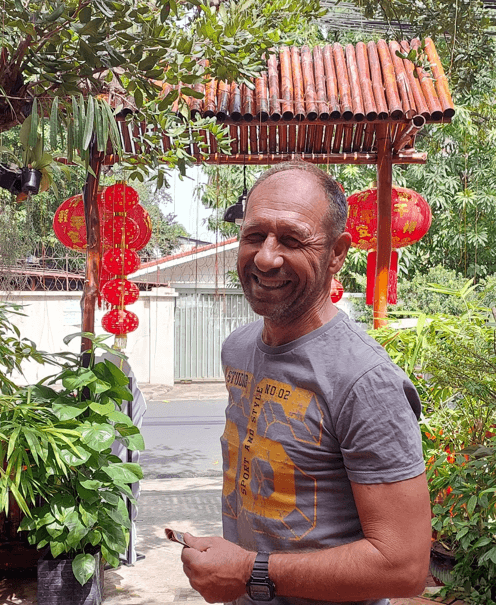
Bruno, or another expert property hunter based to Phnom Penh, will personally manage your search.

Guide local de l’achat immobilier

Acheter un bien immobilier

Buying property in Phnom Penh in under 30 seconds: here is what you need to know.

Who can buy? Foreign nationals can legally own condominium units (strata title) on the first floor or above, up to a cap of 70% of units per building. Direct land ownership is reserved for Cambodian nationals.

What does it cost? Entry-level condos start from approximately USD 75,000; mid-range boreys from USD 75,000–200,000 USD; prime central condos and villas from USD 200,000+. The city-wide average land price is around USD 1,790 per sqm (CVEA, H1 2025).

What are the acquisition costs? Budget an additional 5–8% on top of the purchase price: 4% Transfer Tax (Stamp Duty) on the assessed value, plus legal fees, notarisation, and registration costs.

How does the process work? Search → due diligence → MOU + deposit (typically 10%) → notarised SPA + further payment → Transfer Tax payment → title registration (8–12 weeks) → final payment and handover.

Can foreigners get financing? Yes — local banks (ABA, Canadia, ACLEDA) offer mortgages to foreigners at approximately 6.5–10% per year; developer instalment plans are also widely available.

What is the market doing? After a correction in 2021–2024, the market is stabilising in 2025, with selective recovery in prime segments. Gross rental yields average approximately 7.68% nationally (Global Property Guide, Q3 2025).

Prix par type de bien

Fourchettes de prix selon la surface, la typologie et l’usage du logement.

Purchase prices in Phnom Penh vary significantly by property type. The following ranges are indicative of the 2024–2025 market:

  • Condominiums (strata title): Entry-level condos are priced at approximately USD 1,500–2,200 per sqm, making Phnom Penh one of the most affordable capital-city condo markets in Southeast Asia (source: IPS Cambodia, 2025). The median transaction price for apartments and condos is around USD 130,000, with the overall range spanning from approximately USD 75,000 to USD 550,000+ depending on size, location, and finish (source: PCInsider, 2025). Premium condos in BKK1 or Tonle Bassac can exceed USD 2,500 per sqm.
  • Boreys (gated housing communities — landed houses): Affordable borey units in suburban areas (Dangkor, Prek Pnov) start from approximately USD 15,000–40,000. Mid-range boreys in areas such as Sen Sok are typically priced between USD 75,000 and USD 200,000. Premium boreys and villas in established or riverside locations can exceed USD 200,000–500,000+ (source: CBRE Cambodia; Good Value Property Cambodia, Q1 2025).
  • Shophouses: Commercial-residential shophouses in central districts command significant premiums, with prices varying widely by location and floor area.
  • Land plots: The city-wide average land price settled at approximately USD 1,790 per sqm in H1 2025 (source: CVEA, 2025). Prime central land (Daun Penh, BKK) can reach USD 6,500–11,000 per sqm, while peripheral plots start from USD 10–50 per sqm.

Note: Foreign nationals may only purchase condominiums (strata title) in their own name under Cambodian law. Land and borey purchases require alternative legal structures.

Prix et profils des quartiers

Les secteurs à comparer selon le budget, le mode de vie et le projet d’achat.

Phnom Penh's property market is highly segmented by district, with significant price variation between central and peripheral areas. The following overview is based on data from the Cambodian Valuers and Estate Agents Association (CVEA) and market sources for 2025:

  • Daun Penh (historic centre): The most central district, home to the Royal Palace, riverside, and key government buildings. Land prices range from approximately USD 3,500 to USD 6,500+ per sqm in prime sub-districts. Suited to buyers seeking central location, heritage character, and commercial potential.
  • Boeung Keng Kang (BKK1, BKK2, BKK3): The primary expatriate and diplomatic hub, with the highest concentration of international restaurants, embassies, and services. BKK1 commands average prices of approximately USD 2,000 per sqm for condominiums (source: Khmer Times, 2025). Land values in BKK reach up to USD 11,000 per sqm in the most sought-after sub-districts (source: CVEA, 2025).
  • Chamkarmon / Tonle Bassac: A premium riverside district adjacent to BKK, popular with high-end residential and commercial developments. Average condo prices around USD 2,500 per sqm (source: Khmer Times, 2025).
  • Toul Kork: An established mid-range residential district popular with local professionals and families. Land prices range from approximately USD 1,600 to USD 5,700 per sqm (source: CVEA / Khmer Times, 2025).
  • Sen Sok: A rapidly developing suburban district with significant borey and condominium supply. More affordable entry points, with land prices from approximately USD 200 to USD 3,100 per sqm (source: CVEA, 2025). Popular with buyers seeking newer housing at lower price points.
  • Chroy Changvar (peninsula): An emerging district across the Tonle Sap river, with significant new development. Land prices range from approximately USD 20 to USD 2,600 per sqm depending on proximity to the river and infrastructure (source: CVEA, 2025).
  • Prek Pnov / Dangkor (outer suburbs): The most affordable areas, with land from as low as USD 10 per sqm, suited to buyers with a long-term development horizon.

Évolution du marché immobilier

Dynamique des prix, niveau de demande et biens les plus recherchés.

Phnom Penh's property market has undergone significant shifts over the past several years. After a period of rapid expansion, the market entered a correction phase driven by oversupply, tightening credit conditions, and reduced foreign investment flows.

In the condominium segment, total supply grew from approximately 20,000 units in 2019 to around 60,000 units by end-2024, representing an annual growth rate of close to 20% year-on-year (source: IPS Cambodia, 2025). This surge in supply contributed to downward pressure on prices: condo sale prices fell by 8.1% in 2021, by 5% in 2022, and by a further 1.1% in 2024 after a brief recovery in 2023 (source: Global Property Guide / Cambodia Residential Real Estate Market Analysis, 2026).

In the landed housing (borey) segment, supply of borey units roughly doubled between 2019 and 2022 — from approximately 60,000 to 120,000 units — before the market began to slow (source: CBRE Cambodia, cited by RFA, 2024). Oversupply and financing risks became visible, with some suburban borey projects experiencing high vacancy rates.

By 2025, the market showed early signs of stabilisation. The average land price in Phnom Penh settled at approximately USD 1,790 per sqm in H1 2025, reflecting a more balanced supply-demand dynamic (source: Cambodian Valuers and Estate Agents Association — CVEA, 2025). The high-end condominium segment began to show signs of recovery in the second half of 2025. Entry-level condos remained attractively priced at USD 1,500–2,200 per sqm, positioning Phnom Penh as one of the more affordable capital-city markets in Southeast Asia (source: IPS Cambodia, 2025).

Overall, the market is transitioning from a period of speculative growth toward a more mature, fundamentals-driven phase, with selective opportunities in well-located, quality assets.

Budget total et fiscalité

Prix d’acquisition, taxes, honoraires et dépenses à prévoir en complément.

When purchasing property in Phnom Penh, buyers must budget for several costs beyond the agreed purchase price. The most significant is the Transfer Tax (Stamp Duty), set at 4% of the government-assessed value of the property — typically lower than the market price — and paid by the buyer at the time of title registration (source: Khmer Times / General Department of Taxation, 2025). This tax applies to all property types including condominiums, landed houses, and land plots.

In addition to the transfer tax, buyers should account for:

  • Notarisation and legal fees: variable, typically a few hundred to a few thousand USD depending on transaction complexity.
  • Title registration and cadastral fees: administrative fees payable to the Ministry of Land Management (MLMUPC), generally modest but project-specific for strata titles.
  • Real estate agent commission: typically 3–5% of the sale price, usually paid by the seller or developer, but negotiable (source: Khmer Times, 2025).
  • Annual Tax on Immovable Property (TOIP): levied at 0.1% of the assessed value on properties valued above approximately USD 25,000 (KHR 100 million threshold), payable each year by the owner (source: General Department of Taxation).

Regarding Capital Gains Tax (CGT) on real estate resale: as of Prakas No. 1130 dated 31 December 2025 (Ministry of Economy and Finance), gains from real estate transactions remain exempt from CGT for the time being, with implementation deferred beyond 1 January 2026. Buyers should monitor future regulatory updates as this exemption may not be permanent.

As a practical rule of thumb, buyers should budget an additional 5–8% on top of the purchase price to cover all acquisition costs, taxes, and professional fees.

Étapes de l’acquisition

Le déroulement du projet depuis la définition des critères jusqu’à la remise des clés.
  1. Property search and market research: Identify target districts, property types, and price ranges. Visit properties in person and compare comparable sales in the area.
  2. Due diligence and title verification: Engage a qualified Cambodian lawyer to verify the title type (hard title, LMAP, or strata title), confirm ownership, check for encumbrances, and review cadastral records at the local and national level.
  3. Price negotiation and offer: Submit a written offer. Negotiate price, payment schedule, and any conditions precedent (e.g., title upgrade, repairs).
  4. Memorandum of Understanding (MOU) / Deposit Agreement: Once terms are agreed, a preliminary MOU or deposit agreement is signed and a deposit — typically 10% of the purchase price — is paid to secure the property.
  5. Drafting and signing the Sales and Purchase Agreement (SPA): The SPA is the binding legal contract between buyer and seller. Under Cambodian Civil Code (Article 336), SPAs for immovable property must be in notarised form. The SPA details the purchase price, payment schedule, title transfer conditions, and obligations of both parties. A further payment — commonly 40–50% of the total price — is typically made at this stage.
  6. Payment of Transfer Tax: The buyer pays the 4% Transfer Tax (Stamp Duty) to the General Department of Taxation based on the government-assessed value of the property.
  7. Title transfer and registration: The buyer and seller (or their representatives) submit the transfer application to the cadastral office or MLMUPC. For condominiums, registration is completed with MLMUPC for the strata title. The process typically takes approximately 8–12 weeks.
  8. Final payment and handover: The remaining balance is paid upon confirmation of title transfer. Keys and possession are handed over to the buyer.

Documents nécessaires

Les justificatifs à préparer pour acheter et financer un bien en Italie.

To complete a property purchase in Phnom Penh, both the buyer and the seller must provide a set of documents. Foreign buyers in particular should prepare the following:

  • Valid passport (all pages, with at least 6 months validity remaining).
  • Proof of income or financial capacity (bank statements, employment contract, or business accounts — required by banks and sometimes by developers for instalment plans).
  • Proof of address (utility bill or official document from country of residence).
  • Tax Identification Number (TIN) if applicable, or registration with the Cambodian General Department of Taxation for ongoing ownership obligations.

On the seller's side, the buyer's legal representative should verify and obtain:

  • Original title deed — hard title (issued by MLMUPC), LMAP title, or strata title certificate for condominiums.
  • Seller's identity documents (national ID or passport; company registration documents if the seller is a legal entity).
  • Tax clearance certificate confirming no outstanding property taxes or debts on the asset.
  • Cadastral survey plan confirming boundaries and surface area.
  • No-encumbrance certificate confirming the property is free of mortgages, liens, or legal disputes.

For off-plan condominium purchases, buyers should additionally request the developer's construction permit, the strata title pre-approval from MLMUPC, and the developer's company registration documents.

All documents submitted to Cambodian authorities must be in Khmer or accompanied by a certified Khmer translation.

Vérifications juridiques et techniques

Contrôles du titre, du cadastre, de la conformité et de l’état réel du bien.

Thorough legal and technical due diligence is essential before committing to a property purchase in Phnom Penh. The following checks should be conducted, ideally by a qualified Cambodian property lawyer:

  • Title type verification: Confirm whether the property holds a hard title (issued by MLMUPC — the most secure form), an LMAP title (GPS-mapped hard title with QR code linked to the national registry — the gold standard), a soft title (local administrative recognition only — higher risk), or a strata title (for condominiums). Soft titles carry significantly higher legal risk and should be approached with caution.
  • Ownership verification: Confirm the seller's legal right to sell by cross-referencing the title deed with cadastral records at the local and national level.
  • Encumbrance check: Verify that the property is free of mortgages, liens, court orders, or other legal restrictions that could affect the transfer.
  • Boundary and cadastral survey: Confirm the property's boundaries, surface area, and cadastral plan match the title deed and the physical reality on the ground.
  • Tax clearance: Obtain confirmation from the tax authorities that all outstanding property taxes (including the annual Tax on Immovable Property) have been paid by the seller.
  • For condominiums — developer due diligence: Verify the developer's construction permit, strata title pre-approval from MLMUPC, company registration, and track record of completed projects. Confirm the building has not exceeded the 70% foreign ownership cap.
  • For off-plan purchases: Review the payment schedule, escrow arrangements (if any), and the developer's financial standing. Off-plan purchases carry additional completion risk.
  • Physical inspection: Commission a structural and technical inspection of the property, particularly for older buildings or resale units, to identify any defects, illegal constructions, or infrastructure issues.

The Ministry of Land Management launched initial digital land registry services in 2024, allowing basic land information lookups online. Full digital registration services are planned for rollout by 2026–2029 (source: Cambodia Property Titles Guide, 2025).

Financement des non-résidents

Apport, crédit, justificatifs et contraintes propres aux acquéreurs étrangers.

Financing a property purchase in Phnom Penh as a foreign non-resident is possible but more restricted than for Cambodian nationals. The main options are:

  • Local bank mortgages: Several Cambodian banks offer home loan products to foreigners, including ABA Bank, Canadia Bank, and ACLEDA Bank. As of early 2026, mortgage interest rates for foreign buyers typically range from approximately 6.5% to 10% per year, depending on the lender, the borrower's profile, and whether a promotional rate applies (source: Bamboo Routes, 2026). Loan-to-value (LTV) ratios for foreigners are generally more conservative than for locals.
  • Developer financing: Many developers in Phnom Penh offer instalment payment plans — often structured as 20–40% upfront and the balance spread over the construction period or beyond. This is a common route for off-plan condominium purchases and does not require bank approval.
  • International financing: Some buyers leverage equity or financing from their home country to fund a Cambodian purchase, particularly where local bank terms are less favourable.

Key requirements for a local bank mortgage application typically include: a valid passport, proof of income (payslips, tax returns, or business accounts), bank statements, and a credit history document. Foreigners can finance condominiums and commercial spaces; direct land ownership — and therefore land-secured mortgages — is not available to foreign nationals under Cambodian law.

Important restriction: Under Cambodian law, foreigners cannot own land directly. Foreign buyers are legally limited to owning condominium units (strata title), subject to the 70% foreign ownership cap per building and the prohibition on ground-floor units (source: Cambodia Foreign Property Ownership Law, 2010; BNG Legal, 2024).

Investissement et potentiel locatif

Demande locative, loyers, rendement indicatif et règles à anticiper.

Phnom Penh remains one of the more accessible entry points for property investment in Southeast Asia, with purchase prices that are competitive relative to regional capitals. The city's investment appeal is supported by a growing expatriate community, an expanding middle class, and ongoing infrastructure development.

In terms of rental yield, the average gross rental yield in Cambodia stood at approximately 7.68% in Q3 2025, up from 7.40% in Q1 2025 (source: Global Property Guide, 2025). These figures reflect a broad market average across property types and locations.

However, investors should be aware of the current market context:

  • The condominium segment has experienced significant oversupply since 2020, with total supply reaching approximately 60,000 units by end-2024 (source: IPS Cambodia, 2025). This has kept vacancy rates elevated in some segments and put downward pressure on both sale prices and achievable rents.
  • Well-located condominiums in prime districts (BKK1, Tonle Bassac, Daun Penh) tend to outperform the broader market in terms of occupancy and resale liquidity.
  • Boreys (gated housing communities) in suburban areas offer lower entry prices but may carry higher vacancy risk in the current oversupplied environment.

Foreign buyers should also factor in the 70% foreign ownership cap per condominium building, which can affect resale liquidity if a building approaches its foreign quota. Engaging a local property manager is advisable for investors who are not resident in Cambodia, as property management infrastructure is still developing.

Overall, Phnom Penh offers genuine investment potential for buyers who conduct thorough due diligence, select quality assets in established locations, and take a medium-to-long-term view.

Méthode de négociation

Analyse du juste prix et arguments employés pour défendre l’offre d’achat.

Negotiating a property purchase in Phnom Penh requires an understanding of local market dynamics and cultural norms. The following approach is recommended:

  • Research comparable sales: Before making an offer, research recent transaction prices for similar properties in the same district. Understanding whether you are in a buyer's or seller's market will determine your negotiating leverage.
  • Assess time on market: Properties that have been listed for an extended period, or that have already undergone price reductions, typically indicate a more motivated seller and greater room for negotiation.
  • Make a written offer: Submitting a formal written offer signals seriousness and creates a clear record of the proposed terms, including price, payment schedule, and any conditions.
  • Negotiate payment terms as well as price: In Cambodia, the payment structure (deposit amount, instalment schedule, balance timing) is often as important as the headline price. Flexible payment terms can be a valuable negotiating tool, particularly with developers.
  • Work with a local expert: Engaging a licensed local real estate agent or lawyer who understands market conditions and local negotiation customs can significantly improve outcomes. They can advocate on your behalf and help avoid cultural missteps.
  • Be aware of multiple-offer situations: In high-demand areas or for well-priced properties, competing offers may limit negotiating room. In the current market (2024–2025), with elevated supply in many segments, buyers generally have more leverage than in previous years.
  • Avoid aggressive tactics: Cambodian business culture values relationship-building and face-saving. Overly aggressive or confrontational negotiation styles can be counterproductive and may cause a seller to disengage.

Honoraires et contenu de la prestation

Mode de rémunération, services inclus et éventuels frais complémentaires.

When purchasing property in Phnom Penh, buyers typically engage several professionals whose fees form part of the total acquisition cost:

  • Real estate agent commission: The standard commission on a property sale in Cambodia is 3–5% of the sale price, generally paid by the seller or developer. In some transactions, particularly private resales, the commission structure may be negotiated between parties (source: Khmer Times, 2025; Prakas No. 761, Ministry of Economy and Finance, 2017). The agent's service typically covers property search, viewings, negotiation support, and coordination with the seller.
  • Legal / lawyer fees: Engaging a qualified Cambodian property lawyer is strongly recommended. Legal fees vary by firm and transaction complexity, but typically range from a few hundred to several thousand USD. Services include title due diligence, SPA review and drafting, notarisation coordination, and title transfer assistance.
  • Notary fees: The Sales and Purchase Agreement must be notarised under Cambodian Civil Code (Article 336). Notary fees are set by regulation and are generally modest relative to the transaction value.
  • Title transfer and registration fees: Administrative fees payable to the Ministry of Land Management (MLMUPC) or the cadastral office. For strata title condominiums, additional registration costs apply.
  • Translation and legalisation costs: Documents submitted to Cambodian authorities must be in Khmer; certified translations add a small additional cost.

As a general guide, buyers should budget 5–8% of the purchase price to cover all taxes, professional fees, and administrative costs associated with the acquisition.

Préparez votre achat immobilier

Décrivez votre projet, votre budget et vos critères. Un chasseur local peut rechercher les biens, organiser les visites, vérifier les informations et vous accompagner pendant la négociation.

Décrire mon projet

How does it work?

1

Your home finder researches the ideal property based on your criteria.

2
They conduct property viewings, some on your behalf, others with you in person or remotely.
3
They negotiate the price and terms on your behalf. The hunter is still at 100% on the buyer's side.
4
They assist you until all documents are signed
5
It accompanies you until the signature of all documents, to avoid pitfalls.
Couple allongé sur le lit, pieds contre la tête de lit, s'enlaçant et regardant l'un l'autre.

Our hunters around the world!

Remoters continues to grow!
We are recruiting new hunters, do not hesitate to apply.
Carte du monde en trois panneaux avec des marqueurs rouges indiquant des emplacements en Amériques, Europe, Afrique et Asie.I am applying

FAQ

Une main portant un bracelet noir pointe sur l'écran d'un ordinateur portable tandis qu'une autre main tape.

Why choose an English-speaking home finder to Phnom Penh?

Searching for a property abroad requires time, organization, and a good understanding of local regulations, which may differ from those in France (notaries, land registry, taxation, etc.). A property hunter helps simplify the process by managing the search, selecting relevant properties, organizing viewings, and reviewing legal documents.

They work closely with the buyer to define clear criteria, identify suitable opportunities, and negotiate the best possible price. They may attend property visits on the buyer’s behalf or accompany them during a stay in Istanbul.

Thanks to their local network, the home finder also facilitates the legal and logistical steps of the purchase. From the initial search to the final signature, they provide tailored support and help ensure a smooth and secure buying experience.

Une personne porte une chemise à carreaux et utilise une calculatrice bleue sur un bureau en bois.
How much does the Remoters home finder service cost?

Remoters works with home finders around the world. Since real estate prices vary greatly depending on the location, it is difficult to apply a single pricing structure.

Each home finder sets their own fees based on the complexity of the project and the local market. You can contact them directly to learn more about their terms and evaluate the value they can bring to your purchase.

In many cases, the home finder’s fee is largely offset by negotiating a better purchase price and helping reduce legal and administrative risks.

Main tenant holding keys with house-shaped keychain near a door lock.
Will I have access to all the offers on the market?

There are three main types of property listings on the real estate market:

  • Agency listings
  • Private listings (from individual sellers)
  • “Off-market” opportunities, meaning properties that are not yet publicly advertised

When searching on your own, you will usually access the first two categories, provided you are familiar with the main listing platforms and able to identify outdated or misleading ads sometimes used to attract buyers.

Property hunters can provide access to all three types of opportunities. They screen listings before presenting them and leverage their network to identify relevant off-market properties.

Off-market does not mean properties remain hidden indefinitely. Rather, it refers to opportunities shared before public release, allowing buyers to position themselves early. Thanks to their professional network, a property hunter can help increase access to these early opportunities.

Cuisine moderne avec évier double, robinet chromé, cuisinière à gaz et décorations vertes et citrons jaunes.
Home finder vs real estate agent

When searching for a property abroad, your need is typically a home finder🕵️

A real estate agent represents the seller through a sales mandate and aims to market properties to potential buyers.

A home finder, on the other hand, represents the buyer through a search mandate. They do not have properties to sell. Instead, they search for a specific property based on the buyer’s criteria, sourcing opportunities from both private sellers and agencies.

While the real estate agent advises and supports the seller throughout the transaction, the home finder advises and assists the buyer at every step of the purchasing process, always acting in the buyer’s best interest.

Un homme en costume tenant une petite maison colorée dans sa main devant une calculatrice.
How do you choose the right home finder?

The right home finder is the one who helps you purchase a property that best matches your needs and criteria, at an optimized price.

Their fees should remain reasonable and create real value for your project. In many cases, the cost of the service is largely offset by stronger negotiation outcomes and better purchase conditions 🤑

When buying abroad, working with a French-speaking property hunter who is well established in the local market can be particularly beneficial. This helps reduce misunderstandings and increases your chances of accessing high-quality opportunities through their local network.

Deux mains d'hommes serrées en signe de poignée de main, fond beige neutre.

Interested in becoming a home finder for Remoters to Phnom Penh ?

You should have:

🧙 Strong experience in the local real estate market
🌐 A solid network to access a wide range of property opportunities
⚖️ In-depth knowledge of local regulations
💸 Excellent negotiation skills
🛎️ Above all, a genuine desire to support clients in their property purchase projects

If this sounds like you, we encourage you to apply — we would be happy to welcome you to our network.

Button TextButton Text