I describe my searchGet started
The #1 international network of home finders

Find your place in Algiers with a local home finder

For students, companies and professionals, all over the world.

Remoters puts you in touch with a home finder living there, who speaks your language, searches to your criteria, views on your behalf and stays with you through to the signed lease.

Your home finder, on site
An English-speaking home finder, based on site

They know the neighbourhoods, the rents and how the local market works, and they speak your language.

Shortlists properties and visits them for you

Listings, agencies, local network: they shortlist to your criteria and view properties on your behalf.

Backs your application and negotiates the lease

They present your application to the landlord and negotiate the lease terms for you.

Every step protected, no hidden surprises

Verified home, lease reviewed, secure payment: you sign knowing exactly what you are getting.

5,000+ clients supported
★★★★★ 4.8/5 on Google, 1,100+ reviews
220+ cities
60+ countries

What does a home finder actually do?

Six missions, from the first brief to key handover.

Illustration: scoping the search

They scope your search

Real budget, viable neighbourhoods, size, life constraints. The brief is written before the first listing — that's what saves three months of pointless viewings.
Illustration: local market specialist

They comb the whole market

Portals, local agencies, private landlords: your home finder checks every new listing daily and contacts agencies on your behalf, so nothing slips through.
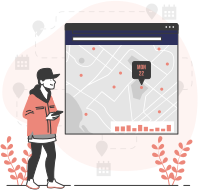
Illustration: viewings and neighbourhoods

They visit for you

Filmed viewings, an honest report, walks through the neighbourhood at different hours. You no longer need to travel: your home finder does it all for you remotely.

Illustration: price negotiation

They assess and negotiate

Local rent levels, service charges, the state of the property, lease length. Concrete arguments to negotiate the terms — on your side, this time.

Illustration: securing the application

They secure the application

Locally required documents, guarantor, translation, review of the lease and the inventory. This is where foreign applications most often fall apart.

Illustration: saving time when settling in

They stay with you until you're settled in

Inventory, key handover, utilities set-up, first admin steps. Your home finder doesn't disappear once the contract is signed: they remain a valuable contact for any questions about life on the ground.

What you get

Safety

No scams, verified homes, secure payment.

Speed

A home found in a few weeks.

Human

Guided by a local home finder, in your language.

Peace of mind

Everything handled remotely, stress-free.

How it works

Four steps, from your request to the signed lease.

1

We get acquainted

You start by filling in a short questionnaire to tell us a bit more about your search.

2

Free first call

One of our home finders then takes over and contacts you for a free first conversation. The goal? Understanding exactly what you need.

3

The adventure begins

If it clicks and you want to move forward, you receive a tailored quote. Once approved, the search begins!

4

Heading to your new home

Your home finder searches for you, shares their finds, stays with you through to signing the lease — all that’s left is packing your bags.

+5000
clients supported since 2023
+220
cities covered worldwide
+60
countries covered
+250
home finders
Algiers
Algiers is the capital and largest city of Algeria, situated on the Bay of Algiers along the Mediterranean coast. The city's rental market is active and competitive, with premium neighbourhoods such as Hydra, El Biar, and Ben Aknoun commanding the highest rents and attracting diplomatic staff and international workers. Long-term leases are typically formalised before a notary in Arabic, and landlords often require a security deposit of one month's rent alongside several months' advance payment. The metro and tramway network, combined with proximity to institutions such as USTHB university in Bab Ezzouar, makes Algiers a practical base for both professionals and students. Rents have been rising at 6% to 10% year-on-year in local currency as of early 2026, reflecting sustained demand and limited quality housing supply in central areas (source: Sands of Wealth, January 2026).

Renting long-term in Algiers: the market is competitive, especially in expat-favoured neighbourhoods like Hydra, El Biar, and Ben Aknoun. Rents range from around 25,000 DZD/month for a studio in outer districts to over 200,000 DZD/month for a large furnished apartment in premium areas. Leases are formalised before a notary in Arabic — always get a certified translation. Expect to pay a one-month security deposit and potentially several months' rent in advance. Utilities (Sonelgaz for electricity/gas, SEAAL for water) are billed separately to the tenant. Peak demand runs August–October and January–February, so plan your search accordingly.

Algiers, the Algerian capital, offers a distinctive blend of Mediterranean coastal living, North African culture, and a dynamic urban environment. Situated on the Bay of Algiers, the city enjoys a mild climate and a rich architectural heritage that mixes Ottoman, French colonial, and contemporary styles.

For long-term residents, Algiers provides access to a wide range of amenities: modern infrastructure including a metro system and tramway network, international schools, a growing restaurant and café scene, and proximity to beaches along the Algerian Riviera. The city is home to numerous embassies, multinational company offices, and universities, making it a hub for both professional and academic life.

Neighbourhoods such as Hydra, El Biar, and Ben Aknoun offer a residential atmosphere with green spaces, good security, and proximity to international schools and diplomatic missions — factors that make them particularly attractive to expatriate families. More central areas like Alger-Centre and Telemly appeal to young professionals seeking urban convenience and neighbourhood life.

While the city presents practical challenges — including traffic congestion, occasional utility interruptions, and a tight rental market in premium areas — many long-term residents value Algiers for its affordability compared to Western European capitals, its warm social culture, and its strategic position as a gateway to the African continent.

Day-to-day life in Algiers combines the rhythms of a large North African capital with Mediterranean influences. The city is served by a metro network and tramway system, making it possible to get around without a car, though many residents — particularly in the western suburbs — rely on private vehicles. Public transport fares are affordable, with a monthly metro pass costing around 10 USD (source: Expat Exchange, 2024–2025).

Grocery shopping is accessible through a mix of local markets (marchés), supermarkets, and neighbourhood shops. Local produce is inexpensive, while imported goods carry a significant premium. Eating out ranges from very affordable local restaurants to mid-range establishments; a meal at an inexpensive restaurant costs approximately 4–7 USD (source: Expat.com Algiers Guide, 2024–2025).

Algiers has a range of international and bilingual schools, making it a viable long-term base for families. Healthcare is available through both public hospitals and private clinics; expatriates typically opt for private facilities and international health insurance. The city's cultural life includes cinemas, theatres, the Musée National des Beaux-Arts d'Alger, and a lively café culture.

Practical installation steps include registering with local utility providers (Sonelgaz for electricity and gas, SEAAL for water), obtaining a residence permit if required, and opening a local bank account. French is widely spoken alongside Arabic, which eases daily interactions for Francophone residents.

The long-term rental market in Algiers is characterised by strong and persistent demand, particularly in central and premium neighbourhoods. Rental vacancy in the city sits at around 6% to 9% overall, tightening to approximately 4% to 7% in sought-after areas such as Hydra and Ben Aknoun (source: Sands of Wealth, January 2026).

Demand is driven by a combination of local households, corporate tenants, diplomatic missions, and international workers. Properties near major universities — such as USTHB in Bab Ezzouar — typically rent out within 2 to 3 weeks, faster than the Algiers average of 20 to 45 days (source: Sands of Wealth, January 2026). Peak rental demand occurs between August and October and again in January and February, aligned with academic and corporate relocation cycles.

Rents in Algiers have been growing at 6% to 10% year-on-year in local currency as of early 2026, outpacing the city's historical average and reflecting limited quality housing supply in central areas (source: Sands of Wealth, January 2026). The market for furnished apartments is particularly active in expat-heavy neighbourhoods, where furnished units command a 15% to 30% premium over unfurnished equivalents.

Algiers is a city of distinct neighbourhoods, each with its own character and rental profile. The choice of district has a significant impact on both the monthly rent and the quality of daily life.

Hydra is the most prestigious residential area in Algiers, home to over thirty embassies, corporate headquarters, international nursery schools, and a wide range of shops. It is the top choice for diplomatic staff and senior expatriates. Rents here are among the highest in the city, reaching up to 200,000 DZD/month for a well-appointed apartment (source: Expat.com Algiers Guide).

El Biar offers a similarly upscale residential environment with a more urban feel, colonial villas, cafés, and cultural venues including an Alliance Française. Rents are slightly lower than in Hydra for comparable properties, typically between 120,000 and 200,000 DZD/month for a furnished two-bedroom unit (source: jarniascyril.com). Note that traffic congestion is significant due to the presence of many foreign embassies.

Ben Aknoun borders Hydra and shares its status as part of the diplomatic belt of the capital. It is favoured by expat families seeking a quieter residential atmosphere.

Dely Ibrahim and Chéraga are family-friendly western suburbs offering more space and quieter streets. A two-bedroom apartment here typically rents for 60,000 to 150,000 DZD/month.

Alger-Centre and Telemly attract young professionals and those who prefer urban convenience. One-bedroom rents in these areas range from approximately 40,000 to 65,000 DZD/month (source: Sands of Wealth, January 2026).

Bab Ezzouar and Bordj El Kiffan are more affordable outer districts, popular with students and budget-conscious tenants, with studios available from around 25,000 DZD/month.

Algiers is one of the more expensive rental markets in North Africa, particularly in the neighbourhoods favoured by expatriates and diplomatic staff. Rents have been rising steadily, with year-on-year growth estimated at 6% to 10% in local currency as of early 2026 (source: Sands of Wealth, January 2026). Demand is consistently strong in central and premium areas, keeping vacancy rates in Hydra and Ben Aknoun at roughly 4% to 7%.

For long-term tenants, it is important to budget not only for the monthly rent but also for a security deposit equal to one month's rent, potential agency fees, and notary costs associated with formalising the lease. Landlords in Algeria sometimes request several months' rent in advance — in some cases up to a full year — so prospective tenants should plan their cash flow accordingly (source: Expat Arrivals, Expat.com).

Rental prices in Algiers vary significantly depending on the neighbourhood, apartment size, and level of furnishing. Studios and one-bedroom apartments in more affordable outer districts such as Bab Ezzouar or Bordj El Kiffan typically start from around 25,000 DZD/month, while the same type of unit in central areas like Alger-Centre or Telemly ranges from approximately 40,000 to 65,000 DZD/month (source: Sands of Wealth, January 2026).

Two-bedroom apartments in mainstream neighbourhoods generally fall between 55,000 and 90,000 DZD/month. In premium expat-favoured areas such as Hydra or Ben Aknoun, monthly rents for a comparable unit can reach 140,000 DZD or more (source: Sands of Wealth, January 2026). Furnished apartments command a premium of roughly 15% to 30% over unfurnished equivalents, particularly in Hydra and El Biar.

Amenities such as secure parking and reliable heating can add 10,000 to 20,000 DZD/month to the asking rent. Utilities — electricity and gas via Sonelgaz, and water via SEAAL — are generally paid separately by the tenant on top of the base rent.

When searching for a long-term rental in Algiers, several common mistakes can complicate the process or lead to unexpected costs:

  • Not having the lease translated: Lease agreements in Algeria are typically drawn up in Arabic. Signing without a certified translation can leave tenants unaware of key obligations or penalty clauses (source: Expat Arrivals).
  • Underestimating upfront costs: Beyond the first month's rent, tenants should expect a security deposit of one month's rent, possible agency fees, and notary fees for formalising the contract. Some landlords request up to a year's rent in advance.
  • Ignoring utility arrangements: Electricity and gas (Sonelgaz) and water (SEAAL in Algiers) are billed separately to the tenant. Failing to clarify what is included in the rent can lead to budget surprises.
  • Choosing a neighbourhood without visiting first: Traffic congestion is severe in areas like El Biar due to embassy density. Visiting at different times of day helps assess commute times and daily practicality.
  • Searching only online: Word of mouth and local real estate agencies remain key channels in Algiers. Relying solely on online listings may mean missing quality properties that are never publicly advertised.
  • Signing without checking water supply reliability: Water supply cuts are reported in some Algiers districts. Verifying the building's water storage and supply history before signing is advisable.
  • Start your search before arriving: Quality rentals in Hydra, El Biar, and Ben Aknoun are in high demand and can be taken within days. Begin your search on platforms like Ouedkniss and through local agencies before your move.
  • Plan for upfront costs: Budget for a security deposit (one month's rent), potential agency fees, notary fees, and possibly several months' rent in advance. Having sufficient liquidity before signing is essential.
  • Always get a certified translation of the lease: Contracts are drawn up in Arabic. A certified translation protects you and ensures you fully understand your obligations before signing.
  • Visit at peak traffic hours: Algiers traffic can be severe, especially around El Biar and the embassy belt. Visit your shortlisted properties during morning and evening rush hours to assess real commute times.
  • Check water supply: Water cuts are reported in some districts. Ask the landlord or building manager about water storage capacity and supply reliability before committing.
  • Negotiate furnishing and included charges: Clarify upfront whether the rent includes furniture, building charges, or any utilities. Furnished apartments cost 15% to 30% more but can save on setup costs.
  • Time your search strategically: Peak demand in Algiers runs from August to October and in January–February. Searching outside these windows may give you more negotiating room.
  • Use local networks: Expat communities, company HR departments, and word of mouth remain highly effective ways to find quality rentals that are never publicly listed.

Finding a long-term rental in Algiers can be a complex process, especially for newcomers unfamiliar with the local market, the Arabic-language lease system, and the specific dynamics of each neighbourhood. Remoters provides personalised rental search support to help you identify the right apartment in the right district, navigate the lease formalisation process, and avoid the most common pitfalls — from upfront payment expectations to utility setup with Sonelgaz and SEAAL.

Whether you are relocating for work, joining a diplomatic mission, or settling in Algiers independently, Remoters can connect you with vetted local experts who know the Hydra, El Biar, Ben Aknoun, and Alger-Centre rental markets in depth.

What our clients say

Gaelle
Marie
Gaelle
Gaëlle is really professional and super nice, I recommend her.
Sandrine
Giovanni
Sandrine
A chance to have been able to obtain the expertise of the Remoters team. Commitment, knowledge of the market, attentive and respectful of criteria are to be highlighted in an environment where the market is tight. An achievement and delighted with this collaboration. We can finally, through the qualities deployed by Sandrine, only recommend the Remoters structure. Thank you to you,
Gabriel
Salem
Gabriel
It was a good experience with them, well accompanied, it was really a pleasure even when we encountered problems we found solutions without stress
Jean Christophe
Vlad
Jean Christophe
Super satisfied. Very efficient and nice agent 👍😀 …

They search for you on Darjadida, Darrna, Lkeria and Ouedkniss, with letting agents and landlords, view homes and send you photos or video with detailed feedback. Depending on the quote, they help prepare your file, negotiate the payment terms and review the lease.

The first conversation and the quote are free and without commitment: the home finder writes their price there. The rent advance and the security deposit remain yours to pay.

Expect to pay six months to a year of rent in advance, plus a security deposit of one month's rent. For a two-bedroom flat at around 60,000 DZD a month, that is a sum to have ready before you even start viewing.

Add service charges, caretaking and any agency fees. As rent is freely agreed between the parties, you can negotiate the size of the advance or how often payments are made.

On a tight budget, look at Kouba or Bab Ezzouar, close to the universities and the airport, where rents fall to between 40,000 and 80,000 DZD a month. Bab El Oued, working-class and historic, also stays moderate.

Hydra, El Biar and Ben Aknoun, residential and family-friendly, reach 120,000 to 180,000 DZD for 100 m². Alger-Centre and Telemly are expensive, but served by the metro and tram.

Insist on a written contract: in Algeria, a verbal lease has no legal value and gives you no rights. It must state the term, the rent, the security deposit and who is responsible for maintenance.

Ask whether water, electricity and upkeep are included in the advertised rent, and carry out a joint inventory, in writing and with photos, when you move in and when you leave.