
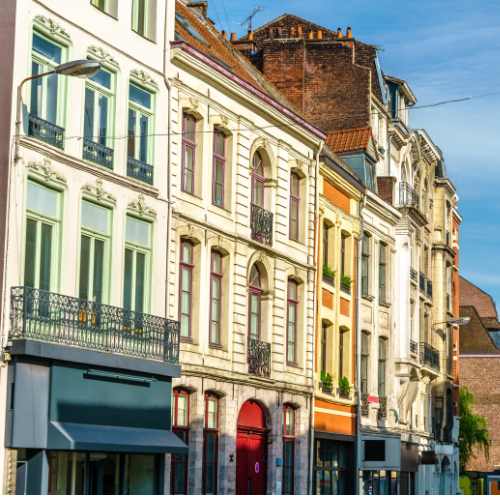



Buying property to Timisoara with a dedicated expert

Drapeau du Royaume-Uni avec des bandes rouges, blanches et bleues en forme de croix et de diagonales.
An English-speaking Home Finder who lives there
Emoji de détective avec chapeau, loupe et cheveux gris.
Sees the good places before they hit the market
Médaille d'or avec un ruban rouge indiquant la première place.
Fights for your offer, not the seller's
Symbole dollar vert sur fond blanc.
The real local price, not the foreigner tax

What kind of property are you looking for to Timisoara?

Describe your project, one of our real estate hunters will look for the ideal property for you

Why work with a property hunter?

Time spent by the buyer
Symbole d'information en cercle bleu foncé sur fond transparent.
When you search alone, about 85% of the time is spent on research, and 15% on visits. With a hunter, you only do the visits
Icône de fermeture (croix)
Access to the off-market
Purchase price
Virtual pre-visits
Secure formalities
Symbole d'information en cercle bleu foncé sur fond transparent.
Customer satisfaction
Only 20% of satisfied buyers according to the 2018 Crédit Foncier study. For its part, Remoters gets a score of 4/5 or 5/5 in 95% of cases
Icône de fermeture (croix)

Buying alone abroad

140 hours
Icône rouge de croix X sur fond blanc.
Very difficult negotiation
Icône rouge de croix X sur fond blanc.
20%

Buying  with Remoters

20:00
14% discount obtained on average
95%
Photo of Aude, home finder in Timisoara

Aude, or another expert property hunter based to Timisoara, will personally manage your search.

Guide local de l’achat immobilier

Acheter un bien immobilier

Buying property in Timișoara is a structured process governed by Romanian civil law, with a mandatory notary at the centre of every transaction. Here is a concise overview for buyers new to the market.

The market: Timișoara is Romania's westernmost major city, a tech and industrial hub with over 40,000 university students and a growing international community. Average purchase prices reached approximately 1,700 EUR/sqm in December 2024, with new builds at around 1,994 EUR/sqm — significantly more affordable than Bucharest or Cluj-Napoca (Romanian Real Estate Market Analysis, 2025).

Who can buy: EU citizens and Romanian nationals may purchase property freely. Non-EU nationals may buy apartments and buildings without restriction; agricultural land and forests are subject to specific legal conditions.

The process in brief:

  1. Search for a property and agree on a price with the seller.
  2. Conduct due diligence: verify the title via a Land Book extract (Cartea Funciară) from ANCPI.
  3. Sign a preliminary contract (antecontract) before a notary and pay a deposit of 5–10% of the purchase price.
  4. Finalise financing if required (mortgage LTV for non-residents: 60–75%).
  5. Sign the final authenticated sale-purchase deed before a notary.
  6. The notary registers the transfer with ANCPI; the buyer receives title.

Total acquisition cost: Budget an additional 2% to 4% of the purchase price for notary fees, land registry registration, and administrative costs. Agent commission is typically 2–3% per party.

Key risk to manage: Always verify the Land Book extract before signing any agreement to confirm the seller's ownership and check for mortgages, liens, or legal disputes registered against the property.

Prix par type de bien

Fourchettes de prix selon la surface, la typologie et l’usage du logement.

The following purchase price ranges are based on asking price data from Imobiliare.ro, PropertyBook, and the Romanian Real Estate Market Analysis (2025). All prices are indicative and reflect market conditions as of late 2024 to early 2025. Actual transaction prices may differ.

  • Studio apartments (garsonieră): Entry-level purchase prices for studios in Timișoara typically start from around 50,000 EUR to 70,000 EUR for older stock in peripheral locations, rising to over 90,000 EUR for renovated or centrally located units.
  • 2-room apartments (1 bedroom): The most actively traded segment. Prices range from approximately 80,000 EUR to 130,000 EUR depending on location, building age, and condition. New-build 2-room apartments in well-located complexes can exceed 130,000 EUR.
  • 3-room apartments (2 bedrooms): Prices typically range from 120,000 EUR to 200,000 EUR for existing stock, with new-build units in premium locations reaching or exceeding 200,000 EUR. A 2-room apartment in a central new development can approach or exceed 150,000 EUR (Tion/Imobiliare.ro, 2024).
  • 4-room apartments and larger (3+ bedrooms): Prices for larger apartments in new central developments can exceed 300,000 EUR (Tion/Imobiliare.ro, 2024). Premium or penthouse units in the historic centre command higher prices.
  • Houses and villas: Detached and semi-detached houses in Timișoara and surrounding communes vary widely. Entry-level houses in peri-urban areas start from around 150,000 EUR, while larger villas in established residential zones can reach several hundred thousand euros.
  • Price per sqm benchmarks (December 2024):
    • Overall average: approximately 1,700 EUR/sqm (+12.8% year-on-year)
    • New builds: approximately 1,994 EUR/sqm
    • Existing stock: approximately 1,659 EUR/sqm
    (Source: Romanian Real Estate Market Analysis, 2025, based on Imobiliare.ro data)

Timișoara remains more affordable than Bucharest and Cluj-Napoca, making it one of Romania's most accessible major cities for property purchase.

Prix et profils des quartiers

Les secteurs à comparer selon le budget, le mode de vie et le projet d’achat.

Timișoara's residential purchase market is divided into distinct neighbourhoods, each with its own character, price level, and buyer profile. The following overview is based on market data from Imobiliare.ro, PropertyBook, and the Romanian Real Estate Market Analysis (2025).

  • Cetate (City Centre / Historic Centre): The historic core of Timișoara, centred around Piața Unirii and Piața Victoriei. Characterised by Austro-Hungarian architecture, cultural institutions, and high walkability. Purchase prices are among the highest in the city, reflecting the prestige and limited supply of central stock. Attracts professionals, expats, and buyers seeking heritage properties or renovated apartments. New-build supply is very limited; most transactions involve existing or refurbished stock.
  • Fabric: A historic working-class district undergoing significant regeneration, including the flagship mixed-use redevelopment of the former slaughterhouse by Țiriac Imobiliare (17 buildings on approximately 5 hectares). Increasingly popular with young professionals and investors attracted by its cultural identity and improving infrastructure. Purchase prices are rising but remain below the city centre premium.
  • Iosefin and Elisabetin: Established residential neighbourhoods with a mix of pre-war villas, interwar apartment buildings, and some new developments. Popular with families and buyers seeking a quieter urban environment close to the centre. Identified as strategic investment zones with strong growth potential (Romanian Real Estate Market Analysis, 2025).
  • Circumvalatiunii: A well-connected mid-ring neighbourhood with a broad range of apartment stock. Purchase prices vary widely, from approximately 1,185 EUR/sqm to over 3,166 EUR/sqm depending on the building age, condition, and floor (PropertyBook data). Popular with a broad buyer profile due to its accessibility and range of price points.
  • Calea Aradului: A major arterial corridor to the north-west of the city, home to several large new residential complexes. Attracts buyers seeking modern apartments with parking and amenities, though the location is more car-dependent than central neighbourhoods.
  • Dumbrăvița and peri-urban communes: The suburban commune of Dumbrăvița, bordering Timișoara to the north, has seen rapid residential development and is popular with families seeking houses or larger apartments at more accessible prices. Moșnița Nouă and the Albina area also show strong development activity with still-accessible land prices (Romanian Real Estate Market Analysis, 2025).

Évolution du marché immobilier

Dynamique des prix, niveau de demande et biens les plus recherchés.

Timișoara's residential property purchase market has demonstrated sustained price growth over recent years, supported by strong local economic fundamentals and growing buyer demand.

According to data from Imobiliare.ro reported by NOCT (2025), the average asking price for new apartments in Timișoara reached 1,674 EUR/sqm + VAT in the first half of 2024, representing a 7% year-on-year increase. By December 2024, the overall average apartment purchase price had risen to approximately 1,700 EUR/sqm, a 12.8% year-on-year gain, with new-build prices reaching 1,994 EUR/sqm and existing stock averaging 1,659 EUR/sqm (Romanian Real Estate Market Analysis, 2025).

Transaction volumes in Timiș County remained dynamic, with 10,584 residential units sold in 2024, a 3.61% increase compared to 2023 (Romanian Real Estate Market Analysis, 2025). This contrasts with a national moderation: according to ANCPI transaction statistics, Romania recorded 159,879 residential sales nationwide in 2025, a 5.4% year-on-year decline.

Timișoara's price growth outpaced several other major Romanian cities in 2024. Apartment prices rose by approximately 8.7% year-on-year as of May 2024, compared to 18% in Brașov, 11% in Bucharest, and 10% in Cluj-Napoca (Imobiliare.ro data, via Ziarul Financiar / Romania Insider, 2024).

Key structural drivers sustaining purchase demand include the city's strong IT and industrial employment base, its status as the 2023 European Capital of Culture, ongoing infrastructure investment, and its strategic location near the Hungarian and Serbian borders. The city remains more affordable than Bucharest or Cluj-Napoca, which continues to attract both domestic and international buyers.

Looking ahead, the broader Romanian market entered an adjustment phase in 2025, with slower GDP growth (forecast at around 0.6% for 2025), elevated inflation, and higher financing costs moderating activity. However, forecasts for 2026–2027 point to a gradual recovery (Romania Real Estate Market Outlook 2025, CBRE/JLL).

Budget total et fiscalité

Prix d’acquisition, taxes, honoraires et dépenses à prévoir en complément.

When purchasing property in Timișoara, the acquisition price is only part of the total budget. Buyers must account for a set of mandatory costs and taxes on top of the agreed sale price.

  • Notary fees: Calculated as a percentage of the transaction value according to the notary fee grid set by the Romanian Ministry of Justice (Order 177/C/2024). As a general benchmark, buyers typically budget around 1% of the purchase price for notary authentication of the sale-purchase agreement.
  • Land registry (OCPI/ANCPI) registration fee: Approximately 0.15% of the property value for transfers to individuals, payable to the National Agency for Cadastre and Land Registration.
  • VAT on new builds: A reduced VAT rate of 9% applies to new residential properties with a useful area not exceeding 120 sqm and a value below 600,000 RON (excluding VAT). The standard rate of 19% applies to all other new-build transactions from a legal entity. VAT is included in the sale price and borne by the buyer.
  • Income tax on the seller (informational): Under the Romanian Fiscal Code, the seller pays income tax on the transfer: 3% of the transaction value if the property was owned for fewer than three years, or 1% if owned for three years or more. This is collected by the notary at signing and does not fall on the buyer, but it may influence price negotiations.
  • Mandatory property insurance (PAD): All property owners in Romania must hold a mandatory natural disaster insurance policy (PAD), which is a condition for mortgage approval and a legal obligation for all owners.
  • Mortgage-related costs (if applicable): If financing is used, an appraisal report and a mortgage registration fee at the notary are also required.

As a practical rule, buyers in Timișoara should budget an additional 2% to 4% of the purchase price to cover all acquisition costs beyond the agreed sale price (notary fees, registration, insurance, and administrative charges).

Étapes de l’acquisition

Le déroulement du projet depuis la définition des critères jusqu’à la remise des clés.

Buying property in Timișoara follows a structured legal process governed by Romanian civil law. All property transfers must be authenticated by a licensed notary public, who also submits the ownership change to the national Land Book system managed by ANCPI.

  1. Property search and market analysis: Identify suitable properties through local real estate portals (Imobiliare.ro, Storia.ro, PropertyBook) or via a licensed real estate agent. Visits are arranged directly with the seller or agent.
  2. Price negotiation and verbal agreement: Once a property is selected, the buyer and seller agree on the purchase price and key conditions. A written offer may be submitted at this stage.
  3. Due diligence on title and legal status: Before any commitment, the buyer (or their lawyer) requests a Land Book extract (extras de carte funciară) from ANCPI to verify ownership, check for mortgages, liens, easements, or any other encumbrances registered against the property.
  4. Preliminary contract (antecontract): A legally binding preliminary agreement is signed before a notary. The buyer pays a deposit of typically 5% to 10% of the purchase price. If the buyer withdraws without cause, the deposit is forfeited; if the seller withdraws, they must repay double the deposit amount.
  5. Final financing arrangements: If a mortgage is required, the buyer finalises the bank loan application and obtains a formal approval. The bank orders an independent property appraisal.
  6. Signing the final sale-purchase agreement (contract de vânzare-cumpărare): Both parties sign the authenticated deed before the notary. The notary collects all applicable taxes and fees at this stage. The balance of the purchase price is transferred.
  7. Land Book registration: The notary submits the transfer to the local OCPI office (ANCPI). The new ownership is registered in the Land Book (Cartea Funciară), completing the legal transfer of title.
  8. Key handover and post-completion formalities: The buyer receives the keys and all property documents. Utility contracts are transferred, and the new owner registers with the local municipality for property tax purposes.

Documents nécessaires

Les justificatifs à préparer pour acheter et financer un bien en Italie.

To complete a property purchase in Timișoara, both the buyer and the seller must provide a set of documents. All documents must be presented to the notary public who authenticates the final sale-purchase agreement.

Documents required from the buyer:

  • Valid identity document (national ID card for Romanian citizens; passport for foreign nationals)
  • Tax identification number (CIF/CUI) — foreign nationals must obtain one from the National Agency for Fiscal Administration (ANAF) prior to signing
  • Marriage certificate or proof of civil status (if applicable, to establish joint ownership rights)
  • Bank transfer confirmation or proof of funds for the purchase price
  • Mortgage offer or loan approval letter (if financing the purchase)

Documents required from the seller:

  • Valid identity document
  • Original title deed(s) proving ownership chain
  • Authenticated Land Book extract (extras de carte funciară pentru autentificare) issued by ANCPI — requested by the notary
  • Cadastral documentation and floor plan (documentație cadastrală)
  • Energy performance certificate (certificat de performanță energetică)
  • Certificate confirming no outstanding local taxes or charges on the property (certificat fiscal), issued by the local municipality
  • Homeowners' association clearance certificate (for apartments), confirming no outstanding maintenance fees
  • Building permit and reception certificate (autorizație de construire and proces-verbal de recepție) for new builds or extensions

The notary will independently verify the Land Book status and block the cadastral number for ten business days after issuing the authentication excerpt, preventing duplicate registrations during the transaction process.

Vérifications juridiques et techniques

Contrôles du titre, du cadastre, de la conformité et de l’état réel du bien.

Thorough legal and technical due diligence is essential before committing to a property purchase in Timișoara. Romanian law does not impose a mandatory pre-purchase survey, but professional verification is strongly recommended.

Legal verifications:

  • Land Book extract (extras de carte funciară pentru autentificare): The most critical document. Requested from ANCPI (via the notary or directly), it confirms the registered owner, the property's cadastral identifiers, and any encumbrances — mortgages, liens, easements, legal disputes, or seizure orders — registered against the property. Always request an authenticated excerpt (not just an information excerpt) to confirm current ownership status.
  • Ownership chain verification: A lawyer should review the full history of title transfers to confirm the validity of each past transaction and identify any gaps or irregularities in the ownership chain.
  • Restitution and nationalisation claims: Properties in Romania — particularly in historic city centres such as Cetate — may be subject to restitution claims from former owners whose properties were nationalised during the communist era. A legal check for pending or potential claims is essential for older stock.
  • Building permit and reception certificate: For new builds or properties with extensions, verify that a valid building permit (autorizație de construire) was issued and that the construction was formally received (proces-verbal de recepție). Unauthorised constructions cannot be legally transferred.
  • Municipal tax clearance certificate (certificat fiscal): Confirms that the seller has no outstanding property taxes or local charges. Issued by the Timișoara municipality.
  • Homeowners' association clearance (for apartments): Confirms no unpaid maintenance fees or association debts that could transfer to the new owner.

Technical verifications:

  • Energy performance certificate (certificat de performanță energetică): Legally required for all property sales in Romania. Provides an energy efficiency rating for the building.
  • Structural and condition survey: Not legally mandatory but strongly advisable, particularly for older buildings, properties in historic districts, or those that have undergone modifications. Engaging a licensed structural engineer or building surveyor to assess the condition of the structure, roof, plumbing, and electrical systems can prevent costly surprises after purchase.
  • Urban planning certificate (certificat de urbanism): Useful for buyers planning renovations or extensions, as it confirms the permitted uses and building regulations applicable to the plot.

Engaging an independent Romanian lawyer — separate from the notary — to conduct title due diligence and review all contracts before signing is strongly recommended, particularly for foreign buyers unfamiliar with Romanian property law.

Financement des non-résidents

Apport, crédit, justificatifs et contraintes propres aux acquéreurs étrangers.

Non-resident and foreign buyers can access mortgage financing in Romania, though conditions are more restrictive than for residents with documented local income.

Mortgage availability: As of early 2026, Romanian banks do offer mortgage loans to foreign nationals. Typical loan amounts range from approximately 100,000 RON to 500,000 RON (roughly 20,000 EUR to 100,000 EUR), though larger amounts are available depending on the borrower's profile (Investropa, 2026).

Loan-to-value (LTV) ratios: Foreign borrowers typically face more conservative LTV ratios of 60% to 75%, meaning a minimum down payment of 25% to 40% of the purchase price is generally required (Investropa, 2026).

Mortgage rates: For RON-denominated loans, rates for foreign borrowers typically range from 5.5% to 7.5% depending on the borrower's profile and the lending institution (Investropa, 2026).

Required documentation for non-residents:

  • Valid passport and proof of identity
  • Romanian tax identification number (obtained from ANAF before signing)
  • Proof of stable income — preferably in RON or EUR — including employment contracts, payslips, or business documentation
  • Clean credit history and credit report from the country of residence
  • Bank statements (typically covering the last 6 to 12 months)
  • Independent property appraisal report commissioned by the bank

Government-backed programmes: The Prima Casă (First Home) government programme, designed to assist first-time buyers with preferential interest rates and reduced down payment requirements, may be accessible to qualifying foreign nationals purchasing in Romania.

EU citizens vs. non-EU nationals: EU citizens benefit from the same property ownership rights as Romanian nationals. Non-EU nationals may purchase apartments and buildings freely; however, acquisition of agricultural land or forests by non-EU nationals remains subject to specific legal restrictions under Romanian law.

It is strongly recommended that non-resident buyers engage a Romanian lawyer and a financial adviser familiar with cross-border mortgage structuring before committing to a purchase.

Investissement et potentiel locatif

Demande locative, loyers, rendement indicatif et règles à anticiper.

Timișoara is one of Romania's most dynamic cities for property investment, combining affordable purchase prices relative to Western European markets with a structurally strong demand base.

Key investment drivers:

  • Economic and employment base: Timișoara hosts a strong IT sector, multinational industrial and logistics companies, and a large university population of over 40,000 students, generating sustained demand from working professionals and students (Real Estate Investment Insights for Timișoara).
  • European Capital of Culture 2023: The designation accelerated infrastructure investment and raised the city's international profile, supporting medium-term property value appreciation.
  • Strategic location: Fast rail and road connections to Hungary, Serbia, and Western Europe make Timișoara attractive to cross-border buyers and international companies.
  • Relative affordability: With average purchase prices around 1,700 EUR/sqm (December 2024, Romanian Real Estate Market Analysis 2025), Timișoara remains significantly more affordable than Bucharest or Cluj-Napoca, offering a lower entry point for investors.

Gross rental yields: According to Numbeo data (October 2025), gross rental yields in Timișoara stand at approximately 3.71% in the city centre and 3.99% outside the centre. The national average gross rental yield for Romania was 6.33% in Q3 2025 (Global Property Guide, 2025), reflecting that Timișoara's central market is more mature and price-driven.

Strategic investment neighbourhoods: The most attractive areas for property investment include the historic Centre (Cetate), Fabric, Iosefin, Elisabetin, and the peri-urban commune of Dumbrăvița. Emerging zones such as Moșnița Nouă and the Albina area also show strong residential development potential, with active construction and still-accessible land prices (Romanian Real Estate Market Analysis, 2025).

Important note: Gross rental yields are indicative figures. Net returns will be lower after accounting for property management costs, maintenance, vacancy periods, and applicable income taxes. Buyers should conduct their own financial analysis before purchasing for investment purposes.

Méthode de négociation

Analyse du juste prix et arguments employés pour défendre l’offre d’achat.

Negotiating a property purchase in Timișoara requires an understanding of local market dynamics, seller expectations, and the legal framework governing preliminary agreements.

Market context: Timișoara's purchase market has seen consistent price growth, with asking prices rising approximately 12.8% year-on-year by December 2024 (Romanian Real Estate Market Analysis, 2025). In a rising market, sellers are generally less inclined to accept significant discounts, particularly for well-located or new-build properties. However, negotiation remains possible, especially for older stock or properties that have been listed for an extended period.

Practical negotiation approach:

  • Research comparable sales: Before making an offer, review recent transaction prices for similar properties in the same neighbourhood using portals such as Imobiliare.ro or Storia.ro. This provides an objective basis for your offer.
  • Identify the seller's motivation: Sellers who need to close quickly (relocation, inheritance, financial pressure) are typically more open to price negotiation than those testing the market.
  • Make a written offer: Submitting a formal written offer signals seriousness and creates a clear record of the proposed terms (price, payment timeline, conditions).
  • Negotiate beyond price: If the seller is firm on price, consider negotiating on other terms: inclusion of furniture or appliances, a longer or shorter completion timeline, or the seller covering certain costs.
  • Use the antecontract as a commitment tool: Once a price is agreed, the preliminary contract (antecontract) signed before a notary locks in the terms. The deposit (typically 5–10% of the purchase price) is legally binding: the buyer forfeits it if they withdraw without cause; the seller must repay double if they withdraw.
  • Engage a local agent or lawyer: A local professional with knowledge of recent transaction prices in the target neighbourhood can provide significant negotiating leverage and help avoid overpaying.

New-build purchases: Developers in Timișoara rarely discount list prices on new developments, but may offer incentives such as a parking space, storage unit, or fitted kitchen as part of the deal. Negotiation on payment schedules (staged payments during construction) is more common than price reductions.

Honoraires et contenu de la prestation

Mode de rémunération, services inclus et éventuels frais complémentaires.

When buying property in Timișoara, buyers typically work with a real estate agent and a notary public. Understanding the scope and cost of each professional's services is essential for budgeting the total acquisition cost.

Real estate agent commission:

  • In Romania, real estate agents typically charge a commission of 2% to 3% of the transaction price, billed separately to both the buyer and the seller (Bucharestian.com / The Real Estate Guy).
  • The commission is negotiable and is usually agreed upon before the property search begins or at the time of signing the mandate.
  • The agent's service typically covers: property search and selection, organisation of viewings, market price analysis, negotiation support, coordination with the notary, and assistance with document collection.
  • There is no statutory regulation of agent fees in Romania; always confirm the commission rate and scope of service in a written mandate agreement before engaging an agent.

Notary public fees:

  • The notary's fee is calculated as a percentage of the transaction value according to the fee grid set by the Romanian Ministry of Justice (Order 177/C/2024). As a general benchmark, buyers budget approximately 1% of the purchase price for notary authentication of the sale-purchase agreement.
  • The notary's service includes: verification of the parties' identities, review of the Land Book extract, authentication of the preliminary contract and the final deed, collection of applicable taxes, and submission of the ownership transfer to ANCPI for Land Book registration.
  • VAT at 19% is added to the notary's fee.

Legal adviser (optional but recommended):

  • Engaging an independent Romanian lawyer for title due diligence, contract review, and transaction coordination is not legally required but is strongly advisable, particularly for foreign buyers. Legal fees vary by firm and scope of work.

Property appraisal:

  • Required by banks when financing the purchase with a mortgage. The cost varies depending on the property type and size.

Préparez votre achat immobilier

Décrivez votre projet, votre budget et vos critères. Un chasseur local peut rechercher les biens, organiser les visites, vérifier les informations et vous accompagner pendant la négociation.

Décrire mon projet

How does it work?

1

Your home finder researches the ideal property based on your criteria.

2
They conduct property viewings, some on your behalf, others with you in person or remotely.
3
They negotiate the price and terms on your behalf. The hunter is still at 100% on the buyer's side.
4
They assist you until all documents are signed
5
It accompanies you until the signature of all documents, to avoid pitfalls.
Couple allongé sur le lit, pieds contre la tête de lit, s'enlaçant et regardant l'un l'autre.

Our hunters around the world!

Remoters continues to grow!
We are recruiting new hunters, do not hesitate to apply.
Carte du monde en trois panneaux avec des marqueurs rouges indiquant des emplacements en Amériques, Europe, Afrique et Asie.I am applying

FAQ

Une main portant un bracelet noir pointe sur l'écran d'un ordinateur portable tandis qu'une autre main tape.

Why choose an English-speaking home finder to Timisoara?

Searching for a property abroad requires time, organization, and a good understanding of local regulations, which may differ from those in France (notaries, land registry, taxation, etc.). A property hunter helps simplify the process by managing the search, selecting relevant properties, organizing viewings, and reviewing legal documents.

They work closely with the buyer to define clear criteria, identify suitable opportunities, and negotiate the best possible price. They may attend property visits on the buyer’s behalf or accompany them during a stay in Istanbul.

Thanks to their local network, the home finder also facilitates the legal and logistical steps of the purchase. From the initial search to the final signature, they provide tailored support and help ensure a smooth and secure buying experience.

A person in a checked shirt using a blue calculator on a wooden desk.
How much does the Remoters home finder service cost?

Remoters works with home finders around the world. Since real estate prices vary greatly depending on the location, it is difficult to apply a single pricing structure.

Each home finder sets their own fees based on the complexity of the project and the local market. You can contact them directly to learn more about their terms and evaluate the value they can bring to your purchase.

In many cases, the home finder’s fee is largely offset by negotiating a better purchase price and helping reduce legal and administrative risks.

Hand holding keys with a house-shaped keychain near a door lock.
Will I have access to all the offers on the market?

There are three main types of property listings on the real estate market:

  • Agency listings
  • Private listings (from individual sellers)
  • “Off-market” opportunities, meaning properties that are not yet publicly advertised

When searching on your own, you will usually access the first two categories, provided you are familiar with the main listing platforms and able to identify outdated or misleading ads sometimes used to attract buyers.

Property hunters can provide access to all three types of opportunities. They screen listings before presenting them and leverage their network to identify relevant off-market properties.

Off-market does not mean properties remain hidden indefinitely. Rather, it refers to opportunities shared before public release, allowing buyers to position themselves early. Thanks to their professional network, a property hunter can help increase access to these early opportunities.

Modern kitchen with a double sink, chrome tap, gas stove, green decorations and yellow lemons.
Home finder vs real estate agent

When searching for a property abroad, your need is typically a home finder🕵️

A real estate agent represents the seller through a sales mandate and aims to market properties to potential buyers.

A home finder, on the other hand, represents the buyer through a search mandate. They do not have properties to sell. Instead, they search for a specific property based on the buyer’s criteria, sourcing opportunities from both private sellers and agencies.

While the real estate agent advises and supports the seller throughout the transaction, the home finder advises and assists the buyer at every step of the purchasing process, always acting in the buyer’s best interest.

A man in a suit holding a small colourful house in his hand in front of a calculator.
How do you choose the right home finder?

The right home finder is the one who helps you purchase a property that best matches your needs and criteria, at an optimized price.

Their fees should remain reasonable and create real value for your project. In many cases, the cost of the service is largely offset by stronger negotiation outcomes and better purchase conditions 🤑

When buying abroad, working with a French-speaking property hunter who is well established in the local market can be particularly beneficial. This helps reduce misunderstandings and increases your chances of accessing high-quality opportunities through their local network.

Two men's hands clasped in a handshake against a neutral beige background.

Interested in becoming a home finder for Remoters to Timisoara ?

You should have:

🧙 Strong experience in the local real estate market
🌐 A solid network to access a wide range of property opportunities
⚖️ In-depth knowledge of local regulations
💸 Excellent negotiation skills
🛎️ Above all, a genuine desire to support clients in their property purchase projects

If this sounds like you, we encourage you to apply — we would be happy to welcome you to our network.

Button TextButton Text