


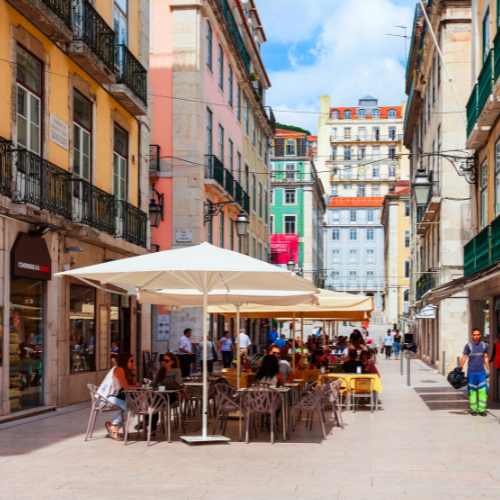


Buying property to Cagliari with a dedicated expert

Drapeau du Royaume-Uni avec des bandes rouges, blanches et bleues en forme de croix et de diagonales.
An English-speaking Home Finder who lives there
Emoji de détective avec chapeau, loupe et cheveux gris.
Sees the good places before they hit the market
Médaille d'or avec un ruban rouge indiquant la première place.
Fights for your offer, not the seller's
Symbole dollar vert sur fond blanc.
The real local price, not the foreigner tax

What kind of property are you looking for to Cagliari?

Describe your project, one of our real estate hunters will look for the ideal property for you

Why work with a property hunter?

Time spent by the buyer
Symbole d'information en cercle bleu foncé sur fond transparent.
When you search alone, about 85% of the time is spent on research, and 15% on visits. With a hunter, you only do the visits
Icône de fermeture (croix)
Access to the off-market
Purchase price
Virtual pre-visits
Secure formalities
Symbole d'information en cercle bleu foncé sur fond transparent.
Customer satisfaction
Only 20% of satisfied buyers according to the 2018 Crédit Foncier study. For its part, Remoters gets a score of 4/5 or 5/5 in 95% of cases
Icône de fermeture (croix)

Buying alone abroad

140 hours
Icône rouge de croix X sur fond blanc.
Very difficult negotiation
Icône rouge de croix X sur fond blanc.
20%

Buying  with Remoters

20:00
14% discount obtained on average
95%
Photo of Mauro, home finder in Cagliari

Mauro, or another expert property hunter based to Cagliari, will personally manage your search.

Guide local de l’achat immobilier

Acheter un bien immobilier

Cagliari is Sardinia's capital and largest city, offering a mature urban property market with a wide range of purchase opportunities — from historic-centre apartments to seafront properties near Poetto beach. Here is what every buyer should know in under thirty seconds:

  • Average price: €2,687/m² city-wide (Immobiliare.it, November 2025), ranging from approximately €2,179/m² in affordable districts to €3,750/m² in the most sought-after seafront zones.
  • Market trend: prices rose 5.50% year-on-year to November 2025; transaction volumes increased 10% in 2024 (Italian Federation of Real Estate Agents).
  • Total acquisition cost: budget an additional 8% to 12% on top of the purchase price to cover taxes, notary fees, and agent commissions.
  • Key tax: 2% registration tax on cadastral value for a primary residence; 9% for a second home.
  • Purchase process: 2 to 4 months from offer to final deed; involves a preliminary agreement (compromesso) with a 10%–30% deposit, followed by the notarial deed (rogito).
  • Foreign buyers: welcome with no restrictions for EU citizens and most nationalities; a Codice Fiscale is mandatory before any deed can be signed.
  • Financing: non-residents can access Italian mortgages at 50%–60% LTV; a minimum 40%–50% cash down payment is required.
  • Negotiation: a 5%–10% discount on the asking price is standard; larger discounts are achievable for properties requiring renovation or those with extended market exposure.

Prix par type de bien

Fourchettes de prix selon la surface, la typologie et l’usage du logement.

Purchase prices in Cagliari vary significantly by property type, condition, and location. The following ranges are indicative, based on data from Immobiliare.it (November 2025), the OMI (Agenzia delle Entrate, H2 2024), and market reports from Tecnocasa and Investropa (2024–2025). The city-wide average asking price stood at €2,687/m² in November 2025 (Immobiliare.it).

  • Studio and one-bedroom apartments (monolocale / bilocale): entry-level units in peripheral or mid-range districts typically start from approximately €80,000 to €130,000 in total. In central or seafront locations, equivalent-sized units can exceed €200,000 depending on condition and floor.
  • Two- and three-bedroom apartments (trilocale / quadrilocale): the most actively traded segment. In mid-range districts (San Benedetto, Sant'Avendrace), prices range broadly from €150,000 to €280,000. In the historic centre or near Poetto, comparable units in good condition are typically priced from €250,000 upwards.
  • Renovated or new-build apartments in the historic centre: restored units in Marina, Stampace, Villanova, or Castello command a significant premium, with prices reaching €3,000 to €3,500/m² for high-quality refurbishments (Tecnocasa, H1 2024).
  • Properties requiring renovation (da ristrutturare): a meaningful share of the Cagliari market consists of older stock needing works. These can be acquired at a discount of 20% to 40% relative to comparable renovated units, offering value for buyers willing to manage a refurbishment project.
  • Villas and detached houses: rare within the city proper; more common in peripheral districts such as Bonaria or in the wider metropolitan area. Premium villas in Bonaria have been listed at up to €4,000/m² (Tecnocasa, H1 2024). Seafront villas in the Poetto/Quartu Sant'Elena area command the highest absolute prices.
  • Penthouses and panoramic units: attract a strong premium in all central and seafront districts; prices are highly individual and depend on terrace size, views, and finish level.

Prix et profils des quartiers

Les secteurs à comparer selon le budget, le mode de vie et le projet d’achat.

Cagliari's property market is divided into distinct neighbourhoods, each with its own character, buyer profile, and price range. The following overview is based on data from Immobiliare.it (November 2025), the OMI (Agenzia delle Entrate, H2 2024), Tecnocasa (H1 2024), and Tempocasa (July 2025).

  • Poetto / La Palma / Saline (seafront east): the most expensive zone in Cagliari, with asking prices reaching €3,750/m² on average (Immobiliare.it, November 2025) and up to approximately €3,500/m² for the best-positioned units (Angela Ciani Immobiliare, 2024). Attracts lifestyle buyers, second-home purchasers, and investors targeting the tourist market. Demand is strong and supply limited.
  • Castello (historic hilltop quarter): the medieval fortified district offers panoramic sea views and a unique architectural heritage. Purchase prices are broadly similar to Stampace, with values in the range of €1,500 to €2,000/m² for properties requiring renovation and higher for restored units. Buyers include investors converting properties for short-term use and heritage enthusiasts.
  • Marina (historic centre, port area): prices around €1,800/m² for standard stock, rising to €3,000–€3,500/m² for newly restored properties (Tecnocasa, H1 2024). Popular with investors and buyers seeking a central urban lifestyle close to the waterfront.
  • Stampace / Punici (historic centre, west): the largest of the four historic quarters. OMI data (H2 2024) places sale prices for apartments between €1,810 and €2,410/m², with an average asking price around €2,670/m² on current listings. Attracts a mix of primary residence buyers and investors.
  • Villanova (historic centre, east): the most colourful and lively of the historic quarters, extensively regenerated over the past decade. Prices in the historic centre broadly range from €2,000 to €2,600/m² (Tempocasa, July 2025). Popular with young professionals and buyers seeking a vibrant neighbourhood.
  • San Benedetto / Tribunale: a well-established residential district with good services. Purchase prices range from approximately €1,800 to €2,300/m² (Tempocasa, July 2025).
  • Bonaria / Monte Urpinu: a sought-after residential area with a quieter character. Prices can reach €4,000/m² for premium villas (Tecnocasa, H1 2024), with more typical apartments in the €2,500–€3,000/m² range.
  • Is Mirrionis / San Michele / Monte Claro: the most affordable zone in the city, with an average asking price of approximately €2,179/m² (Immobiliare.it, November 2025). Attracts budget-conscious buyers and investors seeking higher yield potential relative to purchase price.

Évolution du marché immobilier

Dynamique des prix, niveau de demande et biens les plus recherchés.

Cagliari's residential purchase market has shown consistent upward momentum over the past two years. According to Immobiliare.it, the average asking price for properties for sale in Cagliari reached €2,687 per m² in November 2025, representing a 5.50% increase compared to November 2024 (€2,547/m²). The lowest point recorded over the preceding two years was January 2024, at €2,437/m².

At the broader Sardinian level, residential prices averaged €2,420/m² as of May 2025, up 4.49% year-on-year from May 2024 (€2,316/m²), according to Investropa (June 2025). In 2024, Sardinia's real estate market recorded a 10% rise in property transactions, as reported by the Italian Federation of Real Estate Agents, with Cagliari among the most active cities.

Demand is being driven by a combination of factors: growing interest from foreign buyers (particularly from Germany, the United States, and Northern Europe), the rise of remote working, and Cagliari's improving infrastructure and quality of life. International buyers now represent a significant share of purchases in Sardinia, with international interest in Sardinian property having surged by 64.5% between 2019 and 2023 (Sardiamo, 2025).

Expert forecasts cited by Investropa (June 2025) point to continued price growth through 2026 and 2027, with projected increases of approximately 3% to 7% on 2024 values. The market in Cagliari is considered more accessible than Rome or Milan while offering strong lifestyle appeal, which continues to attract both owner-occupiers and investors.

Budget total et fiscalité

Prix d’acquisition, taxes, honoraires et dépenses à prévoir en complément.

When purchasing property in Cagliari, the headline purchase price is only part of the total budget. Buyers must plan for a set of mandatory taxes and professional fees that typically add 8% to 12% on top of the agreed sale price.

  • Registration tax (imposta di registro): 2% of the cadastral value for a primary residence (prima casa); 9% for a second home or investment property. A minimum of €1,000 applies in either case.
  • Fixed cadastral and mortgage taxes: €50 each when registration tax applies (€200 each for VAT-liable new-build purchases).
  • Notary fees: approximately 1% to 2.5% of the declared property value, negotiable depending on complexity.
  • Estate agent commission: typically 3% to 5% of the purchase price, plus 22% VAT, payable by the buyer (the seller pays a separate commission to the same or a different agent).
  • Legal fees: if you engage an independent property lawyer, budget approximately €2,000 to €5,000 depending on the complexity of the transaction.
  • Codice Fiscale: free to obtain at any Italian consulate or tax office (Agenzia delle Entrate); mandatory before any purchase deed can be signed.
  • Annual property tax (IMU): applies to second homes and investment properties; the rate is set by the municipality of Cagliari and is calculated on the cadastral value. Primary residences are generally exempt.

As a practical rule, add at least 10% to your target purchase price to cover all acquisition costs before committing to a budget.

Étapes de l’acquisition

Le déroulement du projet depuis la définition des critères jusqu’à la remise des clés.
  1. Obtain your Codice Fiscale — apply at an Italian consulate in your home country or at the Agenzia delle Entrate in Cagliari. This is the first practical step for any foreign buyer.
  2. Property search and viewings — work with a licensed local estate agent (agente immobiliare) or search platforms such as Immobiliare.it and Idealista. Arrange in-person viewings; remote purchases without a visit carry significant risk.
  3. Preliminary offer (proposta d'acquisto) — submit a written offer to the seller, usually accompanied by a small good-faith deposit (typically €2,000 to €5,000). The offer becomes binding once accepted by the seller.
  4. Preliminary purchase agreement (compromesso or contratto preliminare di compravendita) — a legally binding private contract signed by both parties, setting out the agreed price, completion date, and conditions. The buyer pays a deposit of 10% to 30% of the purchase price at this stage. Under Italian law (caparra confirmatoria), if the buyer withdraws, the deposit is forfeited; if the seller withdraws, they must repay double the deposit. The compromesso must be registered with the tax authorities.
  5. Due diligence and legal checks — your notary or lawyer verifies title, searches for mortgages and liens, checks planning compliance, and reviews all building permits. This phase typically runs in parallel with mortgage processing if financing is required.
  6. Final deed (rogito notarile) — signed before a notary (notaio) chosen by the buyer. The balance of the purchase price is paid, all taxes are settled, and ownership is formally transferred. The notary then registers the deed with the land registry (Conservatoria dei Registri Immobiliari).
  7. Post-completion — update utility contracts, notify the municipality, and register with the local tax office if applicable. The full process from initial search to completion typically takes 2 to 4 months.

Documents nécessaires

Les justificatifs à préparer pour acheter et financer un bien en Italie.

To complete a property purchase in Cagliari, both the buyer and the seller must provide a specific set of documents. Foreign buyers should begin gathering these well before making an offer.

  • Valid passport or national identity card — required at every stage, from the preliminary offer to the final deed.
  • Codice Fiscale (Italian tax identification number) — issued free of charge by the Agenzia delle Entrate or an Italian consulate abroad; without it, no deed can be registered.
  • Italian bank account details — most notaries require funds to be transferred from an Italian account for traceability purposes.
  • Proof of funds or mortgage pre-approval — sellers and agents routinely request evidence of financial capacity before accepting an offer.
  • Visura catastale — the land registry extract confirming the property's cadastral classification, surface area, and ownership; obtained by the notary or your lawyer.
  • Visura ipotecaria — the mortgage and lien search confirming the property is free of encumbrances; also obtained from the land registry.
  • Planimetria catastale — the official floor plan held at the cadastre, which must match the actual layout of the property.
  • Certificato di destinazione urbanistica — the zoning certificate confirming the property's permitted use and any planning constraints.
  • Energy performance certificate (APE — Attestato di Prestazione Energetica) — mandatory for any sale; must be provided by the seller.
  • Building permits and planning authorisations — the seller must supply all licences, building permits, and any amnesty documents (condono edilizio) relating to the property.
  • Condominium documentation — for apartments, the minutes of recent owners' meetings and a statement of any outstanding service charges (spese condominiali) are required.

Vérifications juridiques et techniques

Contrôles du titre, du cadastre, de la conformité et de l’état réel du bien.

Thorough legal and technical due diligence is essential before signing any binding purchase agreement in Cagliari. Italian law places significant responsibility on the buyer to verify the property's status; issues discovered after the rogito is signed are difficult and costly to resolve.

  • Title verification (visura ipotecaria): a search of the land registry (Conservatoria dei Registri Immobiliari) confirms that the seller is the registered owner and that the property is free of mortgages, liens, easements, or other encumbrances. This is conducted by the notary but should also be reviewed by your independent lawyer.
  • Cadastral extract (visura catastale): confirms the property's cadastral classification, surface area, and tax data. Any discrepancy between the cadastral record and the actual property must be resolved before completion.
  • Floor plan conformity (planimetria catastale): the official cadastral floor plan must match the physical layout of the property. Unauthorised extensions, internal modifications, or changes of use that have not been regularised represent a legal defect that can block the sale or create future liability for the buyer.
  • Planning and building permits (titoli edilizi): verify that all construction, extensions, and modifications have been carried out under valid permits. Any unauthorised works must either be regularised through an amnesty (condono edilizio or sanatoria) or factored into the price as a risk.
  • Zoning certificate (certificato di destinazione urbanistica): confirms the permitted use of the property and any planning constraints, particularly relevant for land or properties with development potential.
  • Energy performance certificate (APE): mandatory for all sales; must be provided by the seller and attached to the deed. Review the energy class, as it affects running costs and future resale value.
  • Condominium status: for apartments, request the minutes of the last three owners' meetings and a certificate from the building administrator confirming that all service charges are paid up to date. Outstanding charges can become the buyer's liability after completion.
  • Inheritance and succession checks: if the property has changed hands through inheritance, verify that the succession has been properly transcribed in the land registry. Untranscribed inheritances can create title defects.
  • Structural and technical survey: engage a qualified surveyor (geometra or ingegnere) to inspect the physical condition of the property, identify any structural issues, and confirm that the layout matches the cadastral plan. This is particularly important for older buildings in the historic centre.

Financement des non-résidents

Apport, crédit, justificatifs et contraintes propres aux acquéreurs étrangers.

Non-resident foreign buyers can obtain a mortgage from Italian banks to finance a property purchase in Cagliari, but the conditions are more restrictive than those offered to Italian residents.

  • Loan-to-Value (LTV): Italian banks typically lend non-residents up to 50% to 60% of the purchase price or appraised value, whichever is lower. Buyers must therefore have a minimum of 40% to 50% of the purchase price available as a cash down payment, plus sufficient liquidity to cover all acquisition costs.
  • Minimum loan amount: most Italian banks set a minimum mortgage of €100,000, though some institutions accept applications from €50,000.
  • Reciprocity requirement: Italy requires that the buyer's country of citizenship allows Italian nationals to purchase property on equivalent terms. EU citizens face no restriction; buyers from most other countries (including the United States) benefit from bilateral treaties. The Italian Ministry of Foreign Affairs publishes the current list.
  • Income documentation: lenders require at least two to five years of stable, verifiable income. Payslips, tax returns, and employer letters are standard. Self-employed applicants face additional scrutiny.
  • Currency: Italian mortgages are denominated in euros. If your income is in another currency, lenders will apply a haircut to account for exchange-rate risk, effectively reducing the amount they are willing to lend.
  • Valuation gap: if the bank's independent valuation comes in below the agreed purchase price, the LTV is calculated on the lower figure, requiring the buyer to cover the difference in cash.
  • Alternative financing: some buyers use equity release or home-equity products in their country of residence to fund the Italian purchase in cash, bypassing the Italian mortgage system entirely.

Engaging a bilingual mortgage broker with experience in cross-border Italian transactions is strongly recommended to identify the most suitable lenders and prepare a compliant application file.

Investissement et potentiel locatif

Demande locative, loyers, rendement indicatif et règles à anticiper.

Cagliari is increasingly recognised as one of Sardinia's most compelling locations for property investment, combining urban amenities, a growing tourism economy, and purchase prices that remain more accessible than Italy's major northern cities.

According to BestYieldFinder (January 2026), property yields in Cagliari range from approximately 4.44% to 5.97% gross depending on the neighbourhood and property type, with the highest returns concentrated in centrally located apartments and properties near Poetto beach. These figures reflect gross yields before taxes, management costs, and vacancy periods.

The short-term tourist rental market has expanded significantly in Cagliari, driven by rising visitor numbers and the city's growing profile as a year-round destination. Occupancy rates in the city have climbed, with increased bookings recorded in early 2024 (Investropa, 2025). Properties in the historic centre (Castello, Marina, Stampace, Villanova) and near Poetto beach attract the strongest short-term demand.

Key investment considerations for buyers:

  • Location premium: properties near the seafront and in the historic centre command higher purchase prices but also the strongest demand from both short-term visitors and long-term occupants.
  • Renovation potential: properties requiring refurbishment in established neighbourhoods can be acquired at a discount to market and repositioned at higher values after works.
  • Foreign buyer demand: international interest in Sardinian property surged by 64.5% between 2019 and 2023 (Sardiamo, 2025), supporting resale liquidity for well-located assets.
  • Regulatory environment: short-term rental activity in Italy is subject to national and regional regulations, including registration requirements and the cedolare secca flat-rate tax regime applicable to qualifying rental income. Buyers should verify current local rules before purchasing with a short-term rental strategy.

Méthode de négociation

Analyse du juste prix et arguments employés pour défendre l’offre d’achat.

Negotiation is a standard and expected part of the property purchase process in Cagliari. Sellers typically list at a price that anticipates some degree of negotiation, and buyers who make well-informed, structured offers are more likely to achieve a favourable outcome.

  • Research the market before offering: compare recent sale prices (not just asking prices) for similar properties in the same neighbourhood. Immobiliare.it and the OMI database of the Agenzia delle Entrate publish transaction data by zone. A well-documented offer is harder to dismiss.
  • Opening offer: in Italy, buyers typically open at 5% to 10% below the asking price for well-priced properties. For properties that have been on the market for an extended period, or that require significant renovation, discounts of 15% to 20% or more are not uncommon. The national average discount from the original asking price is broadly in the range of 10% to 15%.
  • Use property condition as leverage: any defects identified during viewings — outdated systems, non-compliant works, energy inefficiency — provide legitimate grounds for a price reduction. Commission a surveyor's report before finalising your offer if you have concerns.
  • Demonstrate financial readiness: sellers and their agents respond more positively to buyers who can demonstrate proof of funds or mortgage pre-approval. A cash buyer or a buyer with financing already in place has a stronger negotiating position.
  • Avoid emotional signals: expressing strong attachment to a property before an offer is agreed weakens your position. Keep communications measured and professional.
  • Finalise all terms before signing: negotiate not only the price but also the completion timeline, any items included in the sale (fixtures, furniture), and the deposit structure. Once the compromesso is signed, the agreed terms are legally binding.
  • Work through a local agent or lawyer: a bilingual professional familiar with Cagliari's market can advise on realistic price ranges and conduct negotiations on your behalf.

Honoraires et contenu de la prestation

Mode de rémunération, services inclus et éventuels frais complémentaires.

When buying property in Cagliari, several professionals charge fees for their services. Understanding what each covers helps buyers budget accurately and avoid surprises.

  • Estate agent (agente immobiliare): under Article 1755 of the Italian Civil Code, the agent earns a commission from both buyer and seller. The buyer's commission typically ranges from 3% to 5% of the final purchase price, plus 22% VAT. This fee is generally due at the signing of the preliminary purchase agreement (compromesso). The agent's service covers property search, viewings, negotiation support, drafting of the preliminary offer, and coordination between parties through to completion.
  • Notary (notaio): chosen and paid by the buyer, the notary's fee is approximately 1% to 2.5% of the declared property value. The notary verifies the identities of both parties, conducts title searches, drafts and reads the final deed (rogito), collects and remits all purchase taxes, and registers the transfer with the land registry. The notary acts as a neutral public official, not as an advocate for either party.
  • Independent property lawyer (avvocato immobiliare): not legally required but strongly recommended for foreign buyers. Fees typically range from €2,000 to €5,000 depending on complexity. The lawyer reviews all contracts before signature, conducts independent due diligence, advises on legal risks, and can act under power of attorney if the buyer cannot be present in Italy.
  • Surveyor or geometra: engaged to verify that the physical property matches the cadastral floor plan and to identify any unauthorised works. Fees vary by property size and complexity.
  • Mortgage broker (if applicable): fees vary; some brokers charge a flat fee, others a percentage of the loan amount. Clarify the fee structure before engagement.

Préparez votre achat immobilier

Décrivez votre projet, votre budget et vos critères. Un chasseur local peut rechercher les biens, organiser les visites, vérifier les informations et vous accompagner pendant la négociation.

Décrire mon projet

How does it work?

1

Your home finder researches the ideal property based on your criteria.

2
They conduct property viewings, some on your behalf, others with you in person or remotely.
3
They negotiate the price and terms on your behalf. The hunter is still at 100% on the buyer's side.
4
They assist you until all documents are signed
5
It accompanies you until the signature of all documents, to avoid pitfalls.
Couple allongé sur le lit, pieds contre la tête de lit, s'enlaçant et regardant l'un l'autre.

Our hunters around the world!

Remoters continues to grow!
We are recruiting new hunters, do not hesitate to apply.
Carte du monde en trois panneaux avec des marqueurs rouges indiquant des emplacements en Amériques, Europe, Afrique et Asie.I am applying

FAQ

Une main portant un bracelet noir pointe sur l'écran d'un ordinateur portable tandis qu'une autre main tape.

Why choose an English-speaking home finder to Cagliari?

Searching for a property abroad requires time, organization, and a good understanding of local regulations, which may differ from those in France (notaries, land registry, taxation, etc.). A property hunter helps simplify the process by managing the search, selecting relevant properties, organizing viewings, and reviewing legal documents.

They work closely with the buyer to define clear criteria, identify suitable opportunities, and negotiate the best possible price. They may attend property visits on the buyer’s behalf or accompany them during a stay in Istanbul.

Thanks to their local network, the home finder also facilitates the legal and logistical steps of the purchase. From the initial search to the final signature, they provide tailored support and help ensure a smooth and secure buying experience.

Une personne porte une chemise à carreaux et utilise une calculatrice bleue sur un bureau en bois.
How much does the Remoters home finder service cost?

Remoters works with home finders around the world. Since real estate prices vary greatly depending on the location, it is difficult to apply a single pricing structure.

Each home finder sets their own fees based on the complexity of the project and the local market. You can contact them directly to learn more about their terms and evaluate the value they can bring to your purchase.

In many cases, the home finder’s fee is largely offset by negotiating a better purchase price and helping reduce legal and administrative risks.

Main tenant holding keys with house-shaped keychain near a door lock.
Will I have access to all the offers on the market?

There are three main types of property listings on the real estate market:

  • Agency listings
  • Private listings (from individual sellers)
  • “Off-market” opportunities, meaning properties that are not yet publicly advertised

When searching on your own, you will usually access the first two categories, provided you are familiar with the main listing platforms and able to identify outdated or misleading ads sometimes used to attract buyers.

Property hunters can provide access to all three types of opportunities. They screen listings before presenting them and leverage their network to identify relevant off-market properties.

Off-market does not mean properties remain hidden indefinitely. Rather, it refers to opportunities shared before public release, allowing buyers to position themselves early. Thanks to their professional network, a property hunter can help increase access to these early opportunities.

Cuisine moderne avec évier double, robinet chromé, cuisinière à gaz et décorations vertes et citrons jaunes.
Home finder vs real estate agent

When searching for a property abroad, your need is typically a home finder🕵️

A real estate agent represents the seller through a sales mandate and aims to market properties to potential buyers.

A home finder, on the other hand, represents the buyer through a search mandate. They do not have properties to sell. Instead, they search for a specific property based on the buyer’s criteria, sourcing opportunities from both private sellers and agencies.

While the real estate agent advises and supports the seller throughout the transaction, the home finder advises and assists the buyer at every step of the purchasing process, always acting in the buyer’s best interest.

Un homme en costume tenant une petite maison colorée dans sa main devant une calculatrice.
How do you choose the right home finder?

The right home finder is the one who helps you purchase a property that best matches your needs and criteria, at an optimized price.

Their fees should remain reasonable and create real value for your project. In many cases, the cost of the service is largely offset by stronger negotiation outcomes and better purchase conditions 🤑

When buying abroad, working with a French-speaking property hunter who is well established in the local market can be particularly beneficial. This helps reduce misunderstandings and increases your chances of accessing high-quality opportunities through their local network.

Deux mains d'hommes serrées en signe de poignée de main, fond beige neutre.

Interested in becoming a home finder for Remoters to Cagliari ?

You should have:

🧙 Strong experience in the local real estate market
🌐 A solid network to access a wide range of property opportunities
⚖️ In-depth knowledge of local regulations
💸 Excellent negotiation skills
🛎️ Above all, a genuine desire to support clients in their property purchase projects

If this sounds like you, we encourage you to apply — we would be happy to welcome you to our network.

Button TextButton Text