

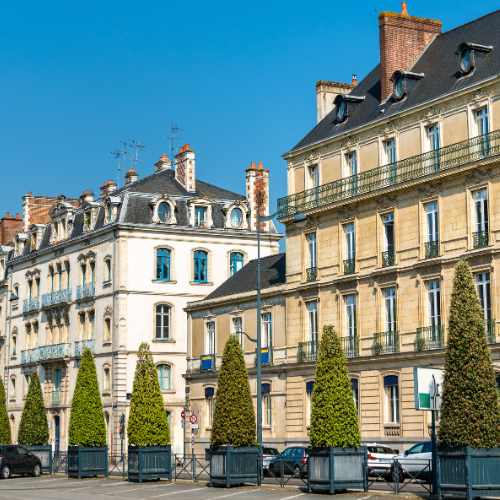


Buying property à Bruxelles with a dedicated expert

Drapeau du Royaume-Uni avec des bandes rouges, blanches et bleues en forme de croix et de diagonales.
An English-speaking Home Finder who lives there
Emoji de détective avec chapeau, loupe et cheveux gris.
Sees the good places before they hit the market
Médaille d'or avec un ruban rouge indiquant la première place.
Fights for your offer, not the seller's
Symbole dollar vert sur fond blanc.
The real local price, not the foreigner tax

What kind of property are you looking for à Bruxelles?

Describe your project, one of our real estate hunters will look for the ideal property for you

Why work with a property hunter?

Time spent by the buyer
Symbole d'information en cercle bleu foncé sur fond transparent.
When you search alone, about 85% of the time is spent on research, and 15% on visits. With a hunter, you only do the visits
Icône de fermeture (croix)
Access to the off-market
Purchase price
Virtual pre-visits
Secure formalities
Symbole d'information en cercle bleu foncé sur fond transparent.
Customer satisfaction
Only 20% of satisfied buyers according to the 2018 Crédit Foncier study. For its part, Remoters gets a score of 4/5 or 5/5 in 95% of cases
Icône de fermeture (croix)

Buying alone abroad

140 hours
Icône rouge de croix X sur fond blanc.
Very difficult negotiation
Icône rouge de croix X sur fond blanc.
20%

Buying  with Remoters

20:00
14% discount obtained on average
95%
Photo of Noémie, home finder in Bruxelles

Noémie, or another expert property hunter based à Bruxelles, will personally manage your search.

Guide local de l’achat immobilier

Acheter un bien immobilier

Buying a property in Brussels in under 30 seconds: here is what you need to know.

  • Market: Brussels is Belgium's most expensive property market. Median prices in 2024: €495,000 EUR for a terraced house, €260,000 EUR for an apartment (Statbel, 2024). Transactions rose +7.1% in 2025 (KBC Brussels, 2025).
  • Costs on top of the purchase price: Budget 14–15% extra for registration duties (12.5%), notary fees, and administrative costs. Primary residence buyers may benefit from a €200,000 EUR abatement on the taxable base.
  • Process: Written offer → compromis de vente (legally binding, 10% deposit) → mortgage arrangement → authentic deed before a notary (typically within 3–4 months).
  • Key documents: EPC/PEB certificate, electrical inspection, soil certificate, urban planning information, asbestos certificate (pre-2001 buildings), cadastral plan.
  • Financing: Mortgage rates averaged 3.4% in 2024, falling to ~3.5% by late 2025. Non-residents typically need a 20–40% down payment.
  • Negotiation: Offers must be in writing and are legally binding once signed by both parties. Always include a financing condition clause.
  • Investment: Gross rental yields average 4.32% in Belgium (Q1 2026, Global Property Guide). Brussels benefits from strong international demand and a structurally undersupplied market.

Prix par type de bien

Fourchettes de prix selon la surface, la typologie et l’usage du logement.

The following purchase prices are based on Statbel official real estate figures for 2024 and Immoweb/Investropa data for 2025, covering the Brussels-Capital Region.

  • Studio (30–40 m²): From approximately €170,000 EUR in more affordable communes such as Anderlecht, rising significantly in premium areas (source: Investropa / Immoweb, August 2025).
  • One-bedroom apartment (50–65 m²): Average of approximately €260,000 EUR across the Brussels-Capital Region (source: Investropa / Immoweb, August 2025; consistent with Statbel 2024 median apartment price of €260,000 EUR).
  • Two-bedroom apartment: Prices vary widely by commune and condition, typically ranging from €300,000 EUR to €500,000 EUR and above in premium locations.
  • Terraced or semi-detached house: The median purchase price in the Brussels-Capital Region reached €495,000 EUR in 2024, up 1% year-on-year (source: Statbel, 2024 real estate figures).
  • Detached house: The median price for a detached house in Brussels reached €1,100,000 EUR in 2024, recovering from a significant drop in 2023 (source: Statbel, 2024 real estate figures; GR-Properties, 2025).
  • New-build apartment: New-build prices in Brussels exceed the average price of existing houses. The price of a new-build apartment in Brussels surpasses €348,000 EUR on average, reflecting high construction costs and the VAT framework (source: KBC Brussels, 2025).
  • Price per m² — market average: Brussels commands the highest property prices in Belgium, with houses averaging €3,308 EUR/m² and apartments at €3,423 EUR/m² across the region (source: Investropa, 2025).

Prices in the most expensive communes (Ixelles, Uccle, Woluwe-Saint-Pierre, Etterbeek) regularly exceed €4,000 EUR/m², while the most affordable communes (Anderlecht, Saint-Josse) remain below €3,000 EUR/m².

Prix et profils des quartiers

Les secteurs à comparer selon le budget, le mode de vie et le projet d’achat.

The Brussels-Capital Region comprises 19 communes with very different price levels, buyer profiles, and urban characters. The following overview is based on Immoweb commune-level data (August 2025) and Statbel transaction records.

  • Ixelles / Elsene — Premium urban: One of the most sought-after communes, with prices regularly exceeding €4,237 EUR/m² (source: Investropa / Immoweb, August 2025). Popular with EU professionals, young executives, and international buyers. Dense mix of Belle Époque townhouses, converted apartments, and new-build residences. Strong demand keeps supply tight.
  • Uccle / Ukkel — Upscale residential: Approximately €4,001 EUR/m² on average, with the south of Uccle recording price growth of more than 5% recently (source: SmartBlock). Characterised by large family homes, green spaces, and prestigious schools. Attracts families and senior executives.
  • Woluwe-Saint-Pierre / Sint-Pieters-Woluwe — Prestigious east: Around €3,957 EUR/m² on average. Houses in this commune frequently exceed €700,000 EUR (source: KBC Brussels, 2025). Quiet, leafy, and well-served by public transport.
  • Etterbeek — European Quarter adjacent: Prices regularly exceed €4,000 EUR/m² for both houses and apartments (source: Investropa, 2025). Proximity to EU institutions drives demand from international buyers and investors.
  • Saint-Gilles / Sint-Gillis — Trendy and transitional: A popular choice for younger buyers and creatives, with a vibrant neighbourhood feel. Prices are more accessible than Ixelles but rising steadily.
  • Schaerbeek / Schaarbeek — Affordable and evolving: Around €3,247 EUR/m² on average (source: Investropa / Immoweb, August 2025). A large, diverse commune undergoing gradual gentrification, offering good value for buyers willing to invest in renovation.
  • Anderlecht — Most affordable: Approximately €2,742 EUR/m² on average (source: Investropa / Immoweb, August 2025). The most accessible entry point in the Brussels market, attracting first-time buyers and value-oriented investors.
  • Saint-Josse-ten-Noode / Sint-Joost-ten-Node — Compact and central: Around €3,177 EUR/m² on average. The smallest commune in Belgium by area, centrally located, with a dense urban fabric.

The overall average price per m² across all property types in Brussels City (postal code 1000) stood at €3,345 EUR/m² as of August 2025, with apartments ranging from €2,744 to €4,561/m² depending on the zone (source: Immoweb, August 2025).

Évolution du marché immobilier

Dynamique des prix, niveau de demande et biens les plus recherchés.

The Brussels property purchase market has gone through several distinct phases in recent years:

  • 2020–2022 — Strong growth: Low interest rates and post-pandemic demand drove significant price increases across all property types in the Brussels-Capital Region.
  • 2022–2023 — Real-terms correction: As inflation surged and the European Central Bank raised rates sharply (reaching a peak of 5.52% in October 2023), borrowing capacity fell and transaction volumes slowed. Brussels experienced real-price declines of roughly 3% to 5% before stabilising, with recovery taking approximately 12 to 18 months (source: Investropa / Brussels Real Estate Market Analysis, 2026).
  • 2024 — Stabilisation: The market showed signs of stabilisation. Mortgage rates averaged around 3.4% in 2024, below the EU average of 4.34%, facilitating a gradual return of buyer confidence (source: Expatica, 2025). Statbel data confirmed that the median price of a terraced or semi-detached house in Brussels reached €495,000 EUR in 2024, up 1%, while apartments reached €260,000 EUR, up 1.9% (source: Statbel, 2024 real estate figures).
  • 2025 — Recovery and renewed activity: Brussels recorded a +7.1% increase in transactions in 2025, confirming a return to a more dynamic market. Nationally, Belgium recorded a record year for sales volumes. Property prices in Brussels increased by approximately 3.7% over the 12 months to Q3 2025 according to the official House Price Index (source: Investropa / Statbel, Q3 2025). The ECB's rate cuts — bringing the deposit facility rate to 2.00% by mid-2025 — improved mortgage affordability and supported buyer demand.
  • Structural context: Apartments account for approximately 70% of transactions in Brussels, making them the primary entry point to home ownership. Young buyers aged 18–35 represented 41% of apartment buyers in Belgium in 2025, up from 35% in 2021 (source: KBC Brussels, 2025). The average buyer age in Brussels is around 40.

Budget total et fiscalité

Prix d’acquisition, taxes, honoraires et dépenses à prévoir en complément.

When purchasing a property in Brussels, the agreed purchase price is only the starting point. Buyers must budget for a set of mandatory additional costs that typically add 14% to 15% on top of the purchase price (source: KBC Brussels, 2025).

  • Registration duties (droits d'enregistrement): Brussels maintains a flat rate of 12.5% on the purchase price or market value, whichever is higher. This is the highest rate in Belgium; Flanders applies 2–3% and Wallonia 3% for primary residences since January 2025.
  • Abatement for primary residence: Buyers who intend to establish their main residence in the purchased property may benefit from a tax abatement of €200,000 on the taxable base, provided the property's purchase price does not exceed €600,000 and the buyer does not already own another property in full ownership. This abatement represents a saving of up to €25,000 EUR in registration duties (source: Brussels Taxation / fiscalite.brussels, 2024–2025).
  • Notary fees: Regulated by the Belgian government on a sliding scale ranging from approximately 0.2% to 4% of the property value, decreasing as the price rises (source: Investropa, 2025).
  • Administrative and documentary costs: Mortgage statement fees, cadastral plan, flood risk data, and other third-party disbursements paid through the notary's office.
  • VAT (new-build only): New-build properties are subject to 21% VAT instead of registration duties. Since 1 January 2024, the reduced 6% VAT rate applies only to demolition-and-rebuild projects meeting strict social conditions.

As a practical rule, buyers should set aside a total budget of purchase price + 15% to cover all acquisition costs in Brussels.

Étapes de l’acquisition

Le déroulement du projet depuis la définition des critères jusqu’à la remise des clés.

Buying a property in Brussels follows a structured legal process overseen by a notary (notaire/notaris). The key steps are as follows:

  1. Property search and viewings: Identify properties through real estate portals (Immoweb, Zimmo, Logic-Immo) or via a licensed estate agent (IPI-registered). Attend viewings and request all mandatory documents from the seller.
  2. Written offer: All offers on Belgian properties must be made in writing. Once both parties sign, the offer becomes legally binding. Buyers should include a financing condition (condition suspensive de financement) to protect themselves if the mortgage is not approved — this clause is typically limited to one month and must be agreed with the seller (source: Investropa, 2025).
  3. Preliminary sale agreement — compromis de vente: This is the central legal document of the Belgian purchase process. It is legally binding on both parties from the moment of signature. It identifies all parties, the property, the agreed price, conditions, and the timeline to the final deed. A deposit of 10% of the purchase price is typically paid at this stage and held in the notary's escrow account until the final deed.
  4. Mortgage financing: If applicable, the buyer arranges a mortgage loan with their bank. The mortgage deed must also be executed in authentic form by a notary, meaning two notarial deeds are usually required: the purchase deed and the mortgage deed.
  5. Notarial due diligence: The notary verifies all legal, urban planning, and cadastral information, requests the mandatory certificates, and prepares the authentic deed of sale.
  6. Authentic deed of sale (acte authentique): Signed before the notary, typically within 3 to 4 months of the compromis. The balance of the purchase price, registration duties, notary fees, and all costs are paid at this stage. Keys are handed over upon signing.
  7. Registration: The notary registers the deed with the relevant authorities. The buyer becomes the legal owner from the date of the authentic deed.

Public and online auction sales are also possible via biddit.be, overseen by a notary, with an 8-day bidding period (source: KBC Brussels, 2025).

Documents nécessaires

Les justificatifs à préparer pour acheter et financer un bien en Italie.

Belgian law requires the seller to provide a specific set of mandatory documents before or at the time of signing the preliminary sale agreement (compromis de vente). Buyers should verify that all of the following are available:

  • Energy Performance Certificate (EPC / PEB): Legally required from the moment the property is listed for sale. In Brussels, the PEB certificate must be available before any transaction is concluded and is valid for 10 years (source: CertiBru / Certinergie, updated November 2024).
  • Electrical installation inspection report: Mandatory upon sale, confirming whether the electrical installation is compliant or identifying non-compliances to be remedied.
  • Asbestos certificate: Required for properties built before 2001.
  • Soil certificate (certificat de sol / bodemattest): A request to the Brussels Environment Institute (Bruxelles Environnement / IBGE) is mandatory for any property transfer in the Brussels-Capital Region. The seller must disclose any known soil pollution (source: Vaneau Lecobel / Brussels Environment).
  • Urban planning information (renseignements urbanistiques): Confirms zoning, existing permits, any planning infringements, and the permitted use of the property. Buyers should not rely solely on information provided by the seller or agent — always verify with the municipal urban planning department.
  • Post-intervention file (dossier d'intervention ultérieure / DIU): Contains technical details of works carried out on the property since 2001, required for future maintenance or renovation.
  • Cadastral plan: Official plan identifying the parcel and its boundaries.
  • Flood risk data: Indicates whether the property is located in a flood-risk zone.
  • Identity documents: Valid passport or national identity card for all parties. Non-Belgian buyers without a Belgian identity card will have an account created by the notary to enable participation in the transaction.

For buyers taking out a mortgage, the bank will additionally require proof of income, recent payslips or tax returns, bank statements, and a property valuation report.

Vérifications juridiques et techniques

Contrôles du titre, du cadastre, de la conformité et de l’état réel du bien.

Before signing any purchase agreement in Brussels, buyers must carry out thorough legal and technical due diligence. The following checks are essential:

  • Urban planning verification (renseignements urbanistiques): Confirms the property's zoning, the existence and validity of all building permits, any planning infringements, and the permitted use. This information must be obtained from the municipal urban planning department — do not rely solely on the seller or agent (source: urban.brussels).
  • Soil certificate: Mandatory for all property transfers in the Brussels-Capital Region. The seller must request a certificate from Brussels Environment (Bruxelles Environnement / IBGE) disclosing any known soil pollution. In-depth soil investigations or remediation may be required if contamination is identified (source: Vaneau Lecobel; Brussels Soil Clean-Up Act of 13 May 2004).
  • Energy Performance Certificate (EPC / PEB): Must be provided by the seller before the property is listed. In Brussels, the PEB certificate has been updated since November 2024 and is valid for 10 years. A poor energy rating (class E or F) may indicate significant future renovation costs and affects resale value.
  • Electrical installation inspection: Mandatory upon sale. Non-compliant installations must be brought into conformity within a set timeframe after purchase.
  • Asbestos certificate: Required for buildings constructed before 2001.
  • Post-intervention file (DIU): Documents all works carried out on the property since 2001. Absence of this file for a property with significant recent works is a red flag.
  • Flood risk data: Buyers must verify whether the property is located in a flood-risk zone, which affects insurability and future value.
  • Cadastral plan and title verification: The notary verifies the chain of title, checks for any encumbrances, mortgages, or easements registered against the property, and confirms the boundaries of the parcel.
  • Co-ownership documents (apartments): For apartments in a co-ownership (copropriété), buyers should review the building's statutes, the minutes of recent general meetings, the maintenance fund balance, and any outstanding works or disputes.

All of these verifications are coordinated by the notary as part of the authentic deed preparation process. Buyers are strongly advised to appoint their own notary — at no additional cost — to ensure independent legal protection throughout the transaction.

Financement des non-résidents

Apport, crédit, justificatifs et contraintes propres aux acquéreurs étrangers.

Non-residents and foreign nationals can purchase property in Brussels without restriction — Belgium imposes no foreign ownership limitations. However, obtaining mortgage financing as a non-resident involves more stringent conditions than for Belgian residents.

  • Loan-to-value (LTV) ratios: Non-resident buyers typically face LTV ratios of 60% to 80%, compared to 80% to 90% for residents with local income. This means a down payment of 20% to 40% of the purchase price is generally required (source: Investropa, 2025).
  • Interest rates: Mortgage rates in Belgium averaged 3.4% in 2024 and fell to approximately 3.5% by November 2025, following ECB rate cuts (source: Expatica, 2025). Non-residents may be offered slightly higher rates depending on their risk profile and the lending institution.
  • Income and creditworthiness: Belgian banks require non-residents to demonstrate stable, verifiable income and a sound credit history. Self-employed applicants and those with income from multiple countries face additional scrutiny.
  • Required documents for mortgage application: Valid passport, proof of income (payslips, tax returns, employment contract), recent bank statements, and a property valuation report. Non-EU nationals may also be asked for a residence permit or proof of legal status.
  • Notary involvement: The mortgage deed must be executed in authentic form before a Belgian notary, in addition to the purchase deed. Buyers without a Belgian identity card will have an account created by the notary to enable participation in the transaction (source: Commissioner Brussels).
  • Alternative financing: Buyers unable to secure a traditional Belgian mortgage may explore financing from their country of residence, international private banks, or developer payment plans for new-build properties.
  • Tax deductibility: Interest on loans for investment properties remains deductible from real estate income. However, capital repayment tax reductions for new loans taken out from 2024 onwards have been abolished for investment purposes (source: Investropa / Belgian tax reform, 2024).

Investissement et potentiel locatif

Demande locative, loyers, rendement indicatif et règles à anticiper.

Brussels is one of the most active property investment markets in Belgium, driven by its status as the de facto capital of the European Union, a large international workforce, and a structurally undersupplied housing stock.

  • Gross rental yields: The average gross rental yield in Belgium stood at 4.32% in Q1 2026, up from 4.21% in Q3 2025 (source: Global Property Guide / Belgium's Residential Property Market Analysis, 2026). Yields vary significantly by property type, size, and commune.
  • Demand drivers: Brussels hosts a large population of EU officials, diplomats, international business professionals, and students — all generating sustained demand for well-located properties. Apartments account for approximately 70% of transactions in the Brussels-Capital Region (source: KBC Brussels, 2025).
  • Supply constraints: Despite a 10% increase in completed dwellings in Belgium in 2024 (the second-highest in Europe), the number of new project starts fell by 8%, pointing to a structurally undersupplied market over the medium term (source: Deloitte Property Index 2025).
  • Property types with strongest investment appeal: Compact apartments (studios and one-bedroom units) in well-connected communes such as Ixelles, Etterbeek, Saint-Gilles, and Schaerbeek attract consistent buyer and occupier demand. Properties with strong energy performance ratings (EPC class A or B) command price premiums and are increasingly preferred by buyers.
  • Tax on rental income: In Belgium, rental income from private tenants is taxed on the basis of the indexed cadastral income plus 40%, not on actual rent received — a specificity of the Belgian system that investors should factor into their return calculations.
  • Capital appreciation: Brussels property prices have shown long-term nominal growth. After a real-terms correction in 2022–2023, prices recovered approximately 3.7% in the 12 months to Q3 2025 (source: Statbel House Price Index, Q3 2025).

Note: Past performance does not guarantee future results. Buyers should seek independent financial and legal advice before making any investment decision.

Méthode de négociation

Analyse du juste prix et arguments employés pour défendre l’offre d’achat.

Negotiating a property purchase in Brussels requires an understanding of local market dynamics, legal constraints, and the specific characteristics of each property and seller.

  • Written offers are legally binding: In Belgium, all purchase offers must be made in writing. Once both the buyer and seller have signed, the offer is legally binding — this is a critical difference from many other countries where offers are non-binding. Never sign a written offer without having verified your financing capacity and the key documents.
  • Include a financing condition: Always include a condition suspensive de financement (financing condition) in your offer. This protects you if your mortgage application is refused. The clause is typically valid for one month and must be agreed with the seller (source: Investropa, 2025).
  • Assess market conditions by commune: In premium communes such as Ixelles, Uccle, and Woluwe-Saint-Pierre, well-presented properties in good condition attract multiple offers and leave little room for negotiation. In more affordable communes such as Anderlecht, Molenbeek, or Schaerbeek, or for properties requiring renovation, there is typically more scope to negotiate on price.
  • Use objective arguments: Base your offer on comparable recent sales in the area, the property's energy performance rating (EPC/PEB), the cost of any works required, and the time the property has been on the market. A property with a poor energy rating or structural issues provides concrete grounds for a price reduction.
  • Negotiation margin: In a stabilising market, buyers can typically negotiate a reduction of 3% to 8% below the asking price for properties that have been on the market for more than 60 days or require significant renovation. In a competitive segment, offers at or above asking price may be necessary.
  • Auction sales: Properties sold via public auction on biddit.be follow a different process — bids are submitted online over an 8-day period and the highest bid wins. There is no negotiation; buyers must be pre-registered with the notary (source: KBC Brussels, 2025).
  • Engage a notary early: Having your own notary review the compromis before signing adds an important layer of legal protection at no additional cost to you.

Honoraires et contenu de la prestation

Mode de rémunération, services inclus et éventuels frais complémentaires.

When buying a property in Brussels, several professional fees apply. Understanding who pays what — and what each professional provides — is essential for budgeting accurately.

  • Notary fees: Regulated by the Belgian government on a sliding scale from approximately 0.2% to 4% of the property value. The notary is a public officer who drafts and authenticates the purchase deed and the mortgage deed, verifies all legal and urban planning information, collects and transfers registration duties to the tax authorities, and holds the deposit in escrow. Both buyer and seller may appoint their own notary; if only one notary is used, fees are not doubled — they are shared between the two offices.
  • Estate agent commission (seller-side): In Belgium, the estate agent's commission is typically paid by the seller and is not set by law — it is freely negotiable. Market practice in Brussels generally ranges from 2% to 4% of the sale price (source: Choosing the Right Estate Agent in Belgium, 2024). The commission is only payable upon successful completion of the sale, at the time of signing the authentic deed. No advance or hidden costs may be demanded during the mandate.
  • Buyer's agent / property hunter: If a buyer engages a property search specialist (chasseur immobilier), that professional is paid by the buyer. Fees vary by mandate and are agreed in advance.
  • What the estate agent provides: Property valuation, marketing, organisation of viewings, negotiation support, assistance with the compromis de vente, and coordination with the notary through to completion.
  • What the notary provides: Legal due diligence, drafting of the authentic deed, collection and transfer of all taxes and duties, registration of the deed, and issuance of the title to the buyer.

All agents operating in Belgium must be registered with the IPI/BIV (Professional Institute of Real Estate Agents), which provides professional liability and bonding guarantees.

Préparez votre achat immobilier

Décrivez votre projet, votre budget et vos critères. Un chasseur local peut rechercher les biens, organiser les visites, vérifier les informations et vous accompagner pendant la négociation.

Décrire mon projet

How does it work?

1

Your home finder researches the ideal property based on your criteria.

2
They conduct property viewings, some on your behalf, others with you in person or remotely.
3
They negotiate the price and terms on your behalf. The hunter is still at 100% on the buyer's side.
4
They assist you until all documents are signed
5
It accompanies you until the signature of all documents, to avoid pitfalls.
Couple allongé sur le lit, pieds contre la tête de lit, s'enlaçant et regardant l'un l'autre.

Our hunters around the world!

Remoters continues to grow!
We are recruiting new hunters, do not hesitate to apply.
Carte du monde en trois panneaux avec des marqueurs rouges indiquant des emplacements en Amériques, Europe, Afrique et Asie.I am applying

FAQ

Une main portant un bracelet noir pointe sur l'écran d'un ordinateur portable tandis qu'une autre main tape.

Why choose an English-speaking home finder à Bruxelles?

Searching for a property abroad requires time, organization, and a good understanding of local regulations, which may differ from those in France (notaries, land registry, taxation, etc.). A property hunter helps simplify the process by managing the search, selecting relevant properties, organizing viewings, and reviewing legal documents.

They work closely with the buyer to define clear criteria, identify suitable opportunities, and negotiate the best possible price. They may attend property visits on the buyer’s behalf or accompany them during a stay in Istanbul.

Thanks to their local network, the home finder also facilitates the legal and logistical steps of the purchase. From the initial search to the final signature, they provide tailored support and help ensure a smooth and secure buying experience.

Une personne porte une chemise à carreaux et utilise une calculatrice bleue sur un bureau en bois.
How much does the Remoters home finder service cost?

Remoters works with home finders around the world. Since real estate prices vary greatly depending on the location, it is difficult to apply a single pricing structure.

Each home finder sets their own fees based on the complexity of the project and the local market. You can contact them directly to learn more about their terms and evaluate the value they can bring to your purchase.

In many cases, the home finder’s fee is largely offset by negotiating a better purchase price and helping reduce legal and administrative risks.

Main tenant holding keys with house-shaped keychain near a door lock.
Will I have access to all the offers on the market?

There are three main types of property listings on the real estate market:

  • Agency listings
  • Private listings (from individual sellers)
  • “Off-market” opportunities, meaning properties that are not yet publicly advertised

When searching on your own, you will usually access the first two categories, provided you are familiar with the main listing platforms and able to identify outdated or misleading ads sometimes used to attract buyers.

Property hunters can provide access to all three types of opportunities. They screen listings before presenting them and leverage their network to identify relevant off-market properties.

Off-market does not mean properties remain hidden indefinitely. Rather, it refers to opportunities shared before public release, allowing buyers to position themselves early. Thanks to their professional network, a property hunter can help increase access to these early opportunities.

Cuisine moderne avec évier double, robinet chromé, cuisinière à gaz et décorations vertes et citrons jaunes.
Home finder vs real estate agent

When searching for a property abroad, your need is typically a home finder🕵️

A real estate agent represents the seller through a sales mandate and aims to market properties to potential buyers.

A home finder, on the other hand, represents the buyer through a search mandate. They do not have properties to sell. Instead, they search for a specific property based on the buyer’s criteria, sourcing opportunities from both private sellers and agencies.

While the real estate agent advises and supports the seller throughout the transaction, the home finder advises and assists the buyer at every step of the purchasing process, always acting in the buyer’s best interest.

Un homme en costume tenant une petite maison colorée dans sa main devant une calculatrice.
How do you choose the right home finder?

The right home finder is the one who helps you purchase a property that best matches your needs and criteria, at an optimized price.

Their fees should remain reasonable and create real value for your project. In many cases, the cost of the service is largely offset by stronger negotiation outcomes and better purchase conditions 🤑

When buying abroad, working with a French-speaking property hunter who is well established in the local market can be particularly beneficial. This helps reduce misunderstandings and increases your chances of accessing high-quality opportunities through their local network.

Deux mains d'hommes serrées en signe de poignée de main, fond beige neutre.

Interested in becoming a home finder for Remoters à Bruxelles ?

You should have:

🧙 Strong experience in the local real estate market
🌐 A solid network to access a wide range of property opportunities
⚖️ In-depth knowledge of local regulations
💸 Excellent negotiation skills
🛎️ Above all, a genuine desire to support clients in their property purchase projects

If this sounds like you, we encourage you to apply — we would be happy to welcome you to our network.

Button TextButton Text