Renting in Berlin means competing hard for each flat: plan on €800 to €1,300 a month for a studio (October 2026 figures). Prepare a complete application, know the rent cap rules and never pay before a viewing.
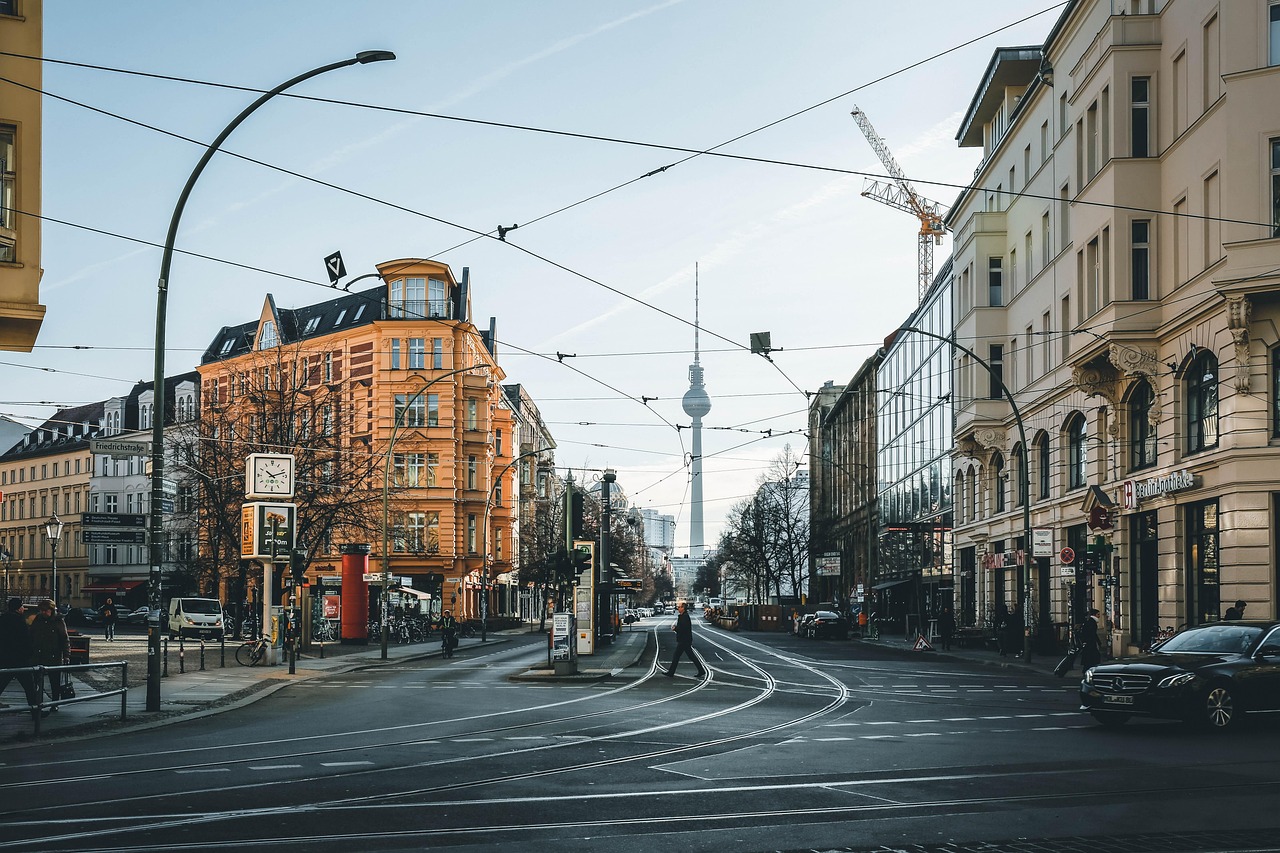

Renting in Berlin means entering a market the Berlin Senate still describes as tight, where flat seekers can send hundreds of applications and receive only a handful of viewing invitations. For one person, plan on €800 to €1,300 a month for a studio (October 2026 figures). Asking rents barely moved in 2025 after years of steep rises, but competition for each flat has not eased. The search is hardest outside the April to June and January to February windows, when students join the queue for the same flats. Your best assets in Berlin are a complete application, a realistic budget and a firm rule never to pay anything before you have visited.
The Berlin rental market remains under strain: prices have levelled off on paper, but demand still far outstrips supply. When it extended the city's rent cap in November 2025, the Berlin Senate justified the decision by the still tense housing market. The Berliner Kurier (March 2026) described flat seekers sending hundreds of applications and receiving only three invitations to a viewing.
Prices in Berlin stopped climbing quickly in 2025. According to the IBB housing market report (March 2026), the median asking rent across Berlin was €15.78 per square metre in 2025, net of utilities, only four cents more than in 2024. The same report notes that this near stability follows several years of rapid increases.
In Berlin, students compete with other newcomers for the same flats, especially outside April to June and January to February. The Berliner Kurier, in the same March 2026 article, presents ImmoScout24 as the largest property platform and reports that it launched a waiting list that alerts applicants to offers matching their district, budget and preferred size; this list complements the usual search rather than replacing it. Classified ad sites and social media also carry Berlin listings, and fraudsters use them too.
If you are weighing Berlin against other cities, our overview of renting in Germany and our guides to renting in Amsterdam and renting in Paris follow the same structure.
In Berlin, our home finders observed rents of €800 to €1,300 a month for a studio, €1,100 to €1,600 for a one-bedroom flat and €1,600 to €2,300 for a two-bedroom flat in October 2026. Per square metre, asking rents vary widely from one district to another.
Monthly rents observed by our home finders, October 2026:
| Type of flat | Monthly rent |
|---|---|
| Studio | €800 to €1,300 a month |
| One-bedroom flat | €1,100 to €1,600 a month |
| Two-bedroom flat | €1,600 to €2,300 a month |
Median asking rents by district in 2025, net of utilities, from the IBB Wohnungsmarktbericht 2025 (published March 2026):
| Area | Median asking rent, 2025 |
|---|---|
| Berlin, whole city | €15.78/m², median 2025 |
| Mitte | €20.00/m², median 2025 |
| Pankow (includes Prenzlauer Berg) | €17.00/m², median 2025 |
| Tempelhof-Schöneberg | €15.79/m², median 2025 |
| Neukölln | €13.61/m², median 2025 |
| Lichtenberg | €13.33/m², median 2025 |
The district figures moved in different directions in 2025: the median stayed flat in Pankow, rose 7.6% in Tempelhof-Schöneberg, fell 6.1% in Neukölln and dropped 12.0% in Lichtenberg, the sharpest fall of all Berlin districts. Each figure covers a whole Bezirk (district), so individual neighbourhoods inside it can sit above or below.
Read every Berlin listing carefully for the type of rent quoted. The Kaltmiete, or Nettokaltmiete, is the rent net of utilities. The district medians above are net of utilities, so your actual monthly payment will be higher.
Moving in also costs money upfront in Berlin. Landlords usually ask for a deposit (Kaution) and the first month's rent. Agree each of these sums in writing and pay only into an account named in a lease you have signed after a viewing.
Berlin is divided into 12 Bezirke (districts), each made up of several neighbourhoods. The five areas below range from the expensive centre to more affordable districts in the south and east.
Mitte is the historic and tourist heart of Berlin, home to the Brandenburg Gate, Museum Island and Alexanderplatz. Cosmopolitan and very well connected by public transport, it suits a first stay in Berlin, especially if you want to be close to everything. It is also the priciest district: Mitte had the highest median asking rent of all Berlin districts in 2025, at €20.00 per square metre.
Prenzlauer Berg, in the district of Pankow, attracts families with children and young professionals. It has a village feel around tree-lined squares such as Kollwitzplatz, well-preserved period buildings, many cafés and organic markets. Gentrification there is well advanced. The Pankow district as a whole had a median asking rent of €17.00 per square metre in 2025, unchanged from 2024 and above the Berlin median.
Friedrichshain, part of the Friedrichshain-Kreuzberg district, is a former working-class area that has become a creative hub, known for clubs such as Berghain and for the East Side Gallery. It is popular with young newcomers and artists who want an alternative atmosphere and nightlife. Rents in Friedrichshain are generally more affordable than in Prenzlauer Berg.
Charlottenburg, in the Charlottenburg-Wilmersdorf district, is the elegant west of Berlin, built around the Kurfürstendamm shopping boulevard. It is favoured by well-off newcomers, professionals and families looking for a refined setting with upmarket shops and restaurants.
Neukölln is a multicultural, working-class district in transformation, popular with artists and young newcomers on a tight budget. Restaurants from all over the world and street art define its atmosphere, while gentrification is changing the area. In 2025 the median asking rent across the Neukölln district was €13.61 per square metre, down 6.1% on 2024 and below the Berlin median of €15.78.
To rent in Berlin you need a ready-to-send application file and a basic grasp of the rent rules that protect new tenants.
Documents commonly requested by Berlin landlords:
If you have no German credit history, ask the landlord or agent which alternative to a Schufa certificate they accept before you apply, and gather solid proof of income from your current or future employer. Having every document scanned and ready lets you reply within hours, which matters in Berlin.
Berlin caps rents on new leases. The new Berlin rent cap regulation (Mietenbegrenzungsverordnung) applies from 1 January 2026 to 31 December 2029, according to Haufe (November 2025). Under this Mietpreisbremse, as extended by the Berlin Senate in November 2025, the rent of a re-let flat may not exceed the ortsübliche Vergleichsmiete, the usual local rent for comparable flats, by more than 10%. Two exceptions matter when you compare listings: new builds first occupied after 1 October 2014 and comprehensively renovated flats.
The reference for the usual local rent in Berlin is the Mietspiegel, the official rent index. The Senate Department for Urban Development (May 2026) announced that the qualified Mietspiegel 2026 came into force on 28 May 2026, replacing the 2024 edition and covering about 1.6 million flats. The Berliner Zeitung (May 2026) reported an average net cold rent of €7.71 per square metre in the Mietspiegel 2026, against an average of €7.21 in the 2024 index; this average reflects existing leases, not the asking rents of advertised flats.
If you suspect that the rent asked when you sign in Berlin is excessive, the Senate's Mietpreisprüfstelle, its rent checking office, is the body to contact, as the Senate pointed out when it extended the cap in November 2025. This describes the rule in general terms; a tenant advice service can assess an individual lease.
Rental fraud is a real risk in Berlin. Berlin police recorded 1,529 cases of rental and housing brokerage fraud in 2023, against 779 in 2020, figures reported by t-online (July 2026). Most scams follow a handful of recognisable patterns.
The classic Berlin scam involves a flat that does not exist, or that the advertiser has no right to let, and a request to transfer the first month's rent or the deposit before any viewing. The warning sign is urgency combined with an excuse for not showing the flat. The defence is simple: never transfer money and never sign a lease without having visited, in person or through someone you trust.
Fraudsters in Berlin copy listings from trusted landlords. Der Tagesspiegel (dpa, July and September 2026) reported on a man who posted listings in the name of a Berlin municipal housing company on a classified ad site and social media, sent fake leases and collected €29,520 in supposed deposits. Five applicants paid him cash deposits of several thousand euros each and never got a flat; he was sentenced to two years and three months in prison, a ruling not yet final. If a listing claims to come from a known housing company, contact that company through its own official channels and never pay in cash.
Some Berlin scammers let one real flat again and again. Der Tagesspiegel (October 2026) covered the trial of a man accused of letting the same one-room flat near Friedrichstraße 39 times without owning it or being authorised to let it, collecting deposits, first rents and kitchen takeover payments worth more than €120,000; he disputes the charges. Being shown around a real flat is therefore not enough: check that the person is the owner or a mandated agent before paying anything.
In a tight market, some Berlin landlords ask more than the Mietpreisbremse allows. The warning sign is a rent well above the Mietspiegel level for a flat that is neither a recent new build nor fully renovated. The defence is to compare the rent with the Mietspiegel 2026 and, if in doubt, contact the Mietpreisprüfstelle.
In Berlin you can find a flat through listing portals such as ImmoScout24, through social media groups and expat communities, through local real estate agencies, through your personal network, employer or university, or with a home finder who searches and visits for you.
| Method | Cost for the tenant | Usual timeframe | Scam risk | Possible without being there | Best for |
|---|---|---|---|---|---|
| Listing portals (ImmoScout24) | Free to browse; check any paid options | Unpredictable, with many applicants per listing | Medium: fake listings circulate | Partly: you can search and apply, but viewings need someone on site | People already in Berlin, with time and some German |
| Social media groups and expat communities | Free | Unpredictable | High: deposit fraud is documented | Partly, with strict caution | People on site who can check every offer in person |
| Local real estate agencies | Agency fee rules apply; ask who pays before signing | Depends on the agency's listings | Low with an established agency | Partly: viewings usually in person | Tenants with a complete application file |
| Personal network, employer or university | Free | Depends on your contacts | Low | Often, through trusted contacts | Relocating employees and students |
| Home finder | On quote | Agreed with the home finder | Low: listings and landlords are checked | Yes: viewings are done for you | Remote searches, newcomers without German, tight deadlines |
A free method is often enough in Berlin. If you are already in the city, have time to attend viewings and speak German, portals and your own network can get you a flat without paying anyone. A home finder is not the best option in every case: its value grows when you cannot visit, do not know the market or are short of time.
A home finder searches listings on your behalf, attends viewings in your place, helps you put together an application file that Berlin landlords take seriously and negotiates with the landlord or agent. The cost is set on quote. Remoters, for example, works with home finders in Berlin: fees are set by a quote after a first conversation, payment for a rental search is held throughout the search and only released to the home finder once it ends, and the service is paid by neither landlords nor agencies.
Which method suits your situation
Start preparing your Berlin search well before you arrive, and aim your active search at the calmer periods. April to June and January to February are the windows when you avoid the bulk of student competition; outside them, the queue for every flat grows longer.
Much of the work can be done from abroad: gathering your documents, setting up alerts on ImmoScout24 and short-listing districts that fit your budget. The viewing is the step you should not skip. Given the scams documented in Berlin, plan for yourself or someone you trust to see the flat before any money changes hands or any lease is signed.
Leave a margin between your arrival date and the date you need the flat. If you cannot travel ahead, temporary accommodation for the first weeks gives you time to visit and choose without pressure.
A home finder answers the three problems that make Berlin hard for newcomers: hundreds of applications sent for only a few viewing invitations, viewings you cannot attend from abroad and scams built on payments before a visit. Your home finder speaks English, visits flats for you, checks that the listing and the landlord are genuine and helps you build an application file that stands out.
Remoters works in more than 220 cities and more than 60 countries. Remoters assigns your request to a home finder in Berlin. Fees depend on the mission and are set by a quote after a first conversation. For a rental, you pay before the search starts; the funds are held throughout the search and only released to the home finder once it ends, and the quote covers the case where the search does not succeed. Remoters is paid by neither landlords nor agencies.
Short answers to the questions our readers ask, written to stand on their own.
It is strongly discouraged in Berlin. A classic rental scam in Berlin asks for the deposit or first rent before any viewing, for a flat that does not exist or that the advertiser cannot let. If you are abroad, have someone you trust visit the flat before you pay or sign anything.
Yes. Berlin's Mietpreisbremse applies from 1 January 2026 to 31 December 2029, and the rent of a re-let flat may not exceed the usual local rent by more than 10%. New builds first occupied after 1 October 2014 and comprehensively renovated flats are exempt. The usual local rent is set by the Mietspiegel 2026, the city's official rent index.
Most Berlin landlords ask for a Schufa certificate, the German credit report, alongside your passport, payslips and proof of income. Newcomers without a German credit history should ask which alternative the landlord accepts and provide strong proof of income instead.
Plan on €1,100 to €1,600 a month for a one-bedroom flat in Berlin, and €800 to €1,300 for a studio, as observed in October 2026. Check whether the rent quoted in a Berlin listing is the Kaltmiete, the rent net of utilities. Add the deposit and first month's rent to your moving-in budget.
April to June and January to February are the calmer periods to search in Berlin, as they avoid most of the student demand. Outside these windows, competition for each flat rises further. Prepare your documents in advance so you can apply as soon as a suitable listing appears.
According to the IBB, Lichtenberg (€13.33 per square metre) and Neukölln (€13.61) had the lowest median asking rents among the districts listed for 2025, against €20.00 in Mitte. Friedrichshain is also generally cheaper than Prenzlauer Berg. These figures cover whole districts, so prices vary from street to street.
Sources cited in this article
A Remoters home finder on site visits for you, negotiates, and secures the lease. No commitment.
Find my home in Berlin4.8 / 5 · 1,100+ Google reviews

 Français
 English
 Español