


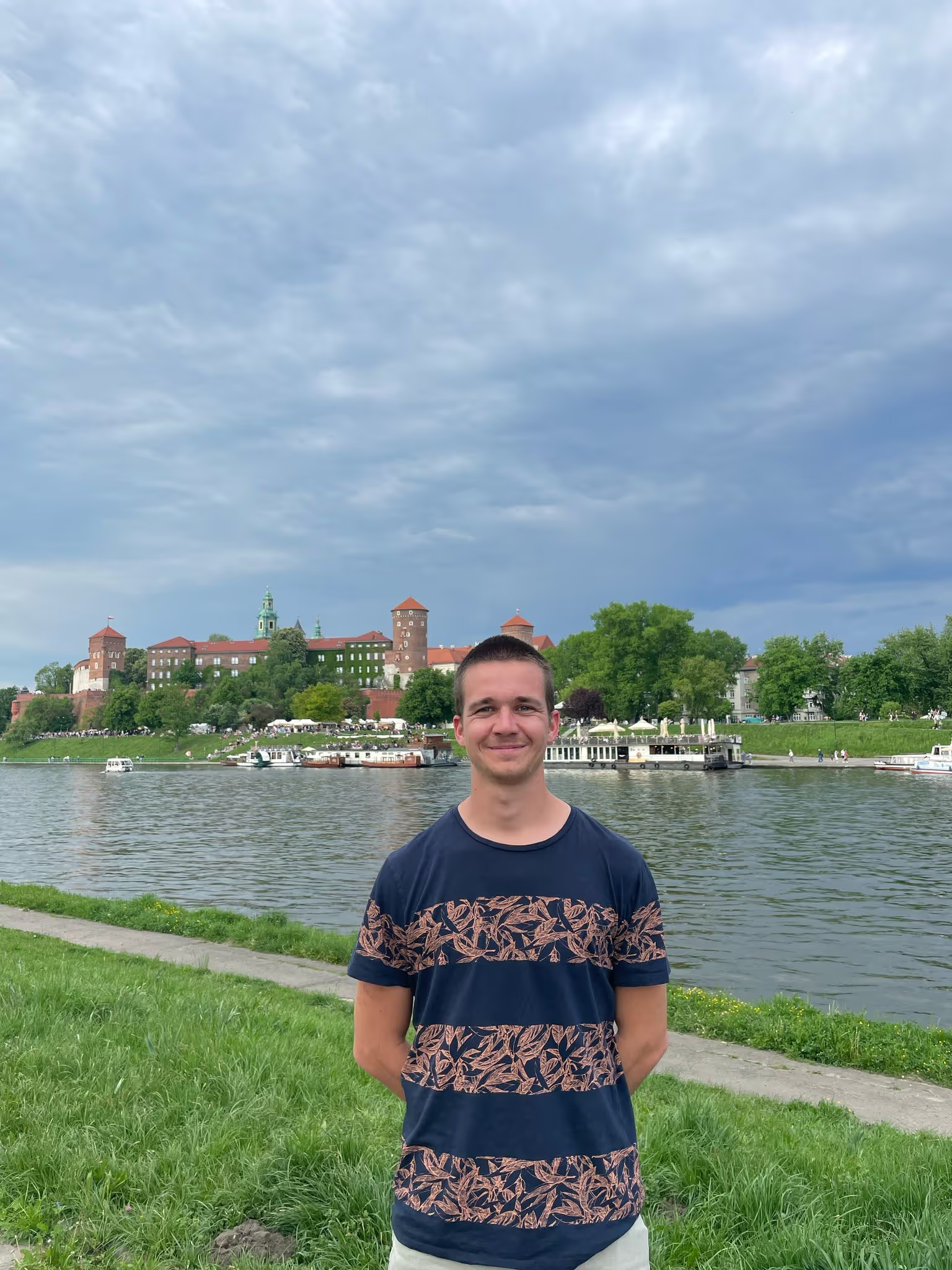
Amalric, or another of our hunters in Krakow, will take care of your search
The total monthly occupancy cost in Krakow typically includes several components. The base rent (czynsz najmu) is the amount agreed with the landlord. On top of this, tenants usually pay a building administration fee (czynsz administracyjny), which covers shared building maintenance, waste collection, and sometimes heating, and is paid to the housing cooperative or building manager. Utility costs (media) — electricity, gas, water, and internet — are generally billed separately and can add approximately 300–600 PLN/mois depending on the season and apartment size.
Under Polish law (Act on the Protection of Tenants' Rights), the security deposit (kaucja) cannot exceed twelve times the monthly rent; in practice, landlords in Krakow typically request one to two months' rent as a deposit (source: Domkaspot, 2024). There is no local housing tax (podatek od nieruchomości) charged directly to tenants. Agency fees, when applicable, are typically equivalent to one month's rent plus 23% VAT, payable by the tenant (source: Wellcome Home, 2024). Home insurance (ubezpieczenie mieszkania) is not legally mandatory for tenants but is increasingly recommended and sometimes required by landlords; basic tenant liability cover costs approximately 100–200 PLN/an.
Krakow in brief for international students: a major Polish university city with affordable rents (1,200–3,000 PLN/mois all-inclusive depending on accommodation type and location), strong public transport, and student-friendly districts including Krowodrza (AGH campus), Kazimierz (near Jagiellonian University), and Grzegórzki (near UEK). Always budget for the building administration fee (czynsz administracyjny) and utilities (media) on top of the advertised rent, and secure your accommodation at least two to three months before the academic year starts.
Finding long-term student accommodation in Krakow requires understanding the local rental market, the city's university geography, and the specific costs involved in renting a flat in Poland. Whether you are enrolling at Jagiellonian University, AGH University of Krakow, or the Cracow University of Economics, your choice of neighbourhood will significantly affect both your daily commute and your monthly budget. Krakow offers a wide spectrum of rental options — from university dormitories (akademiki) and rooms in shared flats to private furnished studios — making it accessible for students at various budget levels. This guide covers the key student districts, typical rental costs, the structure of a Polish lease agreement, and the practical steps to secure a long-term rental in Krakow as an international student.
Krakow is one of Poland's most important university cities, home to major institutions including Jagiellonian University, AGH University of Krakow, and the Cracow University of Economics (UEK), which together attract tens of thousands of students each year, including a growing number of international and Erasmus+ participants. The city's rental market is significantly more affordable than Warsaw, with rents for small apartments clustering around 70–80 PLN per square metre per month according to NBP data (source: Investropa / NBP, 2025–2026). Student-friendly neighbourhoods such as Krowodrza, Kazimierz, and Grzegórzki offer a range of shared flats and private studios to suit different budgets, with monthly all-inclusive costs typically ranging from 1,200 PLN/mois for a room in a shared flat to 3,000 PLN/mois for a furnished studio in a central location. The Polish rental framework requires tenants to pay a security deposit (kaucja) of up to two months' rent, and total occupancy costs include the base rent, a building administration fee (czynsz administracyjny), and utilities (media). Starting the accommodation search two to three months before the academic year begins is strongly recommended, as demand peaks sharply in July and August.
Finding long-term student accommodation in Krakow requires understanding the local rental market, the city's university geography, and the specific costs involved in renting a flat in Poland. Whether you are enrolling at Jagiellonian University, AGH University of Krakow, or the Cracow University of Economics, your choice of neighbourhood will significantly affect both your daily commute and your monthly budget. Krakow offers a wide spectrum of rental options — from university dormitories (akademiki) and rooms in shared flats to private furnished studios — making it accessible for students at various budget levels. This guide covers the key student districts, typical rental costs, the structure of a Polish lease agreement, and the practical steps to secure a long-term rental in Krakow as an international student.
Krakow remains one of the most affordable major student cities in Central Europe. Compared to Warsaw, rents in Krakow are noticeably lower, with the city clustering around 70–80 PLN per square metre per month according to NBP mid-2025 data (source: Investropa / NBP, 2025–2026). Students sharing a flat in districts like Krowodrza or Bronowice can keep their total monthly housing costs well below 2,000 PLN/mois. Those opting for a private studio in Kazimierz or near the Old Town should budget closer to 2,500–3,000 PLN/mois all-inclusive. The Polish rental market in Krakow showed signs of stabilisation in 2024–2025, with asking rents for small apartments remaining broadly flat year-on-year (source: Otodom / Visit Ukraine analysis, spring 2024).
One of the most common mistakes made by international students searching for accommodation in Krakow is confusing the base rent with the total monthly cost. Many listings on platforms such as Otodom or OLX advertise only the czynsz najmu (base rent), without including the building administration fee (czynsz administracyjny) or utilities (media). This can lead students to underestimate their actual monthly outgoings by 500–1,000 PLN/mois.
A second frequent error is failing to document the condition of the apartment at the start of the tenancy. Without a written inventory (protokół zdawczo-odbiorczy) and photographic evidence, tenants risk unjustified deductions from their security deposit (kaucja) at the end of the lease — a particularly common issue in high-demand areas such as Grzegórzki and the Old Town (source: student housing guide for Krakow 2026/2027).
Finally, many students start their search too late. The Krakow rental market tightens significantly in July and August ahead of the academic year, and vacancy rates in well-located areas can drop to under 2% (source: Investropa / NBP, early 2026). Starting your search at least two to three months before your intended move-in date is strongly recommended.
Searching for a property in Krakow while living abroad comes with significant challenges: language barriers, time zone differences, limited local knowledge, and the inability to visit properties in person. A property hunter based in Krakow acts as your trusted local representative, handling every step of the search on your behalf.
They have an in-depth knowledge of Krakow's neighborhoods — from the historic Stare Miasto to the trendy Kazimierz district — and can identify properties that match your criteria before they even hit the public market. They attend viewings for you, provide detailed video reports, and negotiate prices with sellers or landlords in Polish, ensuring you never miss a great opportunity due to distance.
With a property hunter, you save time, avoid costly mistakes, and gain peace of mind knowing a professional is protecting your interests on the ground.
Poland's real estate market operates primarily in Polish, and most listings, contracts, and negotiations are conducted in the local language. For an international buyer or renter, this can be a major obstacle that leads to misunderstandings or even legal issues.
A property hunter in Krakow is fully fluent in Polish and understands the local legal and administrative terminology. They translate listings, communicate directly with sellers, landlords, and notaries, and ensure that every document you sign is clearly explained to you in your language.
Beyond simple translation, they understand the cultural nuances of Polish negotiations, helping you make competitive offers without overstepping local customs. This linguistic and cultural expertise is invaluable when searching from abroad and can make the difference between securing your ideal property and losing it to a local buyer.
Absolutely. Krakow is home to several prestigious universities, including the Jagiellonian University, one of the oldest in Europe, attracting thousands of international students each year. Finding suitable student accommodation from abroad can be stressful, especially with high demand and a competitive rental market.
A property hunter specializing in student rentals in Krakow knows exactly which neighborhoods are best suited for students — such as Krowodrza or areas near the AGH University campus — and has access to a wide network of landlords who are open to renting to international tenants.
They can shortlist apartments that fit your budget, verify the legitimacy of the rental contract, and even help you set up utilities before your arrival. This means you can land in Krakow with your accommodation already secured, allowing you to focus on your studies from day one.
Searching for a property in Krakow independently from abroad exposes you to several serious risks. First, you may fall victim to rental scams, which are unfortunately common on international platforms, where fraudulent listings target foreigners unfamiliar with local prices and practices.
Second, without visiting properties in person, you cannot assess the true condition of an apartment — photos can be misleading, and issues like dampness, noise, or poor building maintenance are impossible to detect remotely. Third, Polish property law has specific requirements for purchase contracts, and without local legal guidance, you could sign agreements that are unfavorable or even invalid.
A property hunter in Krakow eliminates these risks by physically visiting every property on your behalf, conducting thorough due diligence, verifying the legal status of the property, and working alongside trusted local notaries and lawyers. They act as your eyes, ears, and legal shield throughout the entire process, ensuring your investment is safe and sound.
First contact:Your home finder offers a free call to understand your needs.

 I am applying


