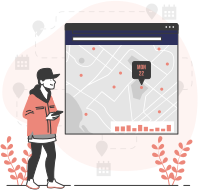

Find a place in Canggu within 4 weeks

Emoji de détective avec chapeau, loupe et cheveux gris.
Shortlists properties and visits them for you

Icône de deux mains se serrant avec des flèches bleues au-dessus symbolisant un accord ou partenariat.
Backs your application and negotiates the lease

Icône de bouclier vert avec une coche blanche, symbole de sécurité ou d'assurance.
Every step protected, no hidden surprises

Why choose a home finder ?

Aude, ou un autre de nos chasseurs à Canggu, prendra en charge votre recherche

Photo chasseur immobilier - Victoria - Canggu

Victoria, ou un autre de nos chasseurs à Canggu, prendra en charge votre recherche

Reliability of listings
Your hunter is there to select the goods, he visits them, alone, with you in person, or with you by video. And above all, he knows how to rely on reliable business partners who only present him with quality goods.
A pen icon
Market access
Your hunter can offer you his own goods, he also has access to all the offers published on the market, and even to quite a few off market offers
A pen icon
Scam risk
At Remoters, we no longer count the number of French people who have signed a rental contract abroad, without understanding it. Some unscrupulous sellers take advantage of this to insert conditions that are disadvantageous for the tenant. This cannot happen when the contract is reviewed by our hunter.
A pen icon
Access to local prices
Symbole d'information en cercle bleu foncé sur fond transparent.
When you search alone, about 85% of the time is spent on research, and 15% on visits. With a hunter, you only do the visits
A pen icon
Application accepted
In areas where homeowners have plenty of candidates to choose from, they rarely choose foreigners first. Your hunter will use his influence (and his mastery of the language) to put your case before others.
A pen icon
Satisfaction
Only 20% of satisfied buyers according to the 2018 Crédit Foncier study. For its part, Remoters gets a score of 4/5 or 5/5 in 95% of cases
A pen icon

Browsing online listings

Weak
Weak
Elevated
Icône rouge de croix X sur fond blanc.
Uncertain
20%

Finding with Remoters

Total
Total
Weak
Very likely
95%
Canggu
Canggu, located on Bali's south-west coast in the Badung regency, is one of Southeast Asia's most popular destinations for long-term rental living among digital nomads, remote workers, and expatriate families. The area is divided into distinct sub-neighbourhoods — including Batu Bolong, Berawa, Pererenan, and Umalas — each offering a different balance of lifestyle, amenities, and rental pricing. Monthly rents for long-term leases range from approximately 400 USD/month for a studio to over 3,000 USD/month for a large villa with a private pool, with most landlords requiring 6 to 12 months of rent paid upfront. The area is well served by coworking spaces such as Dojo Bali at Echo Beach and Outpost Canggu, as well as a dense network of cafés, yoga studios, surf schools, and international restaurants. Foreigners planning a long-term stay must hold an appropriate visa, such as the KITAS or the E33G Remote Worker Visa introduced in 2024.

Canggu in brief: Bali's top destination for long-term rental living, popular with digital nomads, remote workers, and expat families. Key sub-areas include Batu Bolong (lively, central), Berawa (refined, family-friendly), and Pererenan (quiet, residential). Monthly rents range from 400 USD/month for a studio to 3,500 USD/month or more for a large villa with a pool. Most landlords require 6 to 12 months of rent paid upfront. Utilities are billed separately. A valid visa (KITAS or E33G Remote Worker Visa) is required for long-term stays. The rental market is fast-moving — local networks and on-the-ground research are essential.

Canggu has established itself as one of Southeast Asia's most desirable destinations for long-term living, attracting a diverse international community of remote workers, entrepreneurs, creatives, and families. Several factors make it a compelling choice for those seeking a long-term rental base in Bali.

  • Thriving digital nomad infrastructure: Canggu is home to well-known coworking spaces such as Dojo Bali at Echo Beach and Outpost Canggu, offering fast internet, community events, and flexible memberships. Dozens of laptop-friendly cafés complement these dedicated workspaces.
  • Lifestyle and wellness: The area offers an exceptional concentration of yoga studios, gyms, surf schools, and wellness centres. Echo Beach and Batu Bolong Beach provide easy access to surfing and sunset walks.
  • International dining and social scene: Canggu's café and restaurant scene is among the most developed in Bali, with options ranging from local warungs to international cuisine. The area's social calendar is active year-round.
  • Strong expat community: The presence of a large, established international community makes it easier to settle in, find housing recommendations, and build a professional network quickly.
  • Relative proximity to Ngurah Rai International Airport: Canggu is approximately 30 to 45 minutes from the airport (depending on traffic), making it convenient for frequent travellers.
  • Variety of housing options: From compact studios to spacious multi-bedroom villas with private pools, the rental market in Canggu caters to a wide range of budgets and household sizes.

Day-to-day life in Canggu as a long-term tenant is comfortable and well-organised once you are settled. Here is what to expect in practice:

  • Getting around: The most practical way to get around Canggu is by scooter, which can be rented long-term for approximately 60 to 100 USD/month. Ride-hailing apps such as Gojek and Grab are widely available for those who prefer not to ride. Traffic in central Batu Bolong and Berawa can be heavy during peak hours.
  • Groceries and daily shopping: Canggu has a good range of supermarkets, including Pepito Market and Bintang Supermarket, as well as local markets and organic food shops. Most daily needs can be met within the area.
  • Healthcare: Several clinics and international medical facilities are accessible in and around Canggu. For more complex medical needs, the nearest major hospitals are located in Denpasar or Kuta, approximately 20 to 40 minutes away by scooter.
  • Internet and connectivity: Most long-term rentals in Canggu come with Wi-Fi included or available as an add-on. Speeds are generally adequate for remote work, though quality varies by property and provider. Coworking spaces such as Dojo Bali and Outpost Canggu offer reliable high-speed connections as an alternative.
  • Banking and money: ATMs are widely available in Canggu. Many landlords, agents, and service providers prefer payment in cash (Indonesian Rupiah or USD). Opening a local bank account as a foreigner requires a valid long-term visa (KITAS).
  • Community and social life: Canggu has a highly active expat and nomad community. Regular events, meetups, and networking sessions are organised through coworking spaces, community Facebook groups, and local venues, making it relatively easy to build a social and professional network.

The long-term rental market in Canggu has experienced sustained growth over recent years, driven by a rising influx of digital nomads, remote workers, and expatriate families. According to data cited by local property platforms in 2024, Bali hosts an estimated 30,000 digital nomads and expats across various industries, with Canggu consistently ranking as one of the top residential hotspots on the island.

Demand for long-term rentals in Canggu is particularly strong in the one-bedroom villa segment, which appeals to solo professionals and couples seeking a balance between comfort and affordability. Supply, while growing, has struggled to keep pace with demand in the most central sub-areas such as Batu Bolong and Berawa, pushing rents upward and reducing vacancy periods.

The market is characterised by a predominantly informal structure: many properties are listed directly by landlords or through small local agencies rather than large international platforms. This means that the best deals are often found through local networks, Facebook groups dedicated to Bali housing, and on-the-ground research rather than through mainstream listing sites alone.

Lease terms in Canggu are typically 12 months minimum, with landlords strongly preferring tenants who can commit to a full year and pay a significant portion of the rent upfront. Shorter-term arrangements (3 to 6 months) are possible but generally come at a premium. The market is most competitive between June and September, when seasonal demand from tourists and short-stay visitors overlaps with the long-term rental search period.

Canggu is not a single homogeneous neighbourhood but rather a collection of distinct sub-areas, each with its own character, price level, and lifestyle profile. Understanding these differences is essential when searching for a long-term rental.

Batu Bolong is the most central and lively part of Canggu, centred around the famous Batu Bolong Beach and its surrounding streets. It offers the highest concentration of cafés, restaurants, surf shops, and nightlife venues. It is the first choice for those who want to be at the heart of the action, though it is also the noisiest and most traffic-congested sub-area. Rental prices here tend to be at the higher end of the Canggu range.

Berawa sits adjacent to Batu Bolong and offers a slightly more refined atmosphere. It is home to some of Bali's most well-known beach clubs, premium gyms, and family-friendly restaurants. Berawa is popular with expat families and professionals who want modern amenities without the intensity of Batu Bolong. The Canggu Club, a long-established expat social hub, is located in this area.

Pererenan is the quieter, more residential western edge of Canggu. It attracts tenants who prioritise tranquillity, rice field views, and a slower pace of life while remaining within easy reach of central Canggu. Rental prices in Pererenan are generally slightly lower than in Batu Bolong or Berawa for comparable properties.

Umalas is a quieter inland area bordering Canggu, popular with families and long-term residents seeking larger properties, less traffic, and a more local atmosphere. It offers good value for larger villas on annual leases.

Canggu is one of Bali's most in-demand areas for long-term rentals, and its pricing reflects that popularity. Budgeting for accommodation here requires accounting not only for the monthly rent but also for the upfront payment structure that is standard across the island.

For a comfortable one-bedroom villa with a pool in a central location such as Batu Bolong or Berawa, expect to pay between 900 USD and 1,500 USD/month on a yearly lease. More affordable options exist in quieter sub-areas like Pererenan, where similar properties can be found for slightly less. Larger family-sized villas with multiple bedrooms and premium amenities can reach 3,500 USD/month or above in the most desirable pockets of Canggu.

Keep in mind that electricity costs in Bali can be significant, especially with air conditioning running frequently in the tropical heat. Water and internet are additional monthly expenses to factor into your overall housing budget.

Long-term rental prices in Canggu vary significantly depending on the type of property, its location within the area, and the level of furnishing. According to rental platforms active in 2024–2025, studios and compact apartments near the main roads of Batu Bolong and Berawa typically start from around 400 USD/month, making them accessible options for solo digital nomads or couples on a tighter budget.

One-bedroom villas or modern houses with a private garden or small pool generally range from 900 USD to 2,000 USD/month on a 12-month lease. These properties are the most sought-after segment in Canggu, combining comfort with a tropical lifestyle at a reasonable cost.

For larger two- to three-bedroom villas with a private pool, lush garden, and full furnishing, monthly rents typically range from 1,500 USD to 3,500 USD/month or more, depending on proximity to the beach and the quality of finishes. Premium properties in Berawa or near Echo Beach command the highest rates.

It is important to note that most landlords in Canggu require rent to be paid 6 to 12 months in advance, which is standard practice in Bali. A security deposit equivalent to one or two months' rent is also commonly required. Utilities such as electricity, water, and internet are generally not included in the quoted rent and are billed separately.

Finding and securing a long-term rental in Canggu follows a process that differs in several important ways from rental markets in Europe or North America. Here is a step-by-step overview:

  1. Define your requirements and budget: Determine the type of property you need (studio, 1-bedroom villa, family villa), your preferred sub-area (Batu Bolong, Berawa, Pererenan), and your monthly budget including utilities. Remember that most landlords require 6 to 12 months of rent paid upfront.
  2. Search through multiple channels: Use a combination of local rental agencies, Facebook groups (such as Canggu Community and Bali Expat Housing), dedicated Bali property websites, and word-of-mouth recommendations from the local expat community. The best properties often circulate informally before appearing on listing platforms.
  3. Visit properties in person: Always inspect a property before committing. Check the condition of appliances, air conditioning units, the pool (if applicable), water pressure, and internet connectivity. Visit at different times of day to assess noise levels and traffic.
  4. Verify ownership documents: Ask the landlord to provide the land certificate (sertifikat tanah) and confirm their legal right to lease the property. If in doubt, engage a local legal consultant to review the documents.
  5. Negotiate the lease terms: Discuss the rental price, lease duration, advance payment schedule, security deposit (typically 1 to 2 months' rent), and which utilities are included. Ensure all agreed terms are reflected in the written contract.
  6. Sign a bilingual lease agreement: The rental contract should be written in both English and Bahasa Indonesia. Both parties should sign and retain a copy. For longer leases or higher-value properties, notarisation is advisable.
  7. Arrange your visa: Ensure you hold a valid visa for the duration of your stay. Options include the B211A social/cultural visa (extendable), the KITAS (limited stay permit), or the E33G Remote Worker Visa introduced in 2024 for qualifying digital nomads.
  8. Set up utilities: Electricity in Bali operates on a prepaid top-up system. Arrange internet connection (typically through a local provider) and confirm water supply arrangements with your landlord.

Renting long-term in Canggu is generally straightforward, but several common mistakes can lead to costly surprises. Here are the key pitfalls to avoid:

  • Signing without a written lease: Always insist on a formal written rental agreement in both English and Indonesian (Bahasa Indonesia). Verbal agreements offer no legal protection and are difficult to enforce.
  • Not verifying the landlord's ownership: Before signing, ask to see the property's land certificate (sertifikat tanah) to confirm the landlord has the legal right to rent the property. Disputes over ownership do occur.
  • Ignoring utility costs: Many tenants are surprised by electricity bills, which are not included in the rent. Air conditioning usage in Bali's tropical climate can significantly increase monthly costs.
  • Paying the full year upfront without inspection: While paying 6 to 12 months in advance is standard, always visit the property in person and check all appliances, plumbing, and the pool (if applicable) before handing over any money.
  • Renting without checking the visa situation: Foreigners must hold a valid visa to legally reside in Bali. Ensure your visa type (tourist visa, KITAS, or the E33G Remote Worker Visa introduced in 2024) is compatible with a long-term stay before committing to a lease.
  • Choosing a location without testing the commute: Traffic in central Canggu, particularly around Batu Bolong and Berawa, can be heavy. Spend a few days in the area before committing to a specific street or sub-neighbourhood.
  • Skipping a local agent or trusted intermediary: The Canggu rental market moves fast. Working with a reputable local agent reduces the risk of scams and helps navigate lease negotiations in a market where practices differ from Western norms.
  • Visit before you commit: Spend at least one to two weeks in Canggu before signing a long-term lease. Walk the streets of Batu Bolong, Berawa, and Pererenan at different times of day to get a realistic sense of noise, traffic, and daily convenience.
  • Use local networks: Some of the best rental deals in Canggu are shared in Facebook groups such as Canggu Community and Bali Expat Housing before they appear on formal listing platforms. Join these groups early in your search.
  • Budget for upfront costs: Most landlords require 6 to 12 months of rent paid in advance, plus a security deposit of 1 to 2 months' rent. Ensure you have sufficient funds available before beginning your search.
  • Factor in electricity costs: Electricity is not included in most Canggu rents and is billed separately via a prepaid top-up system. Air conditioning usage in Bali's tropical climate can add a meaningful amount to your monthly costs.
  • Get everything in writing: Always insist on a formal bilingual lease agreement (English and Bahasa Indonesia). Verbal agreements are not enforceable and leave you without recourse in the event of a dispute.
  • Check internet connectivity: Fast, reliable internet is essential for remote workers. Test the connection speed at the property before signing, and confirm the provider and plan with the landlord.
  • Understand your visa options: Ensure your visa is valid for the duration of your intended stay. The E33G Remote Worker Visa (introduced in 2024) is available to qualifying digital nomads working for overseas companies. The B211A social visa and KITAS are other common options for long-term residents.
  • Negotiate on longer leases: Landlords in Canggu are generally more flexible on price for tenants who commit to 12 months or more. A longer lease commitment can result in a meaningfully lower monthly rate.

Finding the right long-term rental in Canggu can be time-consuming, especially from abroad. The local market moves quickly, listings are scattered across multiple platforms and informal networks, and lease practices differ significantly from those in Europe. Remoters offers a rental search support service designed to help you navigate this process efficiently — from identifying suitable properties in the right sub-area to reviewing lease terms and coordinating viewings. Whether you are relocating to Batu Bolong, Berawa, or Pererenan, having a knowledgeable point of contact on the ground can save you significant time and help you avoid the most common pitfalls of renting in Bali.

What are you looking for in Canggu?

One of our home finders will look for the ideal property for you

How does it work?

1

First contact:Your home finder offers a free call to understand your needs.

2
Quote: If you’re ready to move forward, you’ll receive a personalized quote via Remoters.
3
Mission start: Once approved and paid, the housing search begins.
4
Support: Your home finder assists you through to the lease signing and your arrival.
5
Feedback: Share your review — your satisfaction is our priority !
Couple allongé sur le lit, pieds contre la tête de lit, s'enlaçant et regardant l'un l'autre.

We are present around the world!

Remoters continues to grow!
We are recruiting new home finders everywhere, do not hesitate to apply
Carte du monde en trois panneaux avec des marqueurs rouges indiquant des emplacements en Amériques, Europe, Afrique et Asie.I am applying