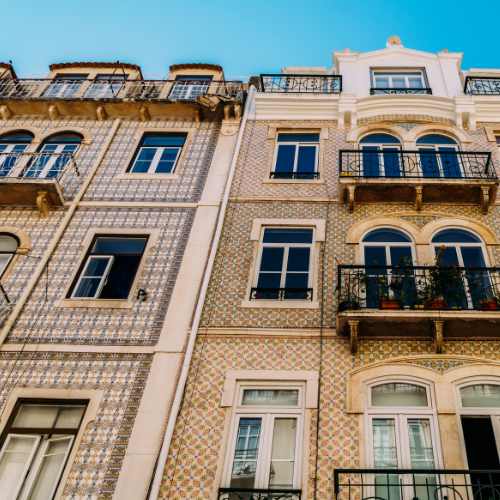

Buying property à Santiago with a dedicated expert

Drapeau du Royaume-Uni avec des bandes rouges, blanches et bleues en forme de croix et de diagonales.
An English-speaking Home Finder who lives there
Emoji de détective avec chapeau, loupe et cheveux gris.
Sees the good places before they hit the market
Médaille d'or avec un ruban rouge indiquant la première place.
Fights for your offer, not the seller's
Symbole dollar vert sur fond blanc.
The real local price, not the foreigner tax

What kind of property are you looking for à Santiago?

Describe your project, one of our real estate hunters will look for the ideal property for you

Why work with a property hunter?

Time spent by the buyer
Symbole d'information en cercle bleu foncé sur fond transparent.
When you search alone, about 85% of the time is spent on research, and 15% on visits. With a hunter, you only do the visits
A pen icon
Access to the off-market
Purchase price
Virtual pre-visits
Secure formalities
Symbole d'information en cercle bleu foncé sur fond transparent.
Customer satisfaction
Only 20% of satisfied buyers according to the 2018 Crédit Foncier study. For its part, Remoters gets a score of 4/5 or 5/5 in 95% of cases
A pen icon

Buying alone abroad

140 hours
Icône rouge de croix X sur fond blanc.
Very difficult negotiation
Icône rouge de croix X sur fond blanc.
20%

Buying  with Remoters

20:00
14% discount obtained on average
95%

Guillaume, or another expert property hunter based à Santiago, will personally manage your search.

Guide local de l’achat immobilier

Acheter un bien immobilier

Buying property in Santiago as a foreign buyer is legally straightforward: no visa or residency is required, and there are no restrictions on foreign ownership of residential property (Expat.cl, 2024). The key steps can be summarised as follows:

  1. Obtain a RUT (Chilean tax ID) from the SII — mandatory before signing any deed.
  2. Search the market via Portal Inmobiliario or TOCTOC; prices are quoted in UF.
  3. Engage a local lawyer for due diligence and contract review.
  4. Negotiate and submit a written offer — expect 5%–9% below the asking price in the current market (TheLatinvestor, 2026).
  5. Sign the promesa de compraventa and pay a deposit (typically 10% of the purchase price).
  6. Complete legal due diligence: title search at the Conservador de Bienes Raíces, certificates of no encumbrances and no outstanding property tax.
  7. Sign the escritura pública before a notary and transfer the balance of the purchase price.
  8. Register the deed at the Conservador de Bienes Raíces — ownership is legally transferred upon registration.

Total closing costs are 1.5%–3.5% for cash purchases and 3%–6% for mortgage-financed transactions (TheLatinvestor, 2026). Non-resident buyers can complete the entire process remotely via a notarised power of attorney. The process typically takes 60 to 120 days from accepted offer to registration.

Prix par type de bien

Fourchettes de prix selon la surface, la typologie et l’usage du logement.

The following purchase price ranges apply to residential properties in Greater Santiago as of 2025–2026, based on data from TheLatinvestor (2026), CChC and Colliers Chile. All prices are acquisition prices; no periodic component applies.

  • Studio apartment (up to ~35 sqm): entry-level purchase prices start from approximately CLP 60 million to CLP 100 million (approximately USD 65,000 to USD 110,000) in peripheral communes. In central or premium communes (Providencia, Las Condes), studios typically sell from CLP 120 million to CLP 200 million.
  • 1-bedroom apartment (~40–55 sqm): typically priced between CLP 100 million and CLP 250 million depending on commune and condition. Well-located units near Metro in Providencia or Ñuñoa fall in the upper part of this range.
  • 2-bedroom apartment (~55–80 sqm): the most actively traded segment in Santiago. Prices range from approximately CLP 130 million to CLP 350 million, with mid-range communes (Ñuñoa, La Florida) at CLP 180–280 million and premium communes (Providencia, Las Condes) at CLP 280–500 million.
  • 3-bedroom apartment or house (~90–130 sqm): family-sized properties in outer communes (Maipú, Puente Alto) are available from approximately CLP 200 million to CLP 350 million. In desirable Santiago communes, prices range from approximately CLP 350 million to CLP 950 million+ (TheLatinvestor / CChC, 2026).
  • Detached house (~100–150 sqm): at the national median of approximately 6,000 UF (CLP 240 million, approximately USD 275,000), a buyer can typically acquire a 3-bedroom family house of 100–120 sqm in an outer Santiago commune such as Puente Alto or Maipú (TheLatinvestor, 2026).
  • Luxury property (150 sqm+, Vitacura / Las Condes): premium properties in top communes are priced from approximately CLP 700 million to CLP 2 billion+ (approximately USD 760,000 to USD 2.2 million+).

Properties are systematically quoted in UF; the daily UF value is published by the Banco Central de Chile and fluctuates with inflation.

Prix et profils des quartiers

Les secteurs à comparer selon le budget, le mode de vie et le projet d’achat.

Santiago is a large, diverse metropolitan area with significant price variation between communes. The following profiles reflect purchase price ranges for residential properties as of 2025–2026, sourced from TheLatinvestor (2026), Banco Central de Chile and Colliers Chile data.

  • Vitacura: Santiago's most expensive commune. Purchase prices per square metre range from approximately CLP 5.5 million to CLP 7.3 million+. Characterised by large houses, luxury apartments, embassies and high-end retail. Predominantly owner-occupied.
  • Las Condes: a major business and residential hub. Typical property prices range from approximately CLP 420 million to CLP 950 million per unit (approximately USD 458,000 to USD 1.04 million). Combines high-rise apartments near Apoquindo with family houses in quieter streets. Strong demand from executives and international buyers.
  • Lo Barnechea: a rapidly developing commune at the foot of the Andes. Premium pricing similar to Las Condes for gated communities and new developments; more affordable options exist in older stock.
  • Providencia: central, walkable and well-served by Metro. Typical purchase prices range from approximately CLP 280 million to CLP 650 million per unit (approximately USD 306,000 to USD 709,000). Popular with professionals, young families and foreign buyers for its urban lifestyle and strong resale market (TheLatinvestor, 2026).
  • Ñuñoa: a vibrant, culturally active commune adjacent to Providencia. More affordable than Providencia, with a strong buyer market for 2- and 3-bedroom apartments. Typical prices for a 2-bedroom apartment start from approximately CLP 180 million to CLP 300 million.
  • La Florida / Peñalolén / La Reina: mid-range communes offering larger floor areas at lower per-square-metre prices. Family houses of 120–200 sqm are available in the CLP 250 million to CLP 500 million range.
  • Maipú / Puente Alto / San Bernardo: peripheral, high-density communes with the most affordable purchase prices in Greater Santiago. Price per square metre ranges from approximately CLP 1.63 million to CLP 2.5 million (TheLatinvestor, 2026). Entry-level apartments start from approximately CLP 60 million to CLP 100 million.

Across Greater Santiago, the price per square metre ranges from approximately USD 1,600 in peripheral areas to USD 4,000 in prime locations such as Vitacura, Las Condes and Providencia, with central zones averaging USD 2,300 to USD 2,500 per square metre (TheLatinvestor, 2025).

Évolution du marché immobilier

Dynamique des prix, niveau de demande et biens les plus recherchés.

Santiago's residential property market has undergone a significant correction and is now in an early recovery phase. After years of strong growth, the market cooled sharply: nominal price growth slowed to just 0.33% in 2024, translating into a real decline of approximately 3.99% after inflation adjustment (Global Property Guide / CChC, 2026). Transaction volumes also contracted, with 17,595 residential units sold in the first three quarters of 2024 — a 13.2% year-on-year decline (TheLatinvestor, 2025).

The recovery began to materialise in 2025. Nationwide residential property sales rose by 26.6% year-on-year in Q3 2025, reaching 13,242 units in that quarter alone, according to CChC data. Cumulatively, sales in the first three quarters of 2025 were up 10.8% year-on-year to 33,080 units. This rebound was driven by improved mortgage access and declining interest rates: the average mortgage rate stood at 4.39% as of June 2025, down from 4.94%–4.96% in 2024 and from peaks above 5% in late 2023 (TheLatinvestor, 2025).

In nominal terms, Santiago property prices in 2026 are estimated to be approximately 5% to 7% higher than a year earlier, though the recovery has been uneven: affordable new apartments and practical family homes recovered faster, while the luxury segment remained more subdued (TheLatinvestor, 2026). Supply slightly outpaces demand across the broader market, and the average time to sell a property in Santiago is approximately 31 months — slower than pre-pandemic averages (TheLatinvestor, 2025). A growing share of new developments — at least 30% in Santiago — now incorporates green certifications, reflecting rising buyer demand for energy-efficient properties (Adventures in CRE / Revista Economía, 2025).

Budget total et fiscalité

Prix d’acquisition, taxes, honoraires et dépenses à prévoir en complément.

When purchasing property in Santiago, the acquisition price is only part of the total budget. Buyers must account for a set of additional costs that typically bring the total outlay to 3% to 6% above the purchase price, depending on whether the transaction is cash-funded or mortgage-backed (TheLatinvestor, 2026).

  • Notary fees (escritura pública): approximately 0.1% to 0.2% of the purchase price, paid to the notary who formalises the public deed.
  • Conservador de Bienes Raíces (property registry): registration fees of approximately 0.2% to 0.5% of the purchase price.
  • Legal fees: typically around 1% of the purchase price for a real estate lawyer handling due diligence and deed review.
  • Real estate agent commission: 2% to 4% of the purchase price, plus 19% VAT on the commission itself — usually paid by the seller but sometimes shared (Expat Focus / Chile, 2026).
  • Stamp tax (Impuesto de Timbres y Estampillas): applies only to mortgage-financed purchases; it is levied on the loan amount and pushes total closing costs toward the 3%–6% range.

For cash purchases, total closing costs generally fall in the 1.5% to 3.5% range. For mortgage-financed purchases, expect 3% to 6% due to the stamp tax and bank appraisal fees (TheLatinvestor, 2026).

Regarding ongoing property taxation, Chile levies an annual Contribuciones (property tax) at a rate of 0.98% to 1.143% on the fiscal value of residential properties, with a surcharge of 1.4% for urban properties above a certain fiscal value threshold (KPMG Chile, 2025). Properties below the minimum fiscal value threshold benefit from an exemption. Prices in Santiago are typically quoted in UF (Unidad de Fomento), Chile's inflation-indexed unit of account, which protects transaction values from peso depreciation.

Étapes de l’acquisition

Le déroulement du projet depuis la définition des critères jusqu’à la remise des clés.
  1. Property search and market analysis: identify target neighbourhoods and property types using platforms such as Portal Inmobiliario or TOCTOC. Prices are quoted in UF; verify the daily UF-to-CLP rate published by the Banco Central de Chile.
  2. Obtain a RUT: apply for Chile's tax identification number at an SII office (in person or via a legal representative). This step must be completed before signing any binding document (SII / Hudson Real Estate, 2024).
  3. Engage a real estate lawyer: appoint a local attorney to conduct legal due diligence and review all contractual documents throughout the process.
  4. Property viewings and selection: visit shortlisted properties; commission an independent technical survey if structural or building condition concerns arise.
  5. Negotiate the offer: submit a written offer, typically in UF. In 2025–2026, actual sale prices in Chile are generally 5% to 9% below listing prices (TheLatinvestor, 2026).
  6. Legal due diligence: the buyer's lawyer requests a title search (estudio de títulos) from the Conservador de Bienes Raíces covering at least 10 years of ownership history, plus certificates confirming no encumbrances, no outstanding property tax and no pending municipal fines.
  7. Sign the promesa de compraventa: a preliminary notarised agreement binding both parties to the transaction at the agreed price and conditions. A deposit — typically 10% of the purchase price — is paid at this stage.
  8. Mortgage application (if applicable): submit the full mortgage file to the chosen bank; the bank orders an independent appraisal of the property.
  9. Sign the escritura pública: the final public deed is executed before a Chilean notary. Both parties (or their authorised representatives) must be present. The balance of the purchase price is transferred at this point.
  10. Registration at the Conservador de Bienes Raíces: the notary submits the deed for inscription in the property registry. Once registered, the buyer becomes the legal owner. This step typically takes a few business days to a few weeks.

The entire process from accepted offer to registration generally takes 60 to 120 days for a standard transaction, and can be completed remotely via power of attorney (TheLatinvestor, 2026).

Documents nécessaires

Les justificatifs à préparer pour acheter et financer un bien en Italie.

To purchase property in Santiago as a foreign buyer, the following documents are required at each stage of the acquisition process:

  • Valid passport: the primary identity document required throughout the process, from the RUT application to the notary deed.
  • RUT (Rol Único Tributario): Chile's national tax identification number, mandatory for all buyers — including foreigners — to appear on the title deed and in the property registry. Obtained in person at any SII (Servicio de Impuestos Internos) office by presenting a passport, or through a legal representative (Hudson Real Estate / SII guidance, 2024).
  • Proof of funds or mortgage pre-approval: bank statements or a letter of pre-approval from a Chilean or international lender, required before signing the promesa de compraventa.
  • Poder notarial (power of attorney): if the buyer cannot be physically present in Chile, a notarised and apostilled power of attorney authorises a local representative — typically a lawyer — to sign all documents on the buyer's behalf (TheLatinvestor, 2026).
  • Promesa de compraventa: the preliminary purchase agreement signed by both parties, setting out the agreed price, conditions and timeline.
  • Escritura pública (public deed): the final notarised deed of sale, drafted and executed before a Chilean notary.
  • Certificate of no encumbrances (certificado de hipotecas y gravámenes): issued by the Conservador de Bienes Raíces, confirming the property is free of mortgages, liens or legal charges.
  • Certificate of no outstanding property tax (certificado de deuda de contribuciones): issued by the SII or the Tesorería General de la República.
  • Building permit and reception certificate (permiso de edificación / recepción final): for new builds or recently constructed properties, confirming legal compliance with municipal planning rules.

Foreign buyers do not need a Chilean visa or residency permit to purchase property in Santiago (Expat.cl, 2024).

Vérifications juridiques et techniques

Contrôles du titre, du cadastre, de la conformité et de l’état réel du bien.

Before signing the promesa de compraventa or the final escritura pública, buyers in Santiago should complete a thorough legal and technical due diligence process. The following checks are standard practice:

  • Title search (estudio de títulos): conducted by the buyer's lawyer at the Conservador de Bienes Raíces, covering at least 10 years of ownership history. This verifies that the seller holds valid, unencumbered title and that ownership can be transferred without legal complications (Property Title Search in Chile / Conservador de Bienes Raíces, 2024).
  • Certificate of no encumbrances (certificado de hipotecas y gravámenes): confirms the property is free of mortgages, liens, easements or other charges registered against it.
  • Certificate of no outstanding property tax (certificado de deuda de contribuciones): issued by the SII or Tesorería General, confirming all annual Contribuciones payments are up to date.
  • Municipal certificates: verify that no outstanding fines, municipal debts or administrative proceedings are registered against the property.
  • Building permit and final reception certificate (permiso de edificación / recepción final): confirms the property was built with the required municipal authorisation and has been formally accepted as compliant with planning regulations. Absence of a recepción final is a significant legal risk, particularly for houses.
  • Zoning and land use verification: check municipal zoning plans (Plan Regulador Comunal) to confirm the permitted use of the land and any development restrictions, particularly relevant for plots and houses (Lex Agency / Santiago municipal registries, 2024).
  • Condominium regulations (reglamento de copropiedad): for apartments, review the building's internal rules, common area maintenance fees (gastos comunes) and any restrictions on use or modifications.
  • Technical survey: for older properties or houses, an independent structural and building survey is strongly recommended to identify defects, water ingress, electrical or plumbing issues before committing to the purchase.
  • Military and environmental restrictions: for land or properties near borders or protected areas, verify that no military or environmental constraints apply (Lex Agency, 2024).

These checks are typically coordinated by the buyer's real estate lawyer and should be completed before the promesa de compraventa is signed and the deposit is paid.

Financement des non-résidents

Apport, crédit, justificatifs et contraintes propres aux acquéreurs étrangers.

Foreign nationals can access mortgage financing in Chile, but lending conditions are more restrictive than for Chilean residents. The key parameters for non-resident buyers in Santiago are as follows:

  • Minimum down payment: Chilean banks typically require a 30% down payment from foreign borrowers, corresponding to a maximum loan-to-value (LTV) ratio of 70%. Some premium banks may accept a 25% down payment for applicants with exceptional credit profiles or substantial local assets, but these cases represent a minority of approvals (TheLatinvestor, 2025).
  • Interest rates: as of June 2025, the average mortgage rate in Chile stood at 4.39%, down from 4.94%–4.96% in 2024 (TheLatinvestor, 2025). Rates for non-residents may be slightly higher depending on the lender's risk assessment.
  • Additional guarantees: banks may require a Chilean co-signer or additional collateral if the applicant has no local credit history (TheLatinvestor, 2025).
  • Stamp tax (Impuesto de Timbres y Estampillas): applies to the mortgage loan amount and adds to the total closing cost, pushing it toward 3%–6% of the purchase price for financed transactions.
  • Mortgage market size: the total value of outstanding mortgage loans in Chile reached CLP 89.75 trillion (approximately USD 104 billion) in January 2026, growing 5% year-on-year, reflecting a healthy and active lending market (Banco Central de Chile, 2026).
  • Remote process: foreign buyers who cannot be present in Chile can complete the mortgage application and property purchase through a notarised power of attorney granted to a local lawyer or representative (TheLatinvestor, 2026).

There is no restriction on the number of properties foreigners can own in Chile, and no quota system applies to condominium buildings (TheLatinvestor, 2026).

Investissement et potentiel locatif

Demande locative, loyers, rendement indicatif et règles à anticiper.

Santiago is one of Latin America's most liquid residential property markets, and purchasing an apartment with a view to generating rental income is a common investment strategy. Key indicators for buyers considering the purchase of an investment property in Santiago are as follows:

  • Gross rental yields: most apartment investments in Santiago generate gross yields in the range of 4% to 6%. The national average gross rental yield stood at 4.82% in Q1 2026, broadly stable from 4.81% in Q3 2025 (TheLatinvestor / Global Property Guide, 2026).
  • Best-performing locations: smaller units in high-demand corridors such as Providencia and Ñuñoa, particularly near Metro stations, tend to achieve yields toward the upper end of the range. Providencia specifically offers gross yields typically between 4.8% and 5.2% for well-located properties (TheLatinvestor, 2025).
  • Occupancy and demand: occupancy rates in Santiago's small apartment segment reached approximately 98% as of late 2025, with well-connected properties in Providencia and Ñuñoa typically leased within 30 days (TheLatinvestor, 2026).
  • Premium eastern communes: Las Condes, Vitacura and Lo Barnechea command significantly higher purchase prices, which compresses yields relative to more central or mid-range communes.
  • Capital appreciation: Santiago property prices in 2026 are estimated to be approximately 5%–7% higher in nominal terms than a year earlier, following the 2024 correction (TheLatinvestor, 2026).

Buyers should factor in property management costs, annual Contribuciones (property tax), and potential vacancy periods when calculating net returns. Properties near Metro lines and with outdoor spaces or home-office configurations attract the strongest buyer and occupier demand.

Méthode de négociation

Analyse du juste prix et arguments employés pour défendre l’offre d’achat.

Negotiating a property purchase in Santiago follows a structured process with several important conventions that buyers should understand before making an offer.

  • Prices quoted in UF: virtually all residential properties in Santiago are listed and negotiated in UF (Unidad de Fomento), Chile's inflation-indexed unit of account. The daily UF-to-CLP conversion rate is published by the Banco Central de Chile. This protects the agreed value from peso fluctuations between offer and closing (TheLatinvestor, 2026).
  • Typical discount from asking price: in 2025–2026, actual sale prices in Chile are generally 5% to 9% below listing prices, with a central estimate near 7%. A property listed at CLP 200 million may typically close near CLP 186–190 million (TheLatinvestor, 2026).
  • Market context: the average property in Santiago takes approximately 31 months to sell in the current market, giving buyers meaningful negotiating leverage — particularly for properties that have been listed for an extended period (TheLatinvestor, 2025).
  • Written offer: offers are submitted in writing, specifying the proposed price in UF, the proposed deposit amount, and any conditions (subject to financing, subject to satisfactory title search, etc.).
  • Role of the agent: the corredor de bienes raíces typically acts as intermediary between buyer and seller. In Santiago, most listed properties are marketed through agents, and direct seller-to-buyer transactions are less common in urban areas.
  • Promesa de compraventa: once an offer is accepted, the preliminary agreement (promesa) is signed and a deposit — typically around 10% of the agreed purchase price — is paid. This deposit is generally forfeited by the buyer if they withdraw without cause, or returned doubled to the buyer if the seller withdraws.
  • Leverage factors: cash buyers, buyers with mortgage pre-approval, and buyers willing to accommodate the seller's preferred timeline tend to achieve better negotiated prices.

Honoraires et contenu de la prestation

Mode de rémunération, services inclus et éventuels frais complémentaires.

Property transactions in Santiago typically involve several professional service providers, each with their own fee structure. The main costs are as follows:

  • Real estate agent (corredor de bienes raíces): the standard commission ranges from 2% to 4% of the purchase price, plus 19% VAT on the commission amount. This fee is commonly paid by the seller but may be shared or negotiated. Agents handle property search, viewings, negotiation, and coordination between parties (Expat Focus / Chile, 2026).
  • Real estate lawyer: legal fees for a full purchase service — including title search, contract review, deed drafting and registry coordination — typically amount to approximately 1% of the purchase price. For foreign buyers, the lawyer may also handle the RUT application and power of attorney.
  • Notary (notario): notary fees for executing the escritura pública are approximately 0.1% to 0.2% of the purchase price (TheLatinvestor, 2026).
  • Conservador de Bienes Raíces (property registry): registration fees are approximately 0.2% to 0.5% of the purchase price.
  • Bank appraisal (tasación): required for mortgage-financed purchases; cost varies by bank and property value but is typically a fixed fee of a few hundred USD.
  • Technical survey: optional but recommended for older properties or houses; cost depends on the property size and the surveyor engaged.

In total, professional fees and closing costs for a cash purchase in Santiago typically represent 1.5% to 3.5% of the purchase price, rising to 3% to 6% for mortgage-financed transactions due to the stamp tax on the loan (TheLatinvestor, 2026).

Préparez votre achat immobilier

Décrivez votre projet, votre budget et vos critères. Un chasseur local peut rechercher les biens, organiser les visites, vérifier les informations et vous accompagner pendant la négociation.

Décrire mon projet

How does it work?

1

Your home finder researches the ideal property based on your criteria.

2
They conduct property viewings, some on your behalf, others with you in person or remotely.
3
They negotiate the price and terms on your behalf. The hunter is still at 100% on the buyer's side.
4
They assist you until all documents are signed
5
It accompanies you until the signature of all documents, to avoid pitfalls.
Couple allongé sur le lit, pieds contre la tête de lit, s'enlaçant et regardant l'un l'autre.

Our hunters around the world!

Remoters continues to grow!
We are recruiting new hunters, do not hesitate to apply.
Carte du monde en trois panneaux avec des marqueurs rouges indiquant des emplacements en Amériques, Europe, Afrique et Asie.I am applying

FAQ

Une main portant un bracelet noir pointe sur l'écran d'un ordinateur portable tandis qu'une autre main tape.

Why choose an English-speaking home finder à Santiago?

Searching for a property abroad requires time, organization, and a good understanding of local regulations, which may differ from those in France (notaries, land registry, taxation, etc.). A property hunter helps simplify the process by managing the search, selecting relevant properties, organizing viewings, and reviewing legal documents.

They work closely with the buyer to define clear criteria, identify suitable opportunities, and negotiate the best possible price. They may attend property visits on the buyer’s behalf or accompany them during a stay in Istanbul.

Thanks to their local network, the home finder also facilitates the legal and logistical steps of the purchase. From the initial search to the final signature, they provide tailored support and help ensure a smooth and secure buying experience.

Une personne porte une chemise à carreaux et utilise une calculatrice bleue sur un bureau en bois.
How much does the Remoters home finder service cost?

Remoters works with home finders around the world. Since real estate prices vary greatly depending on the location, it is difficult to apply a single pricing structure.

Each home finder sets their own fees based on the complexity of the project and the local market. You can contact them directly to learn more about their terms and evaluate the value they can bring to your purchase.

In many cases, the home finder’s fee is largely offset by negotiating a better purchase price and helping reduce legal and administrative risks.

Main tenant holding keys with house-shaped keychain near a door lock.
Will I have access to all the offers on the market?

There are three main types of property listings on the real estate market:

  • Agency listings
  • Private listings (from individual sellers)
  • “Off-market” opportunities, meaning properties that are not yet publicly advertised

When searching on your own, you will usually access the first two categories, provided you are familiar with the main listing platforms and able to identify outdated or misleading ads sometimes used to attract buyers.

Property hunters can provide access to all three types of opportunities. They screen listings before presenting them and leverage their network to identify relevant off-market properties.

Off-market does not mean properties remain hidden indefinitely. Rather, it refers to opportunities shared before public release, allowing buyers to position themselves early. Thanks to their professional network, a property hunter can help increase access to these early opportunities.

Cuisine moderne avec évier double, robinet chromé, cuisinière à gaz et décorations vertes et citrons jaunes.
Home finder vs real estate agent

When searching for a property abroad, your need is typically a home finder🕵️

A real estate agent represents the seller through a sales mandate and aims to market properties to potential buyers.

A home finder, on the other hand, represents the buyer through a search mandate. They do not have properties to sell. Instead, they search for a specific property based on the buyer’s criteria, sourcing opportunities from both private sellers and agencies.

While the real estate agent advises and supports the seller throughout the transaction, the home finder advises and assists the buyer at every step of the purchasing process, always acting in the buyer’s best interest.

Un homme en costume tenant une petite maison colorée dans sa main devant une calculatrice.
How do you choose the right home finder?

The right home finder is the one who helps you purchase a property that best matches your needs and criteria, at an optimized price.

Their fees should remain reasonable and create real value for your project. In many cases, the cost of the service is largely offset by stronger negotiation outcomes and better purchase conditions 🤑

When buying abroad, working with a French-speaking property hunter who is well established in the local market can be particularly beneficial. This helps reduce misunderstandings and increases your chances of accessing high-quality opportunities through their local network.

Deux mains d'hommes serrées en signe de poignée de main, fond beige neutre.

Interested in becoming a home finder for Remoters à Santiago ?

You should have:

🧙 Strong experience in the local real estate market
🌐 A solid network to access a wide range of property opportunities
⚖️ In-depth knowledge of local regulations
💸 Excellent negotiation skills
🛎️ Above all, a genuine desire to support clients in their property purchase projects

If this sounds like you, we encourage you to apply — we would be happy to welcome you to our network.

Button TextButton Text