
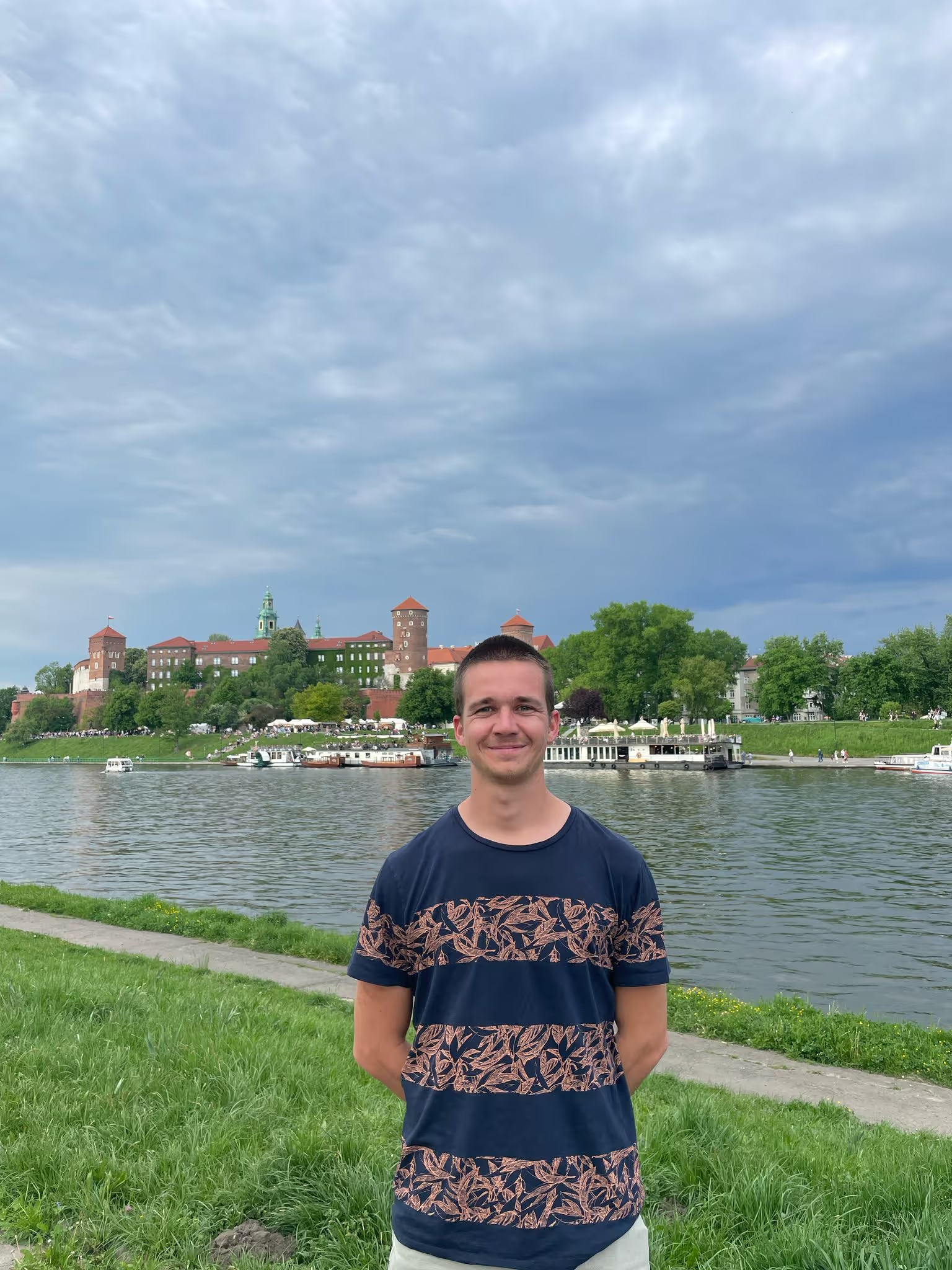
Our home finder in Krakow will help you find your ideal home

Save time and skip the stress

A hand holding a small white house with a red roof and a blue door.
Rent at real local prices

Green shield icon with a white tick: security.
Secure your new home safely from abroad

Why choose a home finder ?

Home finder Amalric (Krakow)

Amalric or another of our home finders will handle your search.

Reliability of listings
Information symbol.
Your home finder is there to select the goods, he visits them, alone, with you in person, or with you by video. And above all, he knows how to rely on reliable business partners who only present him with quality goods.
Icône de fermeture (croix)
Market access
Information symbol.
Your home finder can offer you his own goods, he also has access to all the offers published on the market, and he knows the local agencies and landlords
Icône de fermeture (croix)
Scam risk
Information symbol.
At Remoters, we no longer count the number of French people who have signed a rental contract abroad, without understanding it. Some unscrupulous sellers take advantage of this to insert conditions that are disadvantageous for the tenant. This cannot happen when the contract is reviewed by our home finder.
Icône de fermeture (croix)
Access to local prices
Information symbol.
When you search alone, about 85% of the time goes into searching and 15% into viewings. With a home finder, you only do the viewings
Icône de fermeture (croix)
Application accepted
Information symbol.
In areas where homeowners have plenty of candidates to choose from, they rarely choose foreigners first. Your home finder will use his influence (and his mastery of the language) to put your case before others.
Icône de fermeture (croix)
Information symbol.
Satisfaction
Only 20% of satisfied buyers according to the 2018 Crédit Foncier study. For its part, Remoters gets a score of 4/5 or 5/5 in 95% of cases
Icône de fermeture (croix)

Browsing online listings

Weak
Weak
Elevated
Red cross icon.
Uncertain
20%

Finding with Remoters

Total
Total
Weak
Very likely
95%
Krakow

Krakow is one of Poland's most dynamic cities for long-term rentals, attracting a large and growing international community of professionals and students. The rental market is competitive, particularly in central districts such as Old Town, Kazimierz and Podgórze, where demand consistently outpaces supply of quality long-term apartments.

Rental prices vary significantly by neighbourhood and apartment size. A studio or one-bedroom apartment in a central area typically starts from around 2,500 PLN/month, with larger or more premium properties reaching 5,000–7,000 PLN/month or more (source: UrbanKey Estate, 2024). Utilities, administration charges and a security deposit of one to three months' rent must be factored into the total budget.

The administrative process of renting in Krakow presents specific challenges for foreign nationals: lease agreements are in Polish, the lease type (umowa najmu vs. najem okazjonalny) has important legal implications, and address registration (zameldowanie) rights must be confirmed before signing. Working with a local rental search specialist significantly reduces these risks and accelerates the search process.

In short: Krakow is a competitive long-term rental market with strong demand from expats and students. Central districts like Old Town, Kazimierz and Podgórze are popular but fast-moving. Rents for a one-bedroom apartment in a central area typically start from around 2,500 PLN/month, with utilities adding approximately 1,000–1,100 PLN/month on top (sources: UrbanKey Estate 2024; Expat.com 2024). Lease agreements are in Polish, the lease type matters — especially for foreigners — and address registration rights must be confirmed before signing. Working with a local rental search specialist saves time, reduces legal risk and significantly improves your chances of securing the right apartment at the right price.

The Krakow long-term rental market is competitive and presents several practical challenges for newcomers:

  • High demand and fast-moving listings: Krakow is Poland's second-largest city and a major hub for international companies, universities and a growing expat community. Popular apartments in central districts are often taken within days of listing (source: Expat Arrivals, 2024).
  • Peak season pressure: The rental market is particularly competitive between May and August, when many international employment contracts and academic years begin. Availability tightens and landlords can be more selective during this period.
  • Rising rents: Rental prices in Krakow have increased significantly in recent years, driven by strong demand from both domestic and international tenants, including a large influx of foreign workers (source: Global Property Guide, 2024).
  • Short-term vs. long-term supply: A significant share of centrally located apartments — particularly in Old Town and Kazimierz — are listed on short-term platforms rather than the long-term rental market, reducing the supply of quality long-term options in the most desirable areas.
  • Opaque pricing: Listings frequently separate base rent from administration charges and utilities, making direct price comparisons difficult without requesting a full cost breakdown.
  • Limited English-language communication: Many landlords and local agents operate primarily in Polish, creating a communication barrier for international tenants who do not speak the language.

Navigating the administrative side of renting in Krakow can be challenging, especially for international tenants. The main hurdles include:

  • Language barrier: Lease agreements in Poland are typically written in Polish. Signing a document you cannot fully read is a significant risk, as key clauses — including deposit conditions, notice periods and liability terms — are often buried in standard-looking language (source: yourkrakowcompass.com, 2024).
  • Address registration (zameldowanie): Registering your address at your rental property is a legal requirement for residents staying longer than three months. Some landlords are reluctant to allow this, so it is essential to confirm the right to register before signing.
  • Occasional lease restrictions: The najem okazjonalny lease type structurally prevents tenants from registering their address at the property and requires a notarised declaration of an alternative address. For most foreigners, this lease type is problematic (source: yourkrakowcompass.com, 2024).
  • Proof of income: Landlords routinely request employment contracts, bank statements or other proof of stable income. Freelancers and newly arrived expats may find it harder to satisfy these requirements.
  • Foreign nationals' documents: As a foreign national, you will generally need to provide a valid passport or ID, proof of legal residence (visa or residence permit), and sometimes references from previous landlords (source: Expat Arrivals, 2024).
  • Notarial requirements: Some lease types require notarised documents, adding time and cost to the process.

Finding a long-term rental in Krakow independently can be time-consuming and risky, particularly for international tenants unfamiliar with the local market and legal framework. A rental search specialist adds value at every stage of the process:

  • Local market knowledge: A specialist knows current rental price ranges by neighbourhood, understands which districts suit different lifestyles and budgets, and can identify quality listings before they are widely advertised.
  • Language and negotiation: Communicating with landlords, reviewing Polish-language leases and negotiating terms requires fluency and experience. A specialist handles all of this on your behalf.
  • Legal protection: From verifying the landlord's identity to checking lease clauses, deposit conditions and the zameldowanie right, a specialist ensures you are protected before you sign anything.
  • Time savings: Rather than spending weeks browsing listings, visiting unsuitable apartments and managing landlord communications, you benefit from a curated shortlist matched to your criteria.
  • Avoiding costly mistakes: The most expensive errors in the Krakow rental market — signing a problematic lease, missing hidden charges, or losing a deposit — are precisely the ones a specialist is trained to prevent.
  • Support for expats: International tenants and relocated professionals face specific administrative challenges in Poland. A specialist with expat experience can guide you through registration, documentation and settling-in formalities.

A rental search specialist working in Krakow carries out a thorough due-diligence process on every property before presenting it to a client. Key checks typically include:

  • Landlord identity and ownership: Verifying that the person offering the lease is the legitimate owner or an authorised representative, and that the property is free of encumbrances that could affect the tenancy.
  • Lease type: Confirming whether the agreement is a standard umowa najmu or a najem okazjonalny (occasional lease), as the two carry very different implications for tenants — particularly for foreigners (source: yourkrakowcompass.com, 2024).
  • Zameldowanie clause: Checking that the lease explicitly permits the tenant to register their temporary or permanent address (zameldowanie) at the property, which is essential for administrative purposes in Poland.
  • Deposit terms: Reviewing the deposit amount, conditions for its return, and the timeline for reimbursement at the end of the tenancy.
  • Utility and administration charges: Clarifying which costs are included in the rent and which are billed separately, to avoid unexpected charges.
  • Property condition report: Documenting the state of the apartment at handover with a signed inventory and photographic evidence, protecting the tenant against unjustified deposit deductions.
  • Notice periods and break clauses: Ensuring the lease terms are fair and that exit conditions are clearly defined.
  • Building rules and restrictions: Checking house rules regarding pets, subletting, and renovation works.

A structured rental search process in Krakow typically unfolds in the following stages:

  1. Needs assessment: Defining your requirements — budget, preferred neighbourhoods, apartment size, lease duration, must-have amenities and move-in date — to build a precise search brief.
  2. Market briefing: Receiving an up-to-date overview of current rental conditions in Krakow, including realistic price ranges by district, market availability and any seasonal factors affecting your timeline.
  3. Property search and pre-selection: Identifying suitable listings across multiple channels — agency databases, private landlord networks and online platforms — and filtering out properties that do not meet your criteria or raise red flags.
  4. Viewings: Organising and accompanying you to a curated shortlist of viewings, whether in person or via video call for remote searches, with professional assessment of each property's condition and value.
  5. Lease review and negotiation: Reviewing the Polish-language lease agreement in detail, flagging unfavourable clauses, confirming the lease type, deposit terms and zameldowanie rights, and negotiating improvements where possible.
  6. Move-in support: Assisting with the property handover, signing the condition report, and guiding you through the address registration process and any other administrative steps required upon arrival in Krakow.

Rental search support in Krakow is particularly valuable for the following profiles:

  • Expatriates and international employees: Professionals relocated to Krakow by their employer, often on tight timelines, who need a reliable, legally sound rental quickly and cannot afford to navigate the market alone.
  • International professionals: Newcomers choosing Krakow for its quality of life, affordability and infrastructure, who want a comfortable long-term base without the hassle of a remote search.
  • Students and academics: International students enrolling at Krakow's universities (including the Jagiellonian University) who are unfamiliar with the Polish rental market and need guidance on safe, well-located accommodation.
  • Families relocating to Krakow: Families moving with children who need to balance proximity to international schools, green spaces and family-friendly amenities with a realistic budget.
  • Non-Polish speakers: Any tenant who does not speak Polish and needs support with landlord communication, lease translation and administrative procedures.
  • Professionals with limited time: Anyone who cannot dedicate weeks to apartment hunting and wants a specialist to manage the search efficiently on their behalf.

Krakow is divided into distinct neighbourhoods, each with its own character, rental price range and lifestyle profile. Here is a practical comparison for long-term tenants:

  • Stare Miasto (Old Town): The historic heart of Krakow, ideal for those who want to be at the centre of cultural life. Rental prices are among the highest in the city, and long-term supply is limited due to competition from short-term platforms. Best suited to tenants who prioritise location above all else.
  • Kazimierz: The former Jewish Quarter, now Krakow's most vibrant bohemian district, with independent cafés, galleries, bars and a strong international community. Popular with young professionals and creatives. Rents are high but generally below Old Town levels.
  • Podgórze: Located across the Vistula River, Podgórze offers a more residential atmosphere with a growing arts and culinary scene. It provides good value compared to central districts and is well connected by tram. Suitable for families and professionals seeking a quieter base.
  • Krowodrza: A balanced, predominantly residential district close to major universities, parks and the city centre. Popular with academics and families. Rents are moderate and the area offers a good quality of life.
  • Nowa Huta: A more affordable outer district with a distinctive socialist-realist architectural heritage. Rents are significantly lower than in central areas, making it an option for budget-conscious tenants willing to commute.
  • Grzegórzki and Prądnik Czerwony: Up-and-coming residential districts offering a mix of modern apartments and good transport links, increasingly popular with young professionals seeking more space for their budget.

Rental prices vary considerably between these districts. Always request current market data from a local specialist before finalising your neighbourhood choice.

When budgeting for a long-term rental in Krakow, the headline rent is only part of the picture. Here are the key cost items to factor in:

  • Rent: A studio or one-bedroom apartment in a central district typically ranges from approximately 2,500 PLN/month to 4,500 PLN/month, depending on location and finish. Two-bedroom apartments in popular expat areas can reach 5,000–7,000 PLN/month or more (source: UrbanKey Estate, 2024).
  • Utilities: Heating, electricity, water and waste charges are often billed separately. According to Expat.com (2024), utilities for a standard apartment average around 1,000–1,100 PLN/month, though this varies significantly by season due to Poland's cold winters.
  • Security deposit: Polish law caps the deposit at a maximum of twelve months' rent. In practice, most landlords in Krakow request one to three months' rent as a deposit, payable upfront before move-in.
  • Agency fees: If you use a local letting agent, expect a fee of up to one month's rent (source: Krakow Expats Directory, 2024).
  • Administrative rent (czynsz administracyjny): Many listings quote a base rent plus a separate building administration charge covering shared services. Always ask for the total monthly cost before comparing listings.
  • Internet and TV: Typically not included in rent; budget an additional 50–100 PLN/month.

Always request a full cost breakdown in writing before signing any lease agreement.

Tenants searching for a long-term rental in Krakow frequently make the following mistakes. Avoiding them can save significant time, money and stress:

  • Signing without understanding the lease: Agreeing to a Polish-language contract without a proper translation or legal review is one of the most common and costly errors. Key clauses on deposits, notice periods and liability may be unfavourable.
  • Ignoring the lease type: Failing to check whether the agreement is a standard lease or a najem okazjonalny can have serious consequences, particularly for foreigners who cannot easily provide a notarised alternative address declaration.
  • Not verifying the total monthly cost: Focusing only on the advertised rent and overlooking administration charges, utilities and internet costs leads to budget surprises after move-in.
  • Skipping the property condition report: Moving in without a signed, photographic inventory leaves tenants vulnerable to unjustified deposit deductions at the end of the tenancy.
  • Delaying the search: Starting the search too late — especially for a move planned between May and August — means missing the best options in a fast-moving market.
  • Not confirming zameldowanie rights: Failing to check that the lease permits address registration before signing can create administrative complications for residence permits and other official procedures.
  • Paying a deposit without a written agreement: Never transfer any funds to a landlord before a written lease is signed and all terms are agreed in writing.

Here are practical tips to help you find and secure a long-term rental in Krakow:

  • Start your search early: The market is most competitive between May and August. If your move-in date falls in this period, begin your search at least two to three months in advance.
  • Always request the total monthly cost: Ask for a breakdown of base rent, administration charges (czynsz administracyjny), and estimated utility costs before comparing listings.
  • Confirm the lease type before viewing: Check whether the landlord is offering a standard umowa najmu or a najem okazjonalny. The latter has specific implications for foreigners, including restrictions on address registration.
  • Insist on a zameldowanie clause: Make sure the lease explicitly grants you the right to register your address at the property. This is essential for residence permits and other official procedures.
  • Never sign without a translation: If you do not read Polish, have the lease professionally translated or reviewed before signing. Do not rely on verbal assurances from the landlord or agent.
  • Document the property condition at handover: Take dated photos and videos of every room and sign a written condition report with the landlord. This protects your deposit at the end of the tenancy.
  • Use reputable platforms and networks: In addition to major listing portals, local expat communities and specialist rental agencies in Krakow can provide access to more listings and reliable landlords.
  • Budget for the deposit upfront: Most landlords require one to three months' rent as a security deposit, payable before or at the time of signing. Ensure this is clearly documented in the lease.

Remoters connects international tenants with vetted local rental search specialists in Krakow who understand the specific needs of expats and relocated professionals. Through the Remoters platform, you can:

  • Access specialists with proven experience in the Krakow long-term rental market.
  • Benefit from end-to-end support, from defining your search criteria to signing your lease and registering your address.
  • Receive guidance on lease types, deposit terms and tenant rights under Polish law.
  • Get help navigating the language barrier and administrative procedures specific to foreign nationals renting in Poland.

Whether you are relocating for work, studying at one of Krakow's universities, or choosing the city as your long-term base, Remoters helps you find the right apartment in the right neighbourhood — safely and efficiently.

Many landlords and agents in Krakow work mainly in Polish. The local Home Finder speaks to them for you, spots homes in the Old Town, Kazimierz or Podgórze before they go, and views them on your behalf.

They filter out the short-let listings that clutter the centre, help you build your application and read the lease, written in Polish, before you sign.

A free first conversation, with no commitment, with a Home Finder in Krakow who speaks English, followed by a quote: price, what is included, and what happens if the search does not succeed.

The Home Finder shortlists listings, views homes with photos or video, then supports your application through to signing. You pay online on the platform; the funds stay held during the search and are released to the Home Finder only at the end.

The first is signing a Polish-language contract without understanding it: the deposit, notice period and responsibilities hide in it. The second is najem okazjonalny, an occasional lease that prevents you from registering your address (zameldowanie) and is a problem for most foreigners.

The Home Finder checks the type of lease, the zameldowanie, the total monthly cost beyond the advertised rent and gets a signed inventory with photos.

Plan for a valid passport or ID, proof of legal residence (visa or residence permit), proof of stable income (employment contract, bank statements) and sometimes references from former landlords.

After a stay of more than three months, registering your address (zameldowanie) is compulsory: get that right written into the lease before you sign, as some landlords object. The Home Finder checks it from the shortlisting stage.

What are you looking for in Krakow?

One of our home finders will look for the ideal property for you

How does it work?

1

First contact:Your home finder offers a free call to understand your needs.

2
Quote: If you’re ready to move forward, you’ll receive a personalized quote via Remoters.
3
Mission start: Once approved and paid, the housing search begins.
4
Support: Your home finder assists you through to the lease signing and your arrival.
5
Feedback: Share your review — your satisfaction is our priority !
A couple lying on a bed, embracing.

We are present around the world!

Remoters continues to grow!
We are recruiting new home finders everywhere, do not hesitate to apply
World map with red markers in the Americas, Europe, Africa and Asia.I am applying

Frequently asked questions

A hand pointing at a laptop screen while the other types.
What does a Home Finder do to get you a rental in Krakow despite the Polish language barrier?

Many landlords and agents in Krakow work mainly in Polish. The local Home Finder speaks to them for you, spots homes in the Old Town, Kazimierz or Podgórze before they go, and views them on your behalf.

They filter out the short-let listings that clutter the centre, help you build your application and read the lease, written in Polish, before you sign.

A hand pointing at a laptop screen while the other types.
How does a rental search in Krakow work from abroad?

A free first conversation, with no commitment, with a Home Finder in Krakow who speaks English, followed by a quote: price, what is included, and what happens if the search does not succeed.

The Home Finder shortlists listings, views homes with photos or video, then supports your application through to signing. You pay online on the platform; the funds stay held during the search and are released to the Home Finder only at the end.

A hand pointing at a laptop screen while the other types.
What lease traps await a foreigner renting in Krakow?

The first is signing a Polish-language contract without understanding it: the deposit, notice period and responsibilities hide in it. The second is najem okazjonalny, an occasional lease that prevents you from registering your address (zameldowanie) and is a problem for most foreigners.

The Home Finder checks the type of lease, the zameldowanie, the total monthly cost beyond the advertised rent and gets a signed inventory with photos.

A hand pointing at a laptop screen while the other types.
Which documents and address registration should you plan for to rent in Krakow?

Plan for a valid passport or ID, proof of legal residence (visa or residence permit), proof of stable income (employment contract, bank statements) and sometimes references from former landlords.

After a stay of more than three months, registering your address (zameldowanie) is compulsory: get that right written into the lease before you sign, as some landlords object. The Home Finder checks it from the shortlisting stage.