
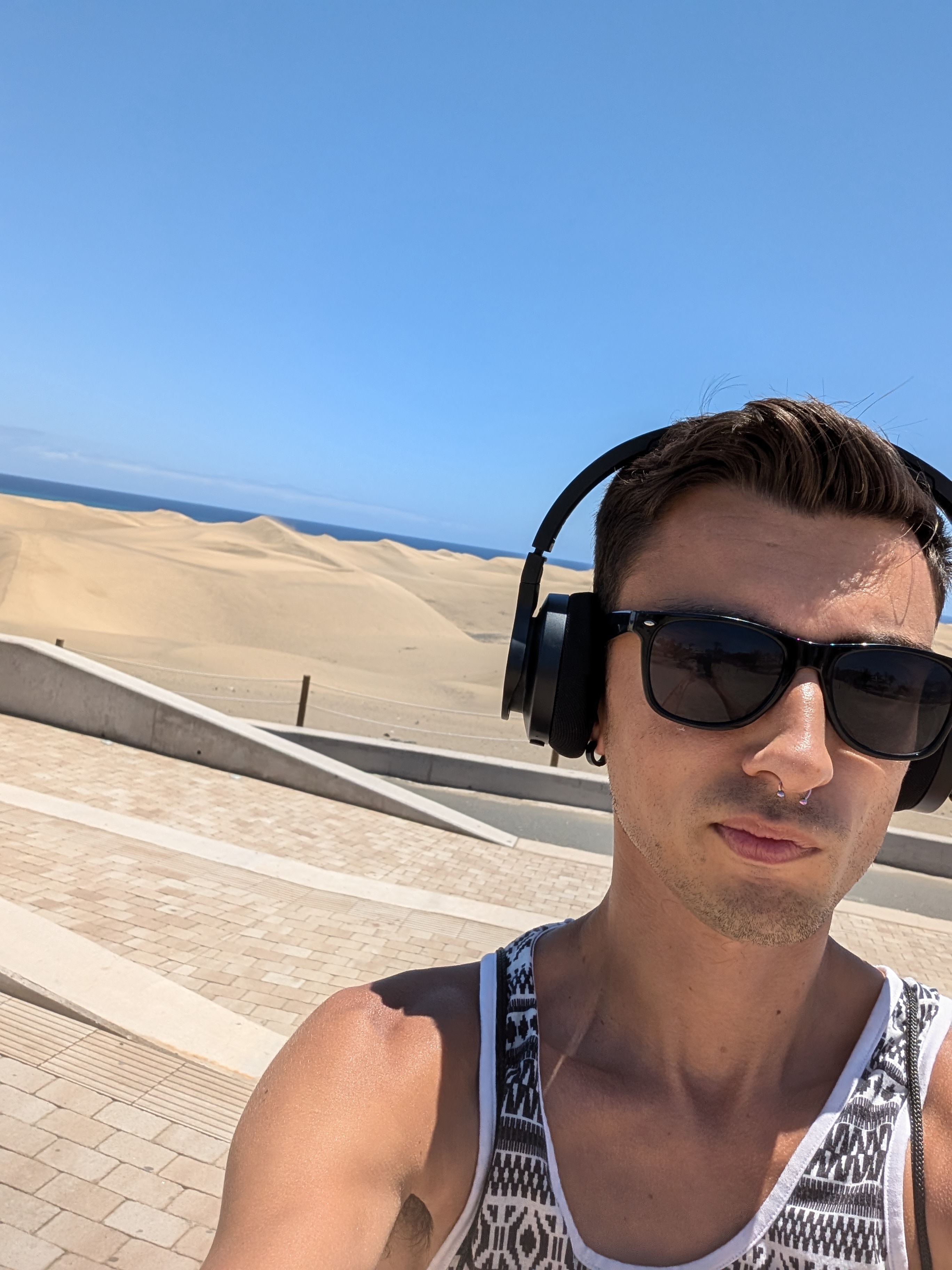
Our home finder in Gran Canaria will help you find your ideal home

Save time and skip the stress

Main tenant une petite maison blanche avec un toit rouge et une porte bleue.
Rent at real local prices

Icône de bouclier vert avec une coche blanche, symbole de sécurité ou d'assurance.
Secure your new home safely from abroad

Why choose a home finder ?

Photo chasseur immobilier - Bertrand - Gran Canaria

Bertrand, ou un autre de nos chasseurs in Gran Canaria, prendra en charge votre recherche

Reliability of listings
Symbole d'information en cercle bleu foncé sur fond transparent.
Your hunter is there to select the goods, he visits them, alone, with you in person, or with you by video. And above all, he knows how to rely on reliable business partners who only present him with quality goods.
Icône de fermeture (croix)
Market access
Symbole d'information en cercle bleu foncé sur fond transparent.
Your hunter can offer you his own goods, he also has access to all the offers published on the market, and even to quite a few off market offers
Icône de fermeture (croix)
Scam risk
Symbole d'information en cercle bleu foncé sur fond transparent.
At Remoters, we no longer count the number of French people who have signed a rental contract abroad, without understanding it. Some unscrupulous sellers take advantage of this to insert conditions that are disadvantageous for the tenant. This cannot happen when the contract is reviewed by our hunter.
Icône de fermeture (croix)
Access to local prices
Symbole d'information en cercle bleu foncé sur fond transparent.
Quand vous cherchez seul, environ 85% du temps est consacré aux recherches, et 15% aux visites. Avec un chasseur, vous ne faites que les visites
Icône de fermeture (croix)
Application accepted
Symbole d'information en cercle bleu foncé sur fond transparent.
In areas where homeowners have plenty of candidates to choose from, they rarely choose foreigners first. Your hunter will use his influence (and his mastery of the language) to put your case before others.
Icône de fermeture (croix)
Symbole d'information en cercle bleu foncé sur fond transparent.
Satisfaction
Only 20% of satisfied buyers according to the 2018 Crédit Foncier study. For its part, Remoters gets a score of 4/5 or 5/5 in 95% of cases
Icône de fermeture (croix)

Browsing online listings

Weak
Weak
Elevated
Icône rouge de croix X sur fond blanc.
Uncertain
20%

Finding with Remoters

Total
Total
Weak
Very likely
95%
Gran Canaria

Gran Canaria is one of Spain's most sought-after destinations for long-term rentals, attracting digital nomads, expats, retirees, and international families drawn by its year-round mild climate, diverse neighbourhoods, and well-developed infrastructure. The island's rental market is centred on Las Palmas de Gran Canaria in the north and the resort towns of the south (Playa del Inglés, Maspalomas, Puerto de Mogán). Supply has tightened significantly in recent years due to competition from short-term tourist rentals and growing international demand, making it increasingly important to approach the search in a structured and well-informed way.

Long-term rentals in Gran Canaria are governed by Spain's Ley de Arrendamientos Urbanos (LAU), which sets clear rules on deposits, contract duration, and tenant rights. Foreign tenants must navigate additional administrative steps — including NIE registration and empadronamiento — before they can fully settle in. Working with a local rental search specialist helps streamline this process, avoid common pitfalls, and secure a property that genuinely matches your needs and budget.

In short: Gran Canaria offers a wide range of long-term rental options, from urban apartments in Las Palmas to coastal homes in the south — but the market is competitive, supply is tight, and the administrative process can be complex for foreign tenants. Rental prices vary significantly by area, with one-bedroom apartments ranging from around 750 EUR/month in outer suburbs to over 1,600 EUR/month in premium coastal locations (source: Estatefy, 2025). Spanish tenancy law (LAU) protects tenants, but knowing your rights and preparing the right documentation from the start is essential. Working with a local rental search specialist helps you navigate the market faster, avoid costly mistakes, and secure a lease that is legally sound and genuinely suited to your needs.

The long-term rental market in Gran Canaria presents several structural challenges for prospective tenants:

  • Supply shortage: Available long-term rental stock has been under sustained pressure. According to Investropa (2025), active listings across Gran Canaria have fallen sharply, with capital city Las Palmas seeing declines of up to 20% in available properties over a single year.
  • Competition from short-term platforms: A significant share of the island's housing stock is diverted to tourist rentals via platforms such as Airbnb, reducing the supply available for long-term residents and pushing up rents.
  • High demand from international tenants: Gran Canaria attracts a growing number of digital nomads, remote workers, retirees, and expats, all competing for a limited pool of long-term rental properties — particularly in Las Palmas and the southern resort areas.
  • Seasonal market dynamics: In tourist-heavy zones such as Playa del Inglés and Maspalomas, landlords may prefer short-term lets during peak season, making it harder to secure a long-term lease at a stable price year-round.
  • Rapid price increases: Rental prices in Las Palmas and popular coastal areas have risen considerably in recent years, driven by tourism pressure, population growth, and foreign demand (source: MDPI Urban Science study, 2025).
  • Landlord preference for local tenants: Some landlords are reluctant to rent to foreigners without a local guarantor or a strong local credit history, creating an additional barrier for international tenants.

Navigating the administrative side of renting in Gran Canaria can be challenging, especially for newcomers and non-Spanish speakers:

  • NIE requirement: Non-EU foreigners typically need a Número de Identificación de Extranjero (NIE) to sign a rental contract. While it is technically possible to use a passport number instead, many landlords and agencies insist on a NIE, which can take several weeks to obtain.
  • Empadronamiento: Registering at the local town hall (empadronamiento) is required for official residency documentation and access to public services. To register, you generally need a valid rental contract of at least six months, your passport, your NIE, and proof of recent rent and utility payments.
  • Language barrier: Rental contracts, utility set-up forms, and town hall procedures are conducted in Spanish. Errors in understanding contract terms can have significant financial consequences.
  • Deposit registration: The landlord is legally obliged to register the deposit with the Instituto Canario de la Vivienda. Tenants should request written confirmation that this has been done.
  • Proof of income: Landlords frequently request payslips, employment contracts, or bank statements. Freelancers, remote workers, and self-employed tenants may find it harder to satisfy these requirements without additional documentation.
  • Utility transfers: Setting up or transferring electricity and water contracts in your name requires coordination with local providers and can involve delays.

Finding a long-term rental in Gran Canaria from abroad — or even locally — is increasingly complex. Here is why working with a rental search specialist makes a real difference:

  • Access to off-market listings: Many landlords in Gran Canaria prefer to rent through trusted local contacts rather than listing publicly. A specialist with local networks can surface properties that never appear on mainstream portals.
  • Time savings: Coordinating viewings, translating contracts, and liaising with landlords across time zones is time-consuming. A specialist handles this on your behalf.
  • Contract protection: Spanish rental law (LAU) contains important tenant rights, but also loopholes that some landlords exploit. A specialist identifies abusive clauses and ensures your contract is legally sound.
  • Negotiation leverage: In a competitive market with limited supply, having a local professional negotiate on your behalf can make the difference between securing a property and losing it to another applicant.
  • Administrative guidance: From NIE applications to empadronamiento registration and utility set-up, a specialist can guide you through each administrative step in the correct order.
  • Neighbourhood expertise: Gran Canaria's rental market is highly localised. A specialist can match your lifestyle, budget, and practical needs to the right area — whether that is the urban energy of Las Palmas or the quieter pace of the southern coast.

A rental search specialist supporting your move to Gran Canaria will typically carry out a thorough set of checks on your behalf before you commit to any lease:

  • Landlord legitimacy: Verifying that the person offering the property is the legal owner or an authorised representative, and that no outstanding disputes or encumbrances affect the tenancy.
  • Contract compliance: Ensuring the lease is a proper contrato de arrendamiento de vivienda habitual governed by the LAU, not a contrato de temporada (seasonal contract) used improperly to bypass tenant protections.
  • Deposit registration: Confirming that the landlord will register the fianza with the Instituto Canario de la Vivienda within the legally required 30-day window.
  • Property condition: Inspecting the flat in person or via a trusted local contact — checking for damp, structural issues, appliance condition, and internet connectivity quality.
  • Neighbourhood fit: Assessing whether the location matches your lifestyle needs: proximity to transport, coworking spaces, schools, or healthcare facilities.
  • Rental price benchmarking: Cross-checking the asking rent against current market rates for comparable properties in the same area to ensure you are not overpaying.
  • Clause review: Flagging any abusive or non-standard clauses in the contract, such as excessive penalty fees, unlawful subletting restrictions, or ambiguous maintenance responsibilities.

A structured rental search process in Gran Canaria typically unfolds in the following stages:

  1. Needs assessment: Defining your requirements — budget, preferred area, property type, lease duration, and any specific needs such as pet-friendliness, parking, or proximity to coworking spaces.
  2. Market briefing: Receiving an up-to-date overview of current rental conditions, typical price ranges by neighbourhood, and realistic expectations for your budget.
  3. Property search: Sourcing listings from local agencies, Spanish portals (Idealista, Fotocasa), and off-market contacts. Filtering results against your criteria.
  4. Viewings: Organising and attending in-person or virtual viewings. Providing honest feedback on each property's condition, location, and value for money.
  5. Application support: Helping you prepare your rental dossier — proof of income, bank statements, employment documentation, and identity documents — in the format expected by Spanish landlords.
  6. Contract review: Checking the lease for compliance with the LAU, flagging any non-standard or potentially harmful clauses, and confirming that deposit terms are lawful.
  7. Move-in coordination: Assisting with the property inventory, utility transfers, and the empadronamiento registration process once you have the keys.

Rental search support in Gran Canaria is particularly valuable for the following profiles:

  • Digital nomads and remote workers: Professionals relocating to Las Palmas or the south of the island who need a reliable, well-connected home base and are unfamiliar with the local rental market.
  • Expats and international relocators: Individuals or families moving from abroad who face language barriers, lack local contacts, and need guidance on administrative procedures such as NIE registration and empadronamiento.
  • Retirees: Those seeking a long-term base in a mild climate, often in the southern resort areas (Maspalomas, Puerto de Mogán, Arguineguín), who want reassurance that their lease is legally sound and their rights are protected.
  • Young professionals: Tenants on a tighter budget looking for good-value neighbourhoods in Las Palmas — such as Schamann, Tafira, or La Isleta — who need help navigating a fast-moving market.
  • Families: Households requiring larger properties near good schools and green spaces, for whom finding the right neighbourhood is as important as the property itself.
  • Short-stay-to-long-stay transitions: Visitors who arrived on a tourist or digital nomad visa and now wish to transition to a stable long-term rental arrangement with proper legal documentation.

Gran Canaria's rental market is highly diverse. Here is a comparative overview of the main areas to consider for a long-term rental:

  • Las Canteras & Guanarteme (Las Palmas): The most popular area for digital nomads and expats. Direct access to Las Canteras beach, strong café and coworking culture, and good transport links. Among the most in-demand — and therefore most expensive — neighbourhoods in the city. Studio apartments near Las Canteras typically ranged from approximately 850 EUR/month to 1,200 EUR/month in 2024 (source: Estatefy, 2024).
  • Vegueta & Triana (Las Palmas): The historic heart of Las Palmas, with colonial architecture, cultural venues, and a lively café scene. Generally more affordable than the beachfront areas, with a strong local character. Well suited to those who prioritise culture and walkability over beach proximity.
  • La Isleta (Las Palmas): A traditional fishing neighbourhood adjacent to Las Canteras, increasingly popular with artists and younger renters. Offers renovated flats at slightly lower rates than the beachside streets.
  • Schamann & Tafira (Las Palmas suburbs): More affordable outer neighbourhoods, with one-bedroom apartments ranging from approximately 750 EUR/month to 1,000 EUR/month as of 2025 (source: Estatefy, 2025). Better suited to those prioritising space and value over central location.
  • Playa del Inglés (south): A dynamic resort area popular with international tenants and remote workers. One-bedroom apartments typically range from approximately 950 EUR/month to 1,400 EUR/month (source: Estatefy, 2025). High demand means good properties are taken quickly.
  • Maspalomas & Meloneras (south): Calmer and more upmarket than Playa del Inglés, with a strong retiree and expat community. One-bedroom apartments range from approximately 1,200 EUR/month to 1,600 EUR/month (source: Estatefy, 2025).
  • Puerto Rico, Arguineguín & Puerto de Mogán (southwest): Quieter coastal towns favoured by retirees and long-stay expats. One-bedroom apartments typically range from approximately 900 EUR/month to 1,300 EUR/month (source: Estatefy, 2025).

When budgeting for a long-term rental in Gran Canaria, several cost items beyond the monthly rent deserve close attention:

  • Security deposit (fianza): Under Spanish law (LAU), landlords must collect exactly one month's rent as a mandatory deposit for residential leases. They may additionally request up to two months' rent as a supplementary guarantee, bringing the maximum upfront amount to three months' rent. Any request exceeding this is unlawful.
  • Agency fees: Since Spain's 2023 Housing Law, agency fees must be paid by the landlord, not the tenant. If an agent asks you to pay a full month's commission, you are entitled to refuse.
  • Utilities: Most long-term rental contracts in Gran Canaria do not include electricity, water, or internet. Budget these separately; costs vary depending on property size and season.
  • Rent indexation: For contracts signed after 26 May 2023, annual rent increases are capped by the IRAV index (Índice de Referencia de Arrendamientos de Vivienda), published monthly by Spain's INE statistics office.
  • Location premium: Rental prices vary significantly across the island. As of 2025, a one-bedroom apartment in central Las Palmas (Vegueta, Triana, Las Canteras area) typically ranges from approximately 1,000 EUR/month to 1,350 EUR/month, while outer suburbs such as Schamann or Tafira offer one-bedroom flats from around 750 EUR/month to 1,000 EUR/month (source: Estatefy, 2025).
  • Furnished vs. unfurnished: Furnished apartments command a premium but reduce your initial setup costs. Clarify what is included before signing.

When searching for a long-term rental in Gran Canaria, avoiding these common mistakes can save you significant time, money, and stress:

  • Signing a seasonal contract for a primary residence: Some landlords offer a contrato de temporada instead of a standard residential lease. If you intend to live in the property as your main home, insist on a contrato de arrendamiento de vivienda habitual, which provides full LAU tenant protections.
  • Paying excessive upfront amounts: The legal maximum is one month's fianza plus up to two months' additional guarantee. Paying more than three months' rent upfront is unlawful under the LAU.
  • Skipping a physical inspection: Renting a property sight unseen — based only on photos — is risky. Condition, noise levels, internet quality, and neighbourhood atmosphere can differ significantly from online listings.
  • Ignoring the empadronamiento process: Failing to register at the town hall promptly can delay access to healthcare, banking, and other essential services.
  • Not verifying the landlord's identity: Rental scams do occur. Always verify that the person signing the contract is the legitimate owner or an authorised agent before transferring any money.
  • Underestimating total monthly costs: Rent is only part of the picture. Factor in utilities, community fees (gastos de comunidad), and internet when assessing affordability.
  • Searching only on international platforms: Many of the best long-term rental listings in Gran Canaria appear on local Spanish portals or through local agencies and word-of-mouth networks, not on international sites.

Practical tips for securing a long-term rental in Gran Canaria:

  • Start your search before you arrive: The best properties in Las Palmas and the south are taken quickly. Begin researching neighbourhoods and contacting local agencies at least four to six weeks before your intended move-in date.
  • Use local Spanish portals: Platforms such as Idealista and Fotocasa list a wider range of long-term rentals than international sites. Local Facebook groups and expat community forums are also valuable sources of off-market listings.
  • Prepare your rental dossier in advance: Landlords typically request proof of income (payslips, bank statements, or a freelance contract), a copy of your passport or NIE, and sometimes a reference from a previous landlord. Having these documents ready in Spanish or with a certified translation speeds up the process.
  • Know your legal rights: Under the LAU, your landlord cannot ask for more than three months' rent upfront (one month fianza plus up to two months' additional guarantee). Agency fees are the landlord's responsibility since the 2023 Housing Law.
  • Insist on a residential lease: Make sure your contract is a contrato de arrendamiento de vivienda habitual, not a seasonal contract, if you are renting as your primary residence.
  • Register at the town hall promptly: The empadronamiento is essential for accessing healthcare, banking, and other services. You will need your rental contract, passport, and NIE to complete the registration.
  • Visit in person before signing: If at all possible, view the property in person — or ask a trusted local contact to do so — before committing to a lease.

Remoters connects you with vetted rental search specialists who know the Gran Canaria market from the inside. Whether you are relocating to Las Palmas, settling in the south, or transitioning from a short stay to a long-term lease, Remoters can match you with a local expert who will handle the search, the paperwork, and the negotiation on your behalf — so you can focus on your move, not the logistics.

Buying property in Gran Canaria from abroad can be a complex and stressful process, especially when you cannot be physically present. A property hunter acts as your trusted local expert on the ground, handling every step of the search on your behalf.

  • They have in-depth knowledge of the local real estate market, including off-market listings not available online.
  • They save you time by pre-selecting properties that match your exact criteria, so you only visit the best options.
  • They negotiate the best price and conditions on your behalf, leveraging their local expertise.
  • They coordinate with notaries, lawyers, and local authorities to ensure a smooth and legally secure transaction.
  • They provide real-time updates and virtual tours so you stay fully informed from wherever you are in the world.

With a property hunter, your investment in Gran Canaria is protected even when you are thousands of kilometres away.

Searching for property in Gran Canaria from a foreign country comes with a unique set of challenges that can quickly become overwhelming without local support:

  • Language barriers: Many listings, contracts, and administrative documents are in Spanish, making it difficult to fully understand what you are agreeing to.
  • Time zone differences: Coordinating viewings and calls with sellers or agents can be complicated when you are in a different time zone.
  • Limited market visibility: The best properties in Gran Canaria are often sold quickly or through local networks before they ever appear on international portals.
  • Legal complexity: Spanish property law, NIE numbers, taxes, and notary procedures require expert guidance to avoid costly mistakes.
  • Risk of scams: Remote buyers are more vulnerable to fraudulent listings or misleading property descriptions.

A property hunter based in Gran Canaria eliminates all these obstacles, giving you full peace of mind throughout your purchase journey.

Property hunters listed on Remoters are experienced in working with international clients and have developed a fully remote-friendly process to make your property search seamless:

  1. Initial briefing: Your hunter starts with a detailed consultation (via video call) to understand your budget, lifestyle needs, and property goals in Gran Canaria.
  2. Active search: They tap into their local network, visit properties in person, and filter out anything that does not meet your criteria.
  3. Video reporting: You receive detailed video tours, photos, and written reports for each shortlisted property so you can make informed decisions remotely.
  4. Negotiation: Your hunter negotiates directly with sellers to secure the best possible price and terms.
  5. Administrative support: They guide you through obtaining your NIE, opening a Spanish bank account, and coordinating with a local notary and lawyer.
  6. Completion: They can represent you via power of attorney at the notary signing if you cannot travel to Gran Canaria.

This end-to-end service means you can confidently purchase your dream property in Gran Canaria without ever leaving your home country.

Absolutely. For international buyers, the value delivered by a property hunter in Gran Canaria far outweighs their fee. Here is why:

  • Better deals: A skilled property hunter typically negotiates a price reduction that more than covers their commission, meaning you often pay less for the property than you would have on your own.
  • Time savings: Instead of spending weeks or months browsing listings and flying back and forth, your hunter does all the legwork while you focus on your daily life.
  • Access to exclusive properties: Many of the best properties in Gran Canaria are never publicly listed. Your hunter's local network gives you access to these hidden gems.
  • Legal and financial security: Mistakes in a foreign property transaction can be extremely costly. Your hunter ensures every step is legally sound and financially transparent.
  • Stress-free experience: Managing a property purchase across borders is stressful. Having a dedicated professional handle everything locally gives you complete peace of mind.

On Remoters, you can compare property hunters specialising in Gran Canaria and choose the one that best fits your project and budget.

What are you looking for in Gran Canaria?

One of our home finders will look for the ideal property for you

How does it work?

1

First contact:Your home finder offers a free call to understand your needs.

2
Quote: If you’re ready to move forward, you’ll receive a personalized quote via Remoters.
3
Mission start: Once approved and paid, the housing search begins.
4
Support: Your home finder assists you through to the lease signing and your arrival.
5
Feedback: Share your review — your satisfaction is our priority !
Couple allongé sur le lit, pieds contre la tête de lit, s'enlaçant et regardant l'un l'autre.

We are present around the world!

Remoters continues to grow!
We are recruiting new home finders everywhere, do not hesitate to apply
Carte du monde en trois panneaux avec des marqueurs rouges indiquant des emplacements en Amériques, Europe, Afrique et Asie.I am applying

Questions fréquentes

Une main portant un bracelet noir pointe sur l'écran d'un ordinateur portable tandis qu'une autre main tape.
Why should I use a property hunter to buy real estate in Gran Canaria from abroad?

Buying property in Gran Canaria from abroad can be a complex and stressful process, especially when you cannot be physically present. A property hunter acts as your trusted local expert on the ground, handling every step of the search on your behalf.

  • They have in-depth knowledge of the local real estate market, including off-market listings not available online.
  • They save you time by pre-selecting properties that match your exact criteria, so you only visit the best options.
  • They negotiate the best price and conditions on your behalf, leveraging their local expertise.
  • They coordinate with notaries, lawyers, and local authorities to ensure a smooth and legally secure transaction.
  • They provide real-time updates and virtual tours so you stay fully informed from wherever you are in the world.

With a property hunter, your investment in Gran Canaria is protected even when you are thousands of kilometres away.

Une main portant un bracelet noir pointe sur l'écran d'un ordinateur portable tandis qu'une autre main tape.
What are the main challenges of searching for property in Gran Canaria remotely?

Searching for property in Gran Canaria from a foreign country comes with a unique set of challenges that can quickly become overwhelming without local support:

  • Language barriers: Many listings, contracts, and administrative documents are in Spanish, making it difficult to fully understand what you are agreeing to.
  • Time zone differences: Coordinating viewings and calls with sellers or agents can be complicated when you are in a different time zone.
  • Limited market visibility: The best properties in Gran Canaria are often sold quickly or through local networks before they ever appear on international portals.
  • Legal complexity: Spanish property law, NIE numbers, taxes, and notary procedures require expert guidance to avoid costly mistakes.
  • Risk of scams: Remote buyers are more vulnerable to fraudulent listings or misleading property descriptions.

A property hunter based in Gran Canaria eliminates all these obstacles, giving you full peace of mind throughout your purchase journey.

Une main portant un bracelet noir pointe sur l'écran d'un ordinateur portable tandis qu'une autre main tape.
How does a property hunter in Gran Canaria work with international clients?

Property hunters listed on Remoters are experienced in working with international clients and have developed a fully remote-friendly process to make your property search seamless:

  1. Initial briefing: Your hunter starts with a detailed consultation (via video call) to understand your budget, lifestyle needs, and property goals in Gran Canaria.
  2. Active search: They tap into their local network, visit properties in person, and filter out anything that does not meet your criteria.
  3. Video reporting: You receive detailed video tours, photos, and written reports for each shortlisted property so you can make informed decisions remotely.
  4. Negotiation: Your hunter negotiates directly with sellers to secure the best possible price and terms.
  5. Administrative support: They guide you through obtaining your NIE, opening a Spanish bank account, and coordinating with a local notary and lawyer.
  6. Completion: They can represent you via power of attorney at the notary signing if you cannot travel to Gran Canaria.

This end-to-end service means you can confidently purchase your dream property in Gran Canaria without ever leaving your home country.

Une main portant un bracelet noir pointe sur l'écran d'un ordinateur portable tandis qu'une autre main tape.
Is hiring a property hunter in Gran Canaria worth the cost for a foreign buyer?

Absolutely. For international buyers, the value delivered by a property hunter in Gran Canaria far outweighs their fee. Here is why:

  • Better deals: A skilled property hunter typically negotiates a price reduction that more than covers their commission, meaning you often pay less for the property than you would have on your own.
  • Time savings: Instead of spending weeks or months browsing listings and flying back and forth, your hunter does all the legwork while you focus on your daily life.
  • Access to exclusive properties: Many of the best properties in Gran Canaria are never publicly listed. Your hunter's local network gives you access to these hidden gems.
  • Legal and financial security: Mistakes in a foreign property transaction can be extremely costly. Your hunter ensures every step is legally sound and financially transparent.
  • Stress-free experience: Managing a property purchase across borders is stressful. Having a dedicated professional handle everything locally gives you complete peace of mind.

On Remoters, you can compare property hunters specialising in Gran Canaria and choose the one that best fits your project and budget.