
Find a place in Seoul within 4 weeks

Drapeau du Royaume-Uni avec croix rouges et blanches sur fond bleu.
An English-speaking Home Finder, based on-site

Emoji de détective avec chapeau, loupe et cheveux gris.
Shortlists properties and visits them for you

Icône de deux mains se serrant avec des flèches bleues au-dessus symbolisant un accord ou partenariat.
Backs your application and negotiates the lease

Icône de bouclier vert avec une coche blanche, symbole de sécurité ou d'assurance.
Every step protected, no hidden surprises

Icône d'une petite bourse rose avec une fermeture dorée.

Personalised support from 300 €

You only pay after approving your quote

Why choose a home finder ?

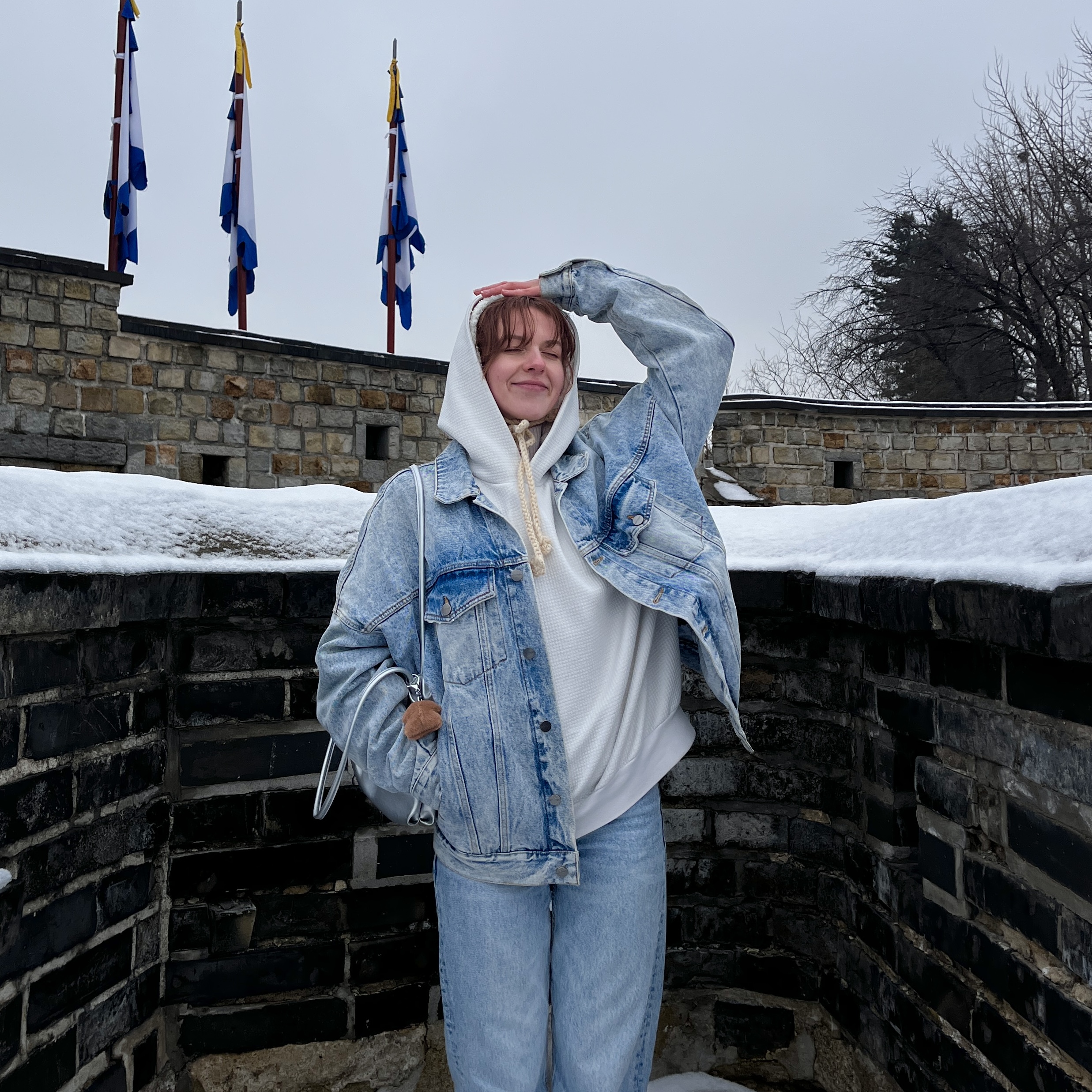
Noémie, ou un autre de nos chasseurs à Séoul, prendra en charge votre recherche

Photo chasseur immobilier - Anaïs - Seoul

Anaïs, ou un autre de nos chasseurs à Séoul, prendra en charge votre recherche

Reliability of listings
Your hunter is there to select the goods, he visits them, alone, with you in person, or with you by video. And above all, he knows how to rely on reliable business partners who only present him with quality goods.
A pen icon
Market access
Your hunter can offer you his own goods, he also has access to all the offers published on the market, and even to quite a few off market offers
A pen icon
Scam risk
At Remoters, we no longer count the number of French people who have signed a rental contract abroad, without understanding it. Some unscrupulous sellers take advantage of this to insert conditions that are disadvantageous for the tenant. This cannot happen when the contract is reviewed by our hunter.
A pen icon
Access to local prices
Symbole d'information en cercle bleu foncé sur fond transparent.
When you search alone, about 85% of the time is spent on research, and 15% on visits. With a hunter, you only do the visits
A pen icon
Application accepted
In areas where homeowners have plenty of candidates to choose from, they rarely choose foreigners first. Your hunter will use his influence (and his mastery of the language) to put your case before others.
A pen icon
Satisfaction
Only 20% of satisfied buyers according to the 2018 Crédit Foncier study. For its part, Remoters gets a score of 4/5 or 5/5 in 95% of cases
A pen icon

Browsing online listings

Weak
Weak
Elevated
Icône rouge de croix X sur fond blanc.
Uncertain
20%

Finding with Remoters

Total
Total
Weak
Very likely
95%
Seoul
Seoul is South Korea's capital and largest city, home to over 10 million residents within the city limits and more than 20 million in the greater metropolitan area. The long-term rental market is structured around two systems unique to Korea: wolse (monthly rent plus a refundable deposit) and jeonse (a large lump-sum deposit with little or no monthly rent). Popular neighbourhoods for expatriates include Itaewon and Hannam-dong in Yongsan-gu, Gangnam, and the creative district of Mapo-gu (Hongdae). Monthly rents for studios range from approximately 700,000 KRW/month in affordable areas to over 1,100,000 KRW/month in premium districts, according to foreignerhome.com (2025). Foreigners renting for more than 90 days must obtain an Alien Registration Card (ARC) and are strongly advised to register their lease at the local community centre to protect their deposit.

Renting long-term in Seoul in brief: Seoul's rental market is built around two systems — wolse (monthly rent + refundable deposit of 5,000,000–20,000,000 KRW) and jeonse (large lump-sum deposit, no monthly rent). Monthly rents for studios range from 700,000 KRW/month in affordable districts to over 1,100,000 KRW/month in Gangnam and Yongsan. Top expat neighbourhoods include Itaewon, Hannam-dong, Gangnam, and Mapo (Hongdae). Foreigners staying more than 90 days need an Alien Registration Card (ARC). Always check the property registry and register your lease at the local community centre to protect your deposit.

Seoul consistently ranks among Asia's most liveable cities for expatriates, combining world-class infrastructure with a rich cultural scene and a highly connected international community.

  • Exceptional public transport: Seoul's metro network covers the entire city and its suburbs with high frequency, low fares, and English-language signage, making car ownership unnecessary for most residents.
  • World-class healthcare: South Korea's healthcare system is widely regarded as one of the best in Asia, with modern hospitals, English-speaking staff in major facilities, and relatively affordable costs compared to Western countries (source: investasian.com).
  • Safety and quality of life: Seoul is considered one of the safest major cities in the world, with low crime rates and a clean urban environment.
  • Vibrant expat community: Neighbourhoods such as Itaewon, Hannam-dong, and Seorae Village offer English-friendly services, international schools, and a well-established network of foreign residents (source: bambooroutes.com).
  • Cultural and culinary richness: From historic palaces in Jongno to the street food markets of Myeongdong and the art galleries of Seongsu-dong, Seoul offers an extraordinary variety of experiences within a compact, walkable city.
  • Career opportunities: As South Korea's economic and technological hub, Seoul attracts professionals in tech, finance, education, and the creative industries (source: theblueground.com).

Day-to-day life in Seoul as a long-term renter is highly practical once you are set up. Here is what to expect:

  • Transport: Seoul's metro (지하철) is one of the most efficient in the world, with 9 main lines covering the entire city. A single journey costs around 1,400–1,600 KRW; monthly passes are available. Most residents do not need a car.
  • Groceries and food: Large supermarkets (E-Mart, Homeplus, Lotte Mart) and traditional markets (시장) are found throughout the city. Eating out is affordable — a meal at a local restaurant typically costs 8,000–15,000 KRW.
  • Healthcare: South Korea operates a national health insurance system (NHIS). Foreign residents with an ARC and a valid visa are generally eligible to enrol. Hospitals in Seoul widely employ English-speaking staff in international clinics.
  • Banking: Opening a Korean bank account (KEB Hana, Shinhan, KB Kookmin) requires your ARC and passport. A Korean bank account is essential for paying rent and utilities.
  • Internet and mobile: South Korea has some of the fastest internet speeds in the world. Home fibre connections and 5G mobile plans are widely available and competitively priced.
  • Language: Korean is the official language. English signage is common in central districts and on public transport, but learning basic Korean phrases significantly eases daily life outside expat-heavy areas.
  • Community: Expat communities are active in Itaewon, Hannam-dong, and Seorae Village, with regular meetups, Facebook groups, and English-language services readily available (source: bambooroutes.com).

Seoul's long-term rental market is one of the most dynamic in Asia, characterised by a dual-system structure unique to South Korea. The two dominant lease models — wolse (monthly rent plus deposit) and jeonse (large lump-sum deposit, no monthly rent) — coexist and shape how landlords and tenants negotiate.

Demand for rental housing in Seoul remains consistently high. Vacancy rates in prime neighbourhoods such as Gangnam, Yongsan, and Mapo run as low as 2–4%, well below the national average of around 6% (source: bambooroutes.com, 2026). This tight supply keeps upward pressure on rents, particularly for small units in expat-favoured districts.

The market for officetels (studio-style units combining residential and office use) and villas (low-rise multi-unit buildings) is especially active among foreign residents, as these property types are widely available on wolse terms and do not require the large capital outlay of jeonse. High-rise apartment complexes (아파트) are also available for rent but tend to command higher monthly rates.

Rental prices have seen moderate year-on-year increases in most districts. Yongsan district, which includes Itaewon and Hannam-dong, recorded studio rent growth of roughly 10–15% year-on-year in 2024–2025, overtaking Gangnam as the most expensive district for one-room units (source: foreignerhome.com, 2025). Ultra-high-end rentals (above 5,000,000 KRW/month) accounted for 1.4% of Seoul contracts in 2024, up from 0.37% in 2020.

Seoul is a city of distinct neighbourhoods, each with its own character and rental market. Here is an overview of the most popular areas for long-term renters and expatriates:

  • Itaewon (Yongsan-gu): The historic heart of Seoul's expat community, known for its international restaurants, English-friendly services, and diverse nightlife. Studio rents in the Yongsan district average around 1,000,000–1,100,000 KRW/month (source: foreignerhome.com, 2025).
  • Hannam-dong (Yongsan-gu): A quieter, upscale residential area south of Itaewon, close to the Han River. Home to the UN Village and popular with diplomatic families and senior professionals. Rents are among the highest in Seoul.
  • Gangnam (Gangnam-gu): Seoul's premium business and luxury district. Studio rents average 880,000–1,100,000 KRW/month, with larger apartments starting from 2,500,000 KRW/month (source: bambooroutes.com, 2025). Proximity to international schools drives strong demand.
  • Mapo-gu (Hongdae / Yeonnam-dong): A creative, youthful district popular with young professionals and digital nomads. Studios average around 720,000–850,000 KRW/month, making it one of the more affordable options close to the city centre (source: bambooroutes.com, 2025).
  • Seongdong-gu (Seongsu-dong): Seoul's emerging creative hub, often compared to Brooklyn. Increasingly popular with young professionals; rents are rising but remain below Gangnam levels.
  • Jongno-gu: A culturally rich central district near historic palaces and museums. Rental prices are relatively stable and moderate, with studios in some pockets averaging around 700,000–800,000 KRW/month (source: foreignerhome.com, 2025).
  • Seorae Village (Seocho-gu): A charming neighbourhood with a strong French expat community, known for its village atmosphere and proximity to parks. Rents are above average due to high demand from international residents.

Renting long-term in Seoul requires understanding the city's two main lease structures. The wolse system — the most common option for foreigners — combines a refundable deposit (보증금) of 5,000,000–20,000,000 KRW with a fixed monthly rent. The jeonse system, preferred by many Korean tenants, requires a much larger lump-sum deposit (often 100,000,000–300,000,000 KRW or more for a family apartment in Seoul) in exchange for little or no monthly rent; the full deposit is returned at the end of the contract (source: seoullawgroup.com).

For a single person, a realistic monthly housing budget in Seoul ranges from approximately 700,000 KRW/month for a studio in a student-friendly neighbourhood to 2,500,000 KRW/month or more for a spacious apartment in a premium district. A global health insurance guide (globalhealth.insurance) estimates a total monthly cost of living — including rent, groceries, transport, and healthcare — at around 1,550 EUR/month for a single person in Seoul.

Monthly rental costs in Seoul vary significantly depending on the district, property type, and lease structure. According to data compiled by foreignerhome.com (2025), studio apartments (one-room units) in affordable areas such as Mapo (Hongdae/Sinchon) or Jongno average around 700,000–850,000 KRW/month, while premium districts like Gangnam and Yongsan (Itaewon, Hannam-dong) reach 900,000–1,100,000 KRW/month for a comparable unit.

For larger apartments, one-bedroom units typically range from 850,000 to 1,200,000 KRW/month, and two- to three-bedroom apartments start from 1,400,000 KRW/month in mid-range areas, rising to 2,500,000 KRW/month or more in Gangnam or Hannam-dong (source: bambooroutes.com, 2025).

Under the wolse system, tenants also pay a refundable deposit (보증금) typically between 5,000,000 and 20,000,000 KRW in addition to monthly rent. Utilities — electricity, gas, water, and internet — are generally billed separately and not included in the quoted rent.

Renting a long-term apartment in Seoul as a foreigner follows a structured process. Here are the key steps:

  1. Define your budget and target neighbourhood: Decide whether you prefer a studio officetel, a villa apartment, or a larger unit, and identify the districts that match your lifestyle and budget.
  2. Search for listings: Use Korean property apps such as Zigbang, Dabang, or Naver Real Estate to browse available rentals. International platforms and expat Facebook groups can also surface English-language listings (source: korealivingguide.com).
  3. Engage a licensed real estate agent (공인중개사): Walk into a local 부동산 (estate agency) office near your target area or contact one online. Verify the agent's official registration. If you do not speak Korean, bringing a Korean-speaking friend or interpreter is strongly recommended.
  4. Visit properties and negotiate: Tour several units before committing. Negotiate the deposit amount, monthly rent, lease duration (typically one or two years), and any special conditions such as pet policies or repainting obligations.
  5. Check the property registry (등기부등본): Before signing, obtain and review the official registry extract to confirm ownership and check for any mortgages or encumbrances on the property (source: beautipin.com).
  6. Sign the lease contract and pay the deposit: Pay the initial contract fee (계약금), then the balance (잔금) on the handover date. Ensure the contract clearly states the deposit amount, monthly rent, move-in date, and all special terms.
  7. Register the lease and your address: Visit the local 주민센터 (community centre) to obtain the 확정일자 (official date stamp) on your lease and complete the 전입신고 (move-in address registration). These steps are essential to protect your deposit under Korean law (source: citygramseoul.kr).
  8. Prepare required documents: Foreigners typically need a valid passport, visa documentation, an Alien Registration Card (ARC) for stays over 90 days, proof of income, and a Korean bank account (source: staysmartguide.com).

Renting in Seoul as a foreigner involves several pitfalls that can be avoided with proper preparation:

  • Skipping the property registry check: Before signing any lease or transferring a deposit, always verify the property's official registry extract (등기부등본) to confirm the landlord's identity and check for existing mortgages or liens that could put your deposit at risk (source: beautipin.com).
  • Failing to register the lease: Not obtaining the 확정일자 (hwakjeong ilja — official date stamp) at the local 주민센터 (community centre) leaves your deposit unprotected in the event of landlord default. This step is essential for legal priority over other creditors.
  • Ignoring the 전입신고 (move-in registration): Registering your address at the local community centre is required to activate tenant protections under Korean law.
  • Misunderstanding the jeonse system: Foreigners sometimes confuse jeonse with a standard deposit. The sums involved are very large — often tens or hundreds of millions of KRW — and deposit insurance is strongly recommended.
  • Using unregistered agents: Always work with a licensed real estate agent (공인중개사). Verify their registration before signing any documents (source: staysmartguide.com).
  • Overlooking utility costs: Quoted rents in Seoul almost never include utilities. Budget separately for electricity, gas, water, and internet.
  • Learn the basics of wolse and jeonse before you start searching: Most foreigners opt for wolse (monthly rent + deposit), but understanding jeonse helps you negotiate and avoid confusion with landlords.
  • Use Korean property apps: Zigbang, Dabang, and Naver Real Estate have the most comprehensive listings. Many now offer partial English interfaces (source: korealivingguide.com).
  • Always check the property registry (등기부등본): Request this document before signing any contract or transferring any deposit. It confirms ownership and reveals any mortgages on the property (source: beautipin.com).
  • Register your lease immediately after signing: Obtain the 확정일자 stamp at your local 주민센터 and complete the 전입신고 (address registration). These steps give your deposit legal priority (source: citygramseoul.kr).
  • Apply for your Alien Registration Card (ARC) early: If you plan to stay more than 90 days, apply for your ARC as soon as possible — landlords and agents will often ask for it (source: staysmartguide.com).
  • Budget for utilities separately: Electricity, gas, water, and internet are almost never included in quoted rents in Seoul.
  • Visit in person before committing: Photos on Korean listing apps can be misleading. Always tour a property in person, and submit a 하자 리스트 (defect list) within a few days of moving in to document any pre-existing issues.
  • Engage a licensed agent (공인중개사): Verify their official registration. Agent fees are typically split between landlord and tenant and are regulated by law.

Finding the right long-term rental in Seoul can be challenging, especially for newcomers unfamiliar with the local lease structures, Korean-language platforms, and administrative requirements. Remoters connects you with experienced local rental search specialists who can guide you through every step of the process — from identifying the right neighbourhood and property type for your needs, to reviewing lease contracts, navigating the wolse or jeonse deposit system, and completing the mandatory registration steps that protect your tenancy under Korean law.

Whether you are relocating for work, joining a partner, or planning an extended stay in Seoul, having a knowledgeable local contact makes the difference between a stressful search and a smooth move-in.

Searching for property in Seoul from abroad comes with significant challenges: language barriers, unfamiliarity with local neighborhoods, time zone differences, and complex Korean real estate regulations. A property hunter based in Seoul acts as your trusted local expert, handling every step of the search on your behalf.

They visit properties in person, verify legal documents, negotiate prices, and coordinate with local agents — saving you countless hours and protecting you from costly mistakes. With a property hunter, you benefit from insider market knowledge and a dedicated professional who represents your interests, not the seller's.

Korea's rental market is unlike any other in the world. It operates on two main systems: Jeonse (a lump-sum deposit where no monthly rent is paid) and Wolse (a smaller deposit combined with monthly rent). For foreigners searching from abroad, understanding which system suits their financial situation and how to protect their deposit legally can be extremely confusing.

A property hunter in Seoul will explain both systems in detail, help you choose the right option, verify the property's mortgage status to ensure your deposit is safe, and guide you through the registration process at the local district office — all remotely coordinated so you can finalize your move with full confidence.

Absolutely. Seoul is home to world-renowned universities such as SNU, Yonsei, and Korea University, attracting thousands of international students each year. Finding suitable student housing from abroad — whether on-campus dormitories, gosiwon (small private rooms), or shared apartments near campus — requires local knowledge and quick action in a competitive market.

A property hunter specializing in student accommodation in Seoul will identify options that match your budget and proximity to your university, conduct viewings on your behalf via video call, and secure the lease before your arrival. This ensures you land in Seoul with a safe, comfortable home already arranged, so you can focus entirely on your studies.

Seoul is a vast and diverse city, and choosing the right neighborhood is crucial for your quality of life. A property hunter with deep local expertise will tailor their recommendations to your lifestyle, budget, and needs. Here are some top areas for expats:

  • Itaewon & Hannam-dong: International community hub with diverse restaurants, embassies, and English-friendly services.
  • Mapo-gu (Hongdae & Yeonnam-dong): Vibrant, creative district popular with young professionals and artists.
  • Gangnam & Seocho: Upscale area with excellent schools, business centers, and modern amenities.
  • Yongsan: Centrally located with easy access to the entire city, popular with families.

A property hunter will not only recommend the best neighborhood for you but also alert you to hidden gems and areas to avoid, ensuring your relocation to Seoul is a complete success.

What are you looking for in Seoul?

One of our home finders will look for the ideal property for you

How does it work?

1

First contact:Your home finder offers a free call to understand your needs.

2
Quote: If you’re ready to move forward, you’ll receive a personalized quote via Remoters.
3
Mission start: Once approved and paid, the housing search begins.
4
Support: Your home finder assists you through to the lease signing and your arrival.
5
Feedback: Share your review — your satisfaction is our priority !
Couple allongé sur le lit, pieds contre la tête de lit, s'enlaçant et regardant l'un l'autre.

We are present around the world!

Remoters continues to grow!
We are recruiting new home finders everywhere, do not hesitate to apply
Carte du monde en trois panneaux avec des marqueurs rouges indiquant des emplacements en Amériques, Europe, Afrique et Asie.I am applying