
 Français
 English
 Español







Mika
Faustine
★★★★★
Very good communication, very fast and efficient! Thanks again to Faustine for her time and for the precision of the search!
Trustpilot · August 13, 2026 · translated from French · See the original review
For students, companies and professionals, all over the world.
Remoters puts you in touch with a home finder living there, who speaks your language, searches to your criteria, views on your behalf and stays with you through to the signed lease.
They know the neighbourhoods, the rents and how the local market works, and they speak your language.
Listings, agencies, local network: they shortlist to your criteria and view properties on your behalf.
They present your application to the landlord and negotiate the lease terms for you.
Verified home, lease reviewed, secure payment: you sign knowing exactly what you are getting.
Six missions, from the first brief to key handover.

Real budget, viable neighbourhoods, size, life constraints. The brief is written before the first listing — that's what saves three months of pointless viewings.

Portals, local agencies, private landlords: your home finder checks every new listing daily and contacts agencies on your behalf, so nothing slips through.
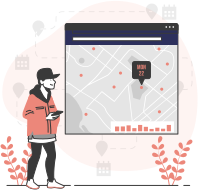
Filmed viewings, an honest report, walks through the neighbourhood at different hours. You no longer need to travel: your home finder does it all for you remotely.

Local rent levels, service charges, the state of the property, lease length. Concrete arguments to negotiate the terms — on your side, this time.

Locally required documents, guarantor, translation, review of the lease and the inventory. This is where foreign applications most often fall apart.

Inventory, key handover, utilities set-up, first admin steps. Your home finder doesn't disappear once the contract is signed: they remain a valuable contact for any questions about life on the ground.
No scams, verified homes, secure payment.
A home found in a few weeks.
Guided by a local home finder, in your language.
Everything handled remotely, stress-free.
Four steps, from your request to the signed lease.
You start by filling in a short questionnaire to tell us a bit more about your search.
One of our home finders then takes over and contacts you for a free first conversation. The goal? Understanding exactly what you need.
If it clicks and you want to move forward, you receive a tailored quote. Once approved, the search begins!
Your home finder searches for you, shares their finds, stays with you through to signing the lease — all that’s left is packing your bags.
Join a community of happy clients.
Lund in brief: A compact, bike-friendly university city in southern Sweden with a highly competitive rental market. One-bedroom apartments in the centre cost approximately 8,000 SEK to 10,000 SEK per month; more affordable options exist in outer districts from around 5,000 SEK per month. Long-term rentals are available through the regulated queue system (AF Bostäder, Bostaden) or the private market (Blocket Bostad, Bofrid). Register in housing queues early, prepare your documents in advance, and act quickly on private listings. Lund is 15 minutes by train from Malmö and under an hour from Copenhagen.
Lund is a compact, walkable city in the Skåne region of southern Sweden, consistently ranked among the country's most liveable university cities. Its appeal rests on a combination of academic prestige, high quality of life, and excellent connectivity.
Day-to-day life in Lund is shaped by its university character, compact size, and strong cycling culture. Here is what to expect when living in the city long-term:
Lund's rental market is characterised by high demand and limited supply, driven primarily by the presence of Lund University, one of Scandinavia's largest universities with approximately 47,000 students enrolled annually as of 2024, including around 25% international students (Investropa, 2024). This concentration of students, researchers, and professionals working in the city's life-science and technology sectors creates persistent pressure on available housing.
The market is structured around two main channels. The public and regulated sector — managed by organisations such as AF Bostäder (the largest student housing provider in Lund) and municipal landlords — allocates apartments through waiting queues. These contracts are subject to Sweden's utility-value rent system (bruksvärdessystemet), which keeps rents below open-market levels. The private market operates through direct landlords, property management companies, and sublet platforms, with rents set more freely.
According to Investropa (2026), properties near Lund's university area and central station (Lund C) are among the fastest-renting in Sweden, typically staying listed for only 7 to 15 days during peak periods such as August–September. New construction has slowed in recent years, further tightening supply. Prospective tenants are advised to begin their search well in advance and to explore multiple channels simultaneously.
Lund is a relatively compact city, and most neighbourhoods are within cycling distance of the university and city centre. Each area has a distinct character suited to different lifestyles and budgets.
Lund's rental market operates on two distinct tiers. The first tier consists of regulated hyresrätt (rental right) apartments allocated through housing queues managed by municipal and private landlords such as Bostaden and AF Bostäder. These contracts offer rent-controlled rates — typically below the open market — but require months or years of queue time. The second tier is the private sublet and direct-rental market, where prices reflect supply and demand more freely.
For newcomers and professionals relocating to Lund, the private market is usually the most accessible route. Budget for at least 8,000 SEK to 12,000 SEK per month for a one-bedroom apartment in a central or well-connected location. Shared housing and co-living arrangements can reduce costs considerably. Keep in mind that a security deposit (deposition) of one to three months' rent is standard practice in private rentals.
Rental prices in Lund vary significantly depending on the type of accommodation, its size, and its proximity to Lund University and the city centre. According to Leverage Edu (2024), a one-bedroom apartment in the city centre typically costs between 8,000 SEK and 10,000 SEK per month, while options further from the centre can be found at lower rates. Studios and rooms in student housing start from around 4,550 SEK per month (HousingTarget listings, 2025), while larger two- or three-bedroom apartments can reach 20,000 SEK per month or more.
The rental market in Lund is split between the regulated public-sector queue system and the private market. Regulated first-hand contracts (hyresrätt) are generally priced below the open market due to Sweden's utility-value rent system, but they require significant queue time. Private-market rentals and sublets tend to be priced higher and are more immediately accessible.
Furnished apartments and short-to-medium-term rentals command a premium, often ranging from 10,000 SEK to 22,000 SEK per month depending on size and amenities (HousingTarget, 2025). Utilities such as heating and internet may or may not be included — always confirm with the landlord before signing.
Finding a long-term rental in Lund comes with several common pitfalls. Here are the most frequent mistakes to avoid:
Relocating to Lund and navigating its competitive rental market can be challenging, especially for newcomers unfamiliar with the Swedish housing system. Remoters connects you with experienced local rental search specialists who can help you identify suitable apartments, prepare your rental dossier, and manage communications with landlords — whether you are looking for a regulated first-hand contract or a private-market rental.
From understanding the queue system at AF Bostäder to reviewing sublet contracts under Swedish tenancy law, Remoters' network of local experts provides practical, on-the-ground support so you can secure your long-term accommodation in Lund with confidence.
Trustpilot · August 13, 2026 · translated from French · See the original review
Google · August 1, 2026 · translated from French · See the original review
Google · August 1, 2026 · translated from French · See the original review
Google · June 1, 2026 · translated from French · See the original review
Register straight away on the bostadskö of LKF, the municipal landlord, and sublet in the meantime. The waiting list works on points and can take several years.
Subletting (andrahandsuthyrning), through Blocket.se, Hemnet, Bostad Direct or Housingtarget.com, is often the quickest route for a newcomer. Check that the main tenant has their landlord's written consent: without it, the lease can be terminated immediately.
On the private market, a studio rents for 6,000 to 9,000 SEK a month, a two-room flat for 9,000 to 14,000 SEK, and a three-room flat for 15,000 to 22,000 SEK (Housingtarget.com listings, 2025). A room in a flatshare starts at 4,000 SEK.
Always ask whether heating (värme), hot water and electricity are included: they often are in LKF housing, rarely on the private market.
Often yes: many landlords and agencies require this Swedish ID number to sign a lease. Apply to Skatteverket as soon as you arrive; you also need it to open a bank account.
Meanwhile, prepare your ID, proof of income (payslips, employment contract or student certificate) and references from previous landlords. The deposit, up to 3 months' rent, goes into a depositionskonto, never without a written contract.
Klostergården and Linero are the most affordable options: the first is a quiet residential area from the 1960s with good transport links, the second offers spacious homes suited to families. Norra Fäladen, north of the centre, is mid-range.
Centrum has the highest rents, and Östra Torn, near the LTH campus, is in high demand among students and researchers. Skånetrafiken buses link the outskirts well to the centre.
A rental search in Lund usually costs between €450 and €600: the range we have seen across the searches carried out in Lund since February 2025. The exact price depends on your search; your home finder sets it in a written quote, free and with no commitment.
You pay online through the platform, never directly to the home finder. The security deposit and local fees (agency, check-in inventory) are not included.


