Find a place in Dusseldorf within 4 weeks

Emoji de détective avec chapeau, loupe et cheveux gris.
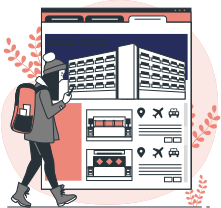
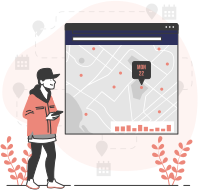
Shortlists properties and visits them for you

Icône de deux mains se serrant avec des flèches bleues au-dessus symbolisant un accord ou partenariat.
Backs your application and negotiates the lease

Icône de bouclier vert avec une coche blanche, symbole de sécurité ou d'assurance.
Every step protected, no hidden surprises

Why choose a home finder ?

Aude, ou un autre de nos chasseurs à Düsseldorf, prendra en charge votre recherche

Photo chasseur immobilier - Mohammed - Dusseldorf

Mohammed, ou un autre de nos chasseurs à Düsseldorf, prendra en charge votre recherche

Reliability of listings
Your hunter is there to select the goods, he visits them, alone, with you in person, or with you by video. And above all, he knows how to rely on reliable business partners who only present him with quality goods.
A pen icon
Market access
Your hunter can offer you his own goods, he also has access to all the offers published on the market, and even to quite a few off market offers
A pen icon
Scam risk
At Remoters, we no longer count the number of French people who have signed a rental contract abroad, without understanding it. Some unscrupulous sellers take advantage of this to insert conditions that are disadvantageous for the tenant. This cannot happen when the contract is reviewed by our hunter.
A pen icon
Access to local prices
Symbole d'information en cercle bleu foncé sur fond transparent.
When you search alone, about 85% of the time is spent on research, and 15% on visits. With a hunter, you only do the visits
A pen icon
Application accepted
In areas where homeowners have plenty of candidates to choose from, they rarely choose foreigners first. Your hunter will use his influence (and his mastery of the language) to put your case before others.
A pen icon
Satisfaction
Only 20% of satisfied buyers according to the 2018 Crédit Foncier study. For its part, Remoters gets a score of 4/5 or 5/5 in 95% of cases
A pen icon

Browsing online listings

Weak
Weak
Elevated
Icône rouge de croix X sur fond blanc.
Uncertain
20%

Finding with Remoters

Total
Total
Weak
Very likely
95%
Dusseldorf
Düsseldorf is a major international business city in North Rhine-Westphalia, consistently ranked among Germany's top cities for quality of life by Mercer. The long-term rental market is competitive, with one-bedroom apartments in central neighbourhoods such as Pempelfort, Oberkassel, and Stadtmitte typically ranging from 1,000 EUR to 1,400 EUR/month, while more affordable options can be found in outer districts like Oberbilk and Eller. Tenants must prepare a complete rental dossier including a SCHUFA credit report, proof of income, and a valid ID, and are legally required to register their address at the Bürgeramt (Anmeldung) within two weeks of moving in. The Altstadt, Medienhafen, and Grafenbergerwald are among the city's most distinctive landmarks, reflecting Düsseldorf's blend of historic character, creative industries, and green urban spaces.

Renting in Düsseldorf in brief: Düsseldorf is a competitive but well-organised rental market. Expect to pay from around 700 EUR/month for a one-bedroom flat in outer districts to 1,400 EUR/month or more in central neighbourhoods like Pempelfort or Oberkassel. Prepare a complete rental dossier (SCHUFA report, payslips, ID), budget for a deposit of up to 3 months' Kaltmiete, and register your address at the Bürgeramt within two weeks of moving in. The most popular search platforms are ImmoScout24 and Immowelt. Act quickly — good listings go fast.

Düsseldorf consistently ranks among Germany's most liveable cities, regularly appearing in Mercer's top global quality-of-life rankings alongside Munich and Frankfurt. The city combines a thriving international business environment with a high standard of urban living, making it a natural choice for professionals, families, and remote workers alike.

  • International business hub: Düsseldorf is home to major corporations, the Messe Düsseldorf trade fair centre, and a significant Japanese business community, making it one of Europe's most internationally connected cities.
  • Culture and nightlife: The Altstadt (Old Town), known as the längste Theke der Welt (longest bar in the world), offers a vibrant restaurant and bar scene. The city also boasts world-class museums, the Kunstakademie Düsseldorf, and a rich fashion and design heritage.
  • Green spaces and the Rhine: Extensive parks, the Grafenbergerwald forest, and the Rhine riverbanks provide excellent outdoor recreation within the city limits.
  • Excellent transport links: Düsseldorf International Airport connects the city to destinations worldwide, while the central train station (Hauptbahnhof) offers fast rail connections to Cologne, Amsterdam, and beyond. The local public transport network (Rheinbahn) covers the city efficiently.
  • International schools and healthcare: The city hosts several international schools, including the Japanese International School, and benefits from high-quality healthcare infrastructure (source: Expatica, 2024).

Day-to-day life in Düsseldorf is comfortable and well-organised. The city's public transport network, operated by Rheinbahn, covers the entire city via U-Bahn, tram, and bus lines, making it easy to live without a car. A monthly public transport pass (Deutschlandticket) costs 49 EUR/month (as of 2024), offering unlimited travel across Germany's local and regional networks.

Grocery shopping is straightforward, with major supermarket chains such as Rewe, Edeka, Aldi, and Lidl present throughout the city. The Carlsplatz market in the Altstadt is a popular destination for fresh produce and local specialities.

Healthcare is of a high standard: residents with statutory health insurance (gesetzliche Krankenversicherung) have access to a wide network of GPs and specialists. International residents should arrange health insurance before or immediately upon arrival.

Düsseldorf has a strong international community, with a particularly large Japanese expat population centred around the Immermannstrasse area, as well as significant communities from across Europe and beyond. English is widely spoken in central areas, restaurants, and international workplaces, easing the transition for newly arrived expats.

The city's cultural offer is rich: the Kunstsammlung Nordrhein-Westfalen (K20 and K21 museums), the Tonhalle concert hall, and the annual Düsseldorf Carnival are among the highlights of local life. The Rhine promenade and the Grafenbergerwald forest provide ample space for outdoor activities year-round.

Düsseldorf's long-term rental market is dynamic and competitive, driven by the city's status as a major international business hub in North Rhine-Westphalia. The city is home to a large expatriate community — approximately 25% of residents are expats — which sustains strong demand for quality rental accommodation year-round (source: Expatica, 2024).

The market is characterised by a clear divide between the city centre and inner districts (Altstadt, Stadtmitte, Pempelfort, Oberkassel, Golzheim, Derendorf), where demand is highest and rents are elevated, and outer or suburban districts (Oberbilk, Eller, Gerresheim, Kaiserswerth), which offer more affordable options with good transport links. Furnished apartments are widely available, particularly in central areas, catering to business travellers and newly arrived expats.

Listings are predominantly found on platforms such as ImmoScout24, Immowelt, and WG-Gesucht (for flat-shares). The market moves quickly: popular listings in sought-after neighbourhoods can receive multiple applications within days of being posted. Landlords typically favour applicants with a complete rental dossier, stable income, and a valid SCHUFA credit report.

Düsseldorf is divided into ten administrative districts (Stadtbezirke) encompassing around fifty neighbourhoods (Stadtteile). Each area has a distinct character and rental price range, making it important to choose the right neighbourhood for your lifestyle and budget.

Altstadt & Stadtmitte form the historic and commercial heart of the city. Altstadt is famous for its lively bar and restaurant scene, while Stadtmitte is a central business and shopping hub. Both are among the most expensive areas for long-term rentals.

Pempelfort is a popular choice for young professionals and expats, offering a balance of residential calm and urban accessibility, with numerous cafés, shops, and parks. Rents here are above average.

Oberkassel, located on the left bank of the Rhine, is one of Düsseldorf's most prestigious neighbourhoods. It is particularly popular with families and expats, offering upscale apartments, parks, and international schools. Average rents for a one-bedroom apartment range from approximately 1,300 EUR to 2,000 EUR/month (source: Wooh.app, 2024).

Derendorf & Golzheim are well-connected, upscale residential areas north of the centre, favoured by professionals and families. Rental prices are on the higher end.

Bilk & Unterbilk are vibrant, mixed neighbourhoods south of the centre, popular with students and young professionals. The Medienhafen (Media Harbour) area in Unterbilk is known for its striking architecture and creative industries.

Oberbilk is a more affordable, multicultural district close to the main train station, offering smaller flats at lower rents — a good option for those on a tighter budget.

Eller & Gerresheim are quieter, family-friendly outer districts near the Grafenbergerwald forest, offering more space at lower rental prices with good tram connections to the centre.

Düsseldorf is one of Germany's more expensive rental markets, though it remains more affordable than Munich or Frankfurt. Rental budgets vary widely: a modest flat in an outer district such as Oberbilk or Eller can be found from around 500–700 EUR/month, while a well-located apartment in Pempelfort, Oberkassel, or Stadtmitte will typically require a budget of 1,200 EUR/month or more. Families seeking a three-bedroom home in a central neighbourhood should plan for at least 1,600–1,800 EUR/month.

Beyond the monthly rent, tenants must budget for Nebenkosten (service charges), which typically add 2–4 EUR per m²/month to the base rent, as well as a security deposit of up to 3 months' Kaltmiete, payable at the start of the tenancy (source: ImmoScout24, 2024; Wunderflats, 2024). Furnished apartments are available across the city but carry a noticeable premium over unfurnished equivalents.

Rental costs in Düsseldorf vary significantly depending on the neighbourhood, apartment size, and whether the unit is furnished or unfurnished. As a general guide, a one-bedroom apartment in the city centre typically rents for around 1,200 EUR/month, while a comparable flat outside the centre averages closer to 700–900 EUR/month. A three-bedroom apartment in central areas can reach 1,800 EUR/month or more, whereas suburban equivalents tend to sit around 1,300 EUR/month (source: Expat.com Düsseldorf Accommodation Guide, 2024).

Every rental listing in Germany distinguishes between Kaltmiete (base rent, excluding utilities) and Warmmiete (total rent including heating and some services). Additional running costs — known as Nebenkosten — typically cover water, heating, and building maintenance, and generally range between 2 EUR and 4 EUR per square metre per month in Düsseldorf (source: ImmoScout24, 2024). Always confirm which costs are included before signing any lease.

Furnished apartments command a premium. In the Stadtmitte district, for example, a furnished one-bedroom flat can range from 950 EUR to 1,380 EUR/month, while in District 3 (Oberbilk area) the range is roughly 780 EUR to 1,300 EUR/month (source: Wunderflats, 2024).

Finding and securing a long-term rental in Düsseldorf follows a structured process. Here are the key steps:

  1. Define your search criteria: Determine your budget (distinguishing between Kaltmiete and Warmmiete), preferred neighbourhood, apartment size, and whether you need a furnished or unfurnished flat.
  2. Search on major platforms: The main portals for Düsseldorf rentals are ImmoScout24, Immowelt, and WG-Gesucht (for flat-shares). Wunderflats and HousingAnywhere are useful for furnished and mid-term options.
  3. Prepare your rental dossier: Assemble a complete application file including: a valid passport or ID, recent payslips (last 3 months) or proof of income, a SCHUFA Bonitätsauskunft (credit report), a reference from a previous landlord if available, and a brief personal cover letter. Newcomers without a SCHUFA record can substitute bank statements or an employer's letter (source: Make it in Germany, 2024).
  4. Attend viewings promptly: Contact landlords quickly and attend viewings prepared to submit your dossier on the spot. The market is competitive and delays can cost you the flat.
  5. Sign the lease: Review the lease carefully, paying attention to the lease type (indefinite or fixed-term), notice periods, and what is included in the Nebenkosten. The security deposit is legally capped at 3 months' Kaltmiete under German law.
  6. Register your address (Anmeldung): Within two weeks of moving in, you must register at the local Bürgeramt. This is a legal requirement and is essential for opening a bank account, obtaining a SCHUFA record, and other administrative steps (source: ImmoScout24, 2024).

When searching for a long-term rental in Düsseldorf, several common mistakes can slow down your search or jeopardise your application:

  • Confusing Kaltmiete and Warmmiete: Always check whether the advertised rent is the base rent (Kaltmiete) or the all-inclusive rent (Warmmiete). Failing to account for Nebenkosten can lead to unexpected monthly costs of 100–300 EUR/month extra.
  • Applying without a SCHUFA report: Most Düsseldorf landlords require a SCHUFA Bonitätsauskunft (credit report). Newcomers to Germany who do not yet have a SCHUFA record should prepare alternative documents such as bank statements, a letter from their employer, or a reference from a previous landlord (source: Make it in Germany, 2024).
  • Submitting an incomplete rental dossier: A weak or incomplete application — missing payslips, ID copies, or a cover letter — significantly reduces your chances in a competitive market. Prepare a complete, well-organised dossier before attending viewings.
  • Delaying after a viewing: Düsseldorf's rental market moves quickly. Waiting too long to submit your application after a viewing often means losing the flat to another candidate.
  • Ignoring the Anmeldung obligation: After moving in, tenants are legally required to register their address at the local Bürgeramt (residents' registration office) within two weeks. Failing to do so can create administrative complications (source: ImmoScout24, 2024).
  • Overlooking lease type: German leases can be indefinite (unbefristet) or fixed-term (befristet). Always clarify the lease type and notice period before signing.
  • Act fast: Düsseldorf's rental market is competitive. Popular listings in central neighbourhoods can attract multiple applicants within days. Have your rental dossier ready before you start viewing.
  • Prepare a complete dossier: Include your passport, last 3 months' payslips, a SCHUFA Bonitätsauskunft (or equivalent for newcomers), a reference from a previous landlord, and a short personal cover letter. A well-prepared application stands out.
  • Understand Kaltmiete vs. Warmmiete: Always check whether the advertised rent is the base rent (Kaltmiete) or the all-inclusive rent (Warmmiete). Nebenkosten (service charges) typically add 2–4 EUR per m²/month to the base rent (source: ImmoScout24, 2024).
  • Budget for the deposit: German law allows landlords to request up to 3 months' Kaltmiete as a security deposit. Make sure you have this amount available before signing.
  • Register promptly (Anmeldung): After moving in, register your address at the local Bürgeramt within two weeks. This is a legal requirement and unlocks access to banking, SCHUFA, and other essential services.
  • Consider outer districts for better value: Neighbourhoods like Oberbilk, Eller, and Gerresheim offer significantly lower rents than central areas while remaining well-connected by tram and U-Bahn.
  • Use multiple platforms: Search on ImmoScout24, Immowelt, and WG-Gesucht simultaneously to maximise your options. For furnished or mid-term rentals, Wunderflats and HousingAnywhere are also useful.
  • Learn basic German phrases: While English is widely spoken in Düsseldorf's central areas, writing a brief cover letter in German (even imperfect) can make a positive impression on landlords.

Relocating to Düsseldorf and searching for a long-term rental can be a complex process, especially for international arrivals unfamiliar with the German rental system. Remoters connects you with experienced local rental search specialists who can guide you through every step: from identifying the right neighbourhood for your lifestyle and budget, to preparing a competitive rental dossier, attending viewings on your behalf, and navigating lease negotiations in German.

Whether you are a remote worker, an expat professional, or a family relocating to Düsseldorf, having a dedicated rental search expert on your side significantly increases your chances of securing the right flat quickly — without the stress of navigating a competitive market alone.

What are you looking for in Dusseldorf?

One of our home finders will look for the ideal property for you

How does it work?

1

First contact:Your home finder offers a free call to understand your needs.

2
Quote: If you’re ready to move forward, you’ll receive a personalized quote via Remoters.
3
Mission start: Once approved and paid, the housing search begins.
4
Support: Your home finder assists you through to the lease signing and your arrival.
5
Feedback: Share your review — your satisfaction is our priority !
Couple allongé sur le lit, pieds contre la tête de lit, s'enlaçant et regardant l'un l'autre.

We are present around the world!

Remoters continues to grow!
We are recruiting new home finders everywhere, do not hesitate to apply
Carte du monde en trois panneaux avec des marqueurs rouges indiquant des emplacements en Amériques, Europe, Afrique et Asie.I am applying